
Making age work for you
From 2020, the number of working-age citizens will decline as Singaporeans who retire outnumber their younger generations who are entering the workplace for the first time. In fact, Singapore has one of the fastest ageing populations in the world.
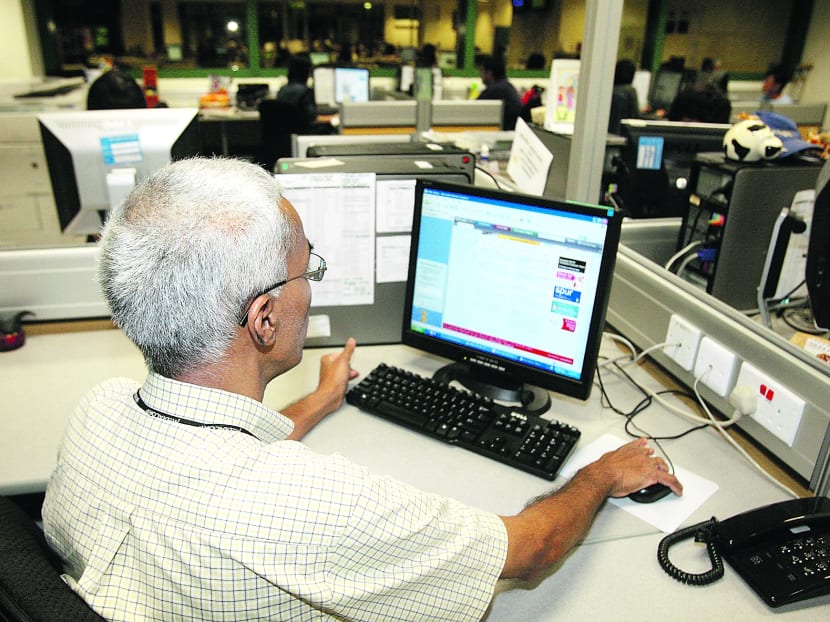
Older workers are a repository of experience, which can be harnessed to powerful effect. TODAY file photo
From 2020, the number of working-age citizens will decline as Singaporeans who retire outnumber their younger generations who are entering the workplace for the first time. In fact, Singapore has one of the fastest ageing populations in the world.
But with life expectancy increasing and people generally remaining healthier till much later in life, the situation of an ageing population would not seem so dire — if not for the fact that many of us still cling to stereotypes of the “older worker” and harbour, consciously or unconsciously, ageist attitudes.
There is no doubt that older workers are a huge asset to the workplace, bringing wisdom invaluable for younger generations. Older workers are a repository of experience and knowledge, which can be harnessed to powerful effect. This is not to say that the challenges that older workers face are only myths.
There are genuine limitations that older workers face, physically and mentally. Older workers often have to come to grips with the fact that their ability to keep up with the challenges of the job in an era dominated by technology is compromised with age.
As we grow older, our energy levels change and this can be difficult to manage with the demands of the modern day workplace. For older workers, finding a role that is fulfilling and comes at a pace that can be handled can be difficult, when the pace of life is frenetic and competition for jobs is fierce.
Added to this is the fact that many older workers actually want to retire, to live out their years devoted to hobbies and other interests that offer relaxation and enjoyment. Working for longer is a depressing thought at the best of times, especially if economic circumstances mean your planned-for retirement is a little further away.
LEADERSHIP CONFUSION
From the organisational perspective, there is also the issue of managing a multi-generational workforce which has to be addressed.
Older workers may prefer and expect a different kind of leadership from their younger colleagues. They may also be more conservative and measured in their approach to problem solving, while younger workers are likely to question authority and express their views, scarcely heeding hierarchical norms or protocols.
Younger workers who move up the leadership ranks may disconcert their older colleagues over whom they now are expected to provide direction. This can lead to conflict within the workplace and confusion as to the type of leadership that an organisation with a multi-generational workforce should have. The fact of the matter is, with an ageing population a reality which cannot be escaped, organisations need to balance the recruitment of younger generations while encouraging older workers to stay on beyond their retirement age.
How older workers are led, motivated and encouraged to attain maximum productivity and how younger workers accept the reality of working in a multi-generational workforce will be key to organisational success.
THE BRIDGE
As with any divide, the solution is always to find a bridge, a common ground from which to build up the organisation.
So what can you do in your organisation to harness this talented segment of your workforce while managing the attitudes of younger workers?
•Evaluate your management practices so they are more flexible towards different generations. For example, value the life experience of older workers and be patient if they are grappling with the modern workplace.
•Think of coaching and mentoring opportunities that you can exploit at little cost to tap the knowledge and experience of your older workers.
•Consider a workforce health, well-being and counselling programme. In particular, offering support to older workers will help them continue to have healthy, productive working lives so they can continue to make a valued contribution to your organisation.
•Implement measures such as reverse mentoring to avoid potential generational conflict. Our own research into this topic reports that as Generation Y make their mark on the workplace and Generation X embed into senior leadership roles, there are more generations working together than ever, creating possible tensions. Asking younger generations to mentor their older colleagues, perhaps in the field of technology, is a simple but effective way of getting generations working together.
•Tailor your flexible working practices. Flexible working is as much of an attraction to older workers as it is to working parents. But their needs will be different so make sure that your organisation doesn’t offer a “one-size-fits-all” approach.
If your older workers choose to work reduced hours, then remember that part-time can be a myth as you can, at times, end up working as many hours as your full-time counterparts. In which case, create boundaries for them and their line managers to make sure they are not taken advantage of, and help them to manage the transition from full-time to part-time work.
Above all, I am not advocating discrimination in favour of older workers against their younger colleagues, but there is a need to recognise differences in generational groups while avoiding stereotyping at either end of the spectrum.
ABOUT THE AUTHOR:
Gary Miles is Director of International Operations at Roffey Park Asia Pacific.
Stay in the know. Anytime. Anywhere.
Subscribe to get daily news updates, insights and must reads delivered straight to your inbox.
By clicking subscribe, I agree for my personal data to be used to send me TODAY newsletters, promotional offers and for research and analysis.



