
BSI Bank shutdown ‘shows zero tolerance towards abuse of financial system’
SINGAPORE — The Monetary Authority of Singapore’s (MAS) order to close down BSI Bank sends out a strong message to banks and financial institutions operating in the Republic that it has a zero-tolerance policy towards those abusing the financial ecosystem here, industry experts said yesterday.
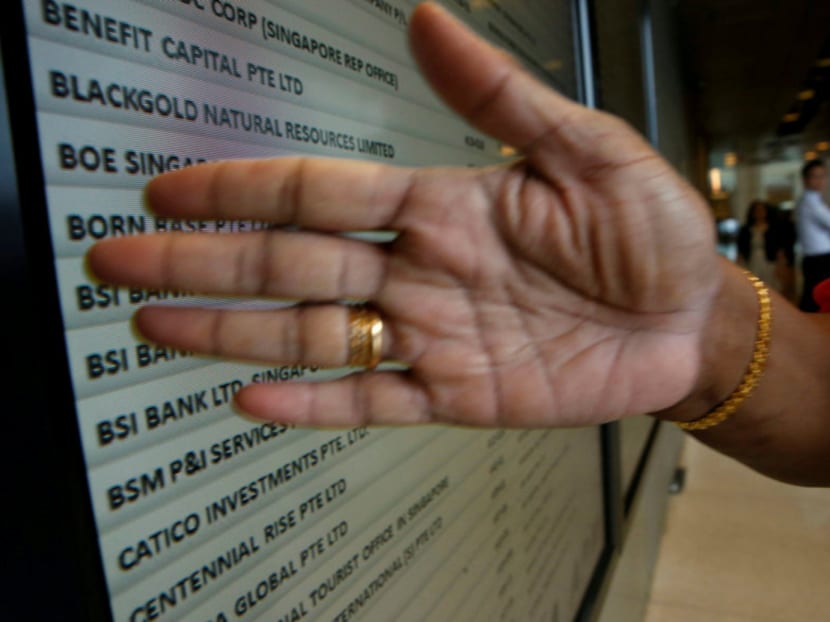
A security officer blocks a directory board showing Swiss bank BSI at their office building in Singapore May 24, 2016. Photo: Reuters

SINGAPORE — The Monetary Authority of Singapore’s (MAS) order to close down BSI Bank sends out a strong message to banks and financial institutions operating in the Republic that it has a zero-tolerance policy towards those abusing the financial ecosystem here, industry experts said yesterday.
MAS revoked BSI Bank’s merchant banking licence in Singapore for serious breaches of anti-money-laundering rules amid a global probe into the accounts of Malaysian state investment fund 1MDB. It also imposed fines on the lender amounting to S$13.3 million.
CIMB Private Bank economist Song Seng Wun said: “It is not an ordinary day for banks and financial institutions at the financial hub in the region. They have been reminded yet again, albeit most firmly in decades, that they need to put to action their anti-money-laundering obligations and that there is no respite for those not falling in line with the rules of the country.”
Mr Nizam Ismail, head of regulatory practices in Singapore and co-founder of compliance solutions at law firm RHTLaw TaylorWessing, said: “This will send a chilling message to bankers here, pushing them to ensure robust anti-money-laundering and counter-terrorism-financing strategies are at play, as otherwise the risk of losing their regulatory licences is now more pronounced. Worse of all, there is also the real threat of personal criminal liability.”
MAS is working with the Swiss authorities to ensure an orderly shutdown of BSI Bank’s operations in Singapore. While industry experts said there will be no big impact on BSI Bank’s clients in general, those found involved in illicit monetary transactions will be taken to task.
“Chances are rare that there would be any significant impact on BSI’s clients here or that anyone would be left in the lurch, as MAS would have sorted this out with BSI before making the announcement,” said Mr Nizam.
Veteran market watcher Mano Sabnani said the problems at BSI are not likely to be contagious.
“It is probably the main rotten egg and the entire basket is not necessarily contaminated. The ramifications as such will be well contained. But MAS will successfully extract from BSI details of its clients who are at fault and will go after them. After all, clients are the source of money,” he said.
In the past five years, rules surrounding tax reporting and anti-money-laundering have been tightened in Singapore and globally.
While this has resulted in increased costs in compliance and surveillance, Ms Tan Su Shan, the co-chair of MAS’ Private Banking Industry Group, said it is better for all industry players in the long run as standards are lifted across the board.
“For us in Asia, what is helpful is that the region is still growing and creating wealth, so business momentum remains positive. Banks who have the scale, knowledge, platform, talent and depth of relationships will continue to benefit from this trend of rising affluence and wealth creation,” said Ms Tan.
Singapore prides itself as a clean and trusted financial centre based on solid regulations. To continue to grow as a robust and sustainable financial hub, she said industry players must recognise that they play an important role to guard against illicit funds flows.
Stay in the know. Anytime. Anywhere.

Subscribe to our newsletter for the top features, insights and must reads delivered straight to your inbox.
By clicking subscribe, I agree for my personal data to be used to send me TODAY newsletters, promotional offers and for research and analysis.






