
Interest in residential property remains strong
Recently released data from the Urban Redevelopment Authority (URA) showed that 1,252 private residences were sold by developers in October, a 15-month high for monthly new home sales. In the first 10 months of this year, developers have already sold 6,908 units and the figure for the whole year is expected to exceed the 7,440 units sold last year. In addition, buyers picked up another 6,337 units in the resale market in the first three quarters of the year, a significant 24.7 per cent higher than the 5,081 units sold in the same period last year.
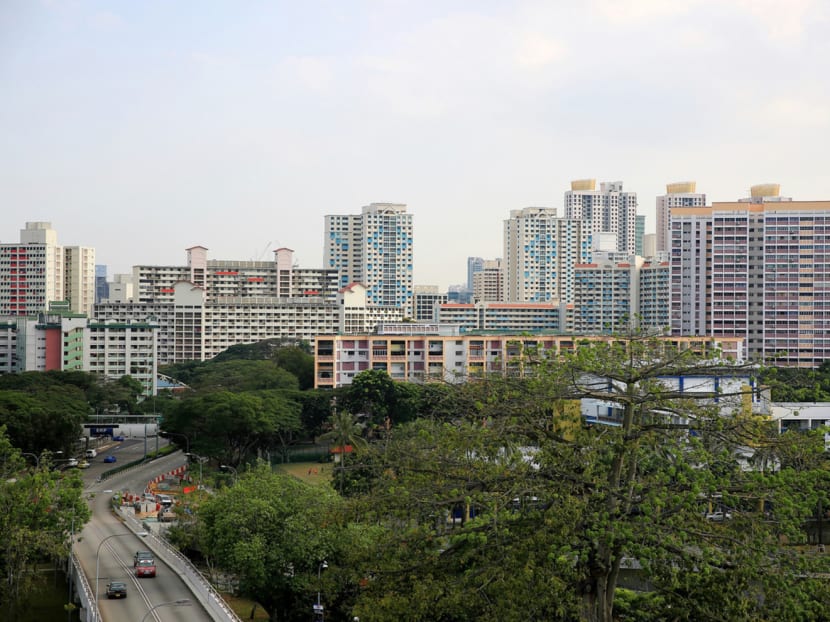
Lately, one- and two-bedroom units have made up the majority of units sold in land-scarce Singapore. TODAY file photo
Recently released data from the Urban Redevelopment Authority (URA) showed that 1,252 private residences were sold by developers in October, a 15-month high for monthly new home sales. In the first 10 months of this year, developers have already sold 6,908 units and the figure for the whole year is expected to exceed the 7,440 units sold last year. In addition, buyers picked up another 6,337 units in the resale market in the first three quarters of the year, a significant 24.7 per cent higher than the 5,081 units sold in the same period last year.
Evidently, more buyers are entering the market and committing to a property purchase. Why is this so? Much has been said about the housing market situation in Singapore.
Vacancy rates reached 8.9 per cent in the second quarter of 2016, a 16-year high, before decreasing slightly to 8.7 per cent in the third quarter. The number of unsold private residential units with sale licences as of the third quarter remained elevated at 15,575.
These indicators point to an oversupply situation, which could be bad for the property market.
However, thinking from the point of view of a buyer, this might be a good time to enter the market. Currently, there are many new projects in the market, providing buyers with a wide range of locations and products to choose from. In order to entice buyers, developers have been pricing their units very attractively. Even in the resale market, individual sellers have also priced their units reasonably so as to avoid leaving their property on the market for too long.
Lately, property investors have been driving up the sales volume at project launches, with one- and two-bedroom units making up the majority of units sold. For example, in the case of Parc Riviera and Queens Peak, both launched on the first weekend of November, 82 per cent and 90 per cent, respectively, of the units sold were those with one or two bedrooms.
In this period of economic uncertainty, property stands out as an investment option. Investment properties are not solely an income generating asset — owners can also occupy them. While there have been many reports about the difficult rental market now, buyers of properties under construction will only have to worry about that in three to four years’ time, when the property is completed. Market conditions could have improved by then.
Ups and downs are part and parcel of Singapore’s property market. While it is true that the market is currently experiencing its longest losing streak of 12 consecutive quarters, if we adopt a longer term perspective of 10 to 15 years, the fundamentals of Singapore’s economy are quite sound.
Despite the spate of negative economic news this year, Singapore remains the second most competitive economy in the world, according to The World Economic Forum Global Competitiveness Report, for the sixth year in a row. Singapore’s strong showing is attributed to its robust infrastructure, higher education and training, and goods market efficiency.
A recent survey of Asia-Pacific business leaders by PricewaterhouseCoopers also found that Singapore was one of their preferred destinations alongside countries such as the United States and China. In the local real estate market, several large quantum deals have been concluded with foreign entities, including the S$3.4 billion sale of Asia Square Tower 1 to Qatar’s sovereign wealth fund. This makes it the largest single tower real estate deal in the Asia Pacific.
Singapore, being a land-scarce gateway city, is still a major attraction to investors. Hence, many of these investors have flocked to the property market to park their money. Consequently, concerns have arisen over whether there is an issue where many would be under pressure to sell when interest rates increase. However, given that banks here are required to adopt stringent loan approval rules, this is unlikely to happen.
For investors purchasing a second residential property, they are only allowed a loan quantum of 50 per cent of the purchase price, resulting in a much lower loan amount than that for a first-time homebuyer. The Total Debt Servicing Ratio (TDSR) of 60 per cent also has to be taken into consideration. Finally, when evaluating the loan amount, an interest rate of 3.5 per cent is used under the TDSR framework, and this is much higher than current actual interest rates charged by the lending banks. As a result, these requirements provide a sizable capital buffer and investors should not be under pressure to sell.
So, if you qualify for a second property loan and have sufficient capital to afford a second property, why not take the opportunity to invest in one?
ABOUT THE AUTHORS: Eugene Lim, Key Executive Officer and Seah Yao Hui is Assistant Manager, Research at ERA Realty Network
Stay in the know. Anytime. Anywhere.

Subscribe to our newsletter for the top features, insights and must reads delivered straight to your inbox.
By clicking subscribe, I agree for my personal data to be used to send me TODAY newsletters, promotional offers and for research and analysis.






