
Singapore is ‘world’s costliest city to live in’
SINGAPORE — The Republic has become the world’s most expensive city to live in, a report from the Economist Intelligence Unit (EIU) showed yesterday, but local economists said Singapore will remain attractive for foreign businesses and expatriates with its good governance, robust infrastructure and quality workforce.
SINGAPORE — The Republic has become the world’s most expensive city to live in, a report from the Economist Intelligence Unit (EIU) showed yesterday, but local economists said Singapore will remain attractive for foreign businesses and expatriates with its good governance, robust infrastructure and quality workforce.
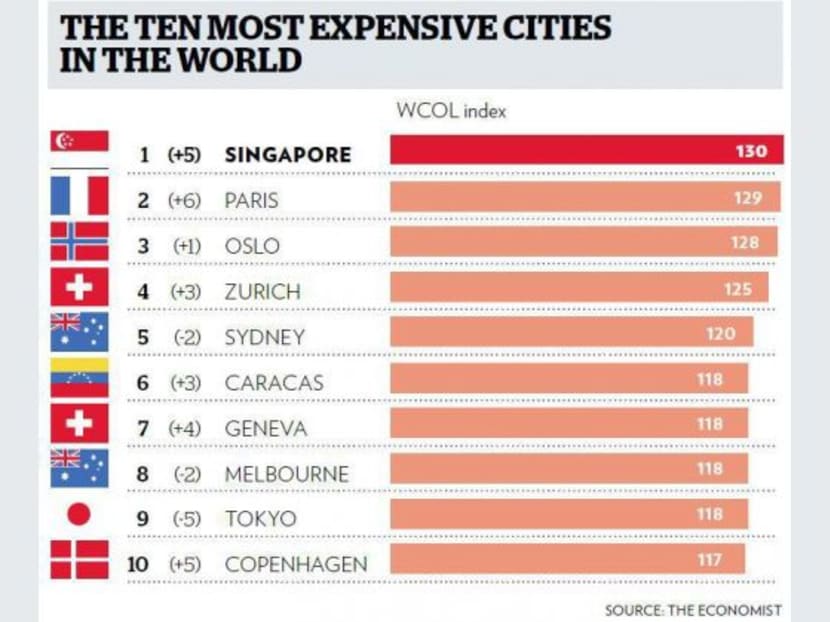
In the latest EIU report, Worldwide Cost of Living, Singapore jumped five spots from last year to go to the top of a list of 131 cities, ahead of Paris in second place and Oslo in third, while Tokyo — last year’s first — dropped to sixth due to a sharply weaker yen.
This marks a huge leap from a decade ago when the Republic ranked 18th in the same survey. But the EIU described Singapore’s rise as “steady rather than spectacular”, due partly to the 40 per cent appreciation in the local currency in 10 years.
In response to TODAY’s queries on the weightage of the strength of the Singapore dollar and other factors in calculating its index, the EIU only said currency appreciation does play a big part, although Singapore is also structurally expensive.
The twice-yearly survey is intended as a guide for human resource managers to calculate compensation packages for expatriates and business travellers. Researchers compare more than 400 prices across 160 products and services such as food, clothing, home rents, transport, utility bills and domestic help. It is understood that some luxury items are also included. The researchers survey a range of stores from supermarkets to high-priced specialty outlets.
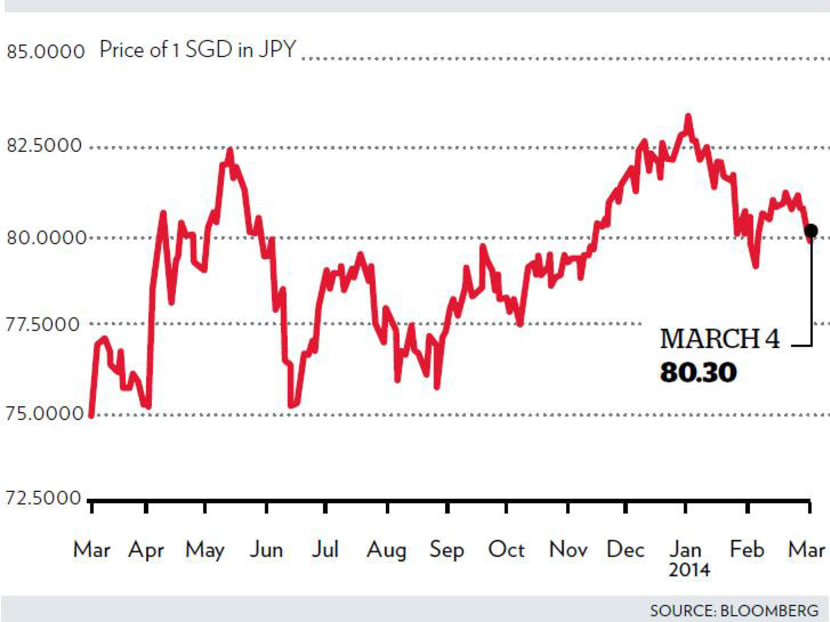
“One of the key reasons Singapore’s ranking keeps rising is the weaker European and Japanese currencies in recent years, while the Singapore dollar continues to appreciate,” UOB economist Francis Tan said.
The Singapore dollar rose by almost 2.4 per cent against the US dollar in the past three years, during which the yen fell 27 per cent against the greenback, CIMB economist Song Seng Wun noted.
Aside from the effect of currency appreciation, the cost of living in Singapore has also been pushed up by high private transport costs and utility charges, the EIU said in its report.
“Transport costs in Singapore are almost three times higher than in New York. In addition, as a city-state with very few natural resources to speak of, Singapore is reliant on other countries for energy and water supplies, making it the third most expensive destination for utility costs,” it said.
Mr Song said: “A reputation as the world’s most expensive city might be alarming for some expatriates and multinational companies wanting to come here. But on balance, we are one of the world’s most successful economies and continue to be an attractive base for businesses to tap Asia’s growth.”
Other economists shared this view. DBS economist Irvin Seah underlined Singapore’s status as the premier place for business investment despite persistent cost concerns, saying: “Investors do not just look at costs for their investment decision. We still have other competitive advantages — a good legislative framework, a competitive labour force and world-class infrastructure.”
Even as Singapore is ranked as the costliest, overall inflation here has slowed, with the consumer price index rising 2.4 per cent last year, down from 4.6 per cent in 2012, in part because changes to the Certificate of Entitlement system helped cool down premiums. As a result, private transport costs fell by 3.5 per cent in January, extending the 2.8 per cent decline in December.
And with the Government giving out subsidies to strengthen the social safety net for Singaporeans, “the real cost of living here is not nearly as high as suggested in the EIU survey”, Mr Tan said.
However, Mr Seah warned that rising labour costs — which the EIU survey does not consider — will be a jutting issue for consumers and companies based here. “The rising labour cost — not only due to wage increases but also Government levies on the foreign workforce — is actually the biggest driver of high living cost in Singapore as it gets passed on to consumers eventually,” he said. “Singapore still has its own allure (for foreign companies and expatriates). But this continued increase in cost is definitely not helping,” Mr Seah added.
Stay in the know. Anytime. Anywhere.

Subscribe to our newsletter for the top features, insights and must reads delivered straight to your inbox.
By clicking subscribe, I agree for my personal data to be used to send me TODAY newsletters, promotional offers and for research and analysis.






