
Emirates tells cabin crew to remove Taiwan flag pins after Chinese government urges one-China compliance
HONG KONG — Emirates ordered its Taiwanese cabin crew to remove the island’s flag from their uniforms on Tuesday (May 30), as the Middle East airline signalled it was willing to support Beijing’s one-China policy, sparking backlash from Taiwanese flight attendants.
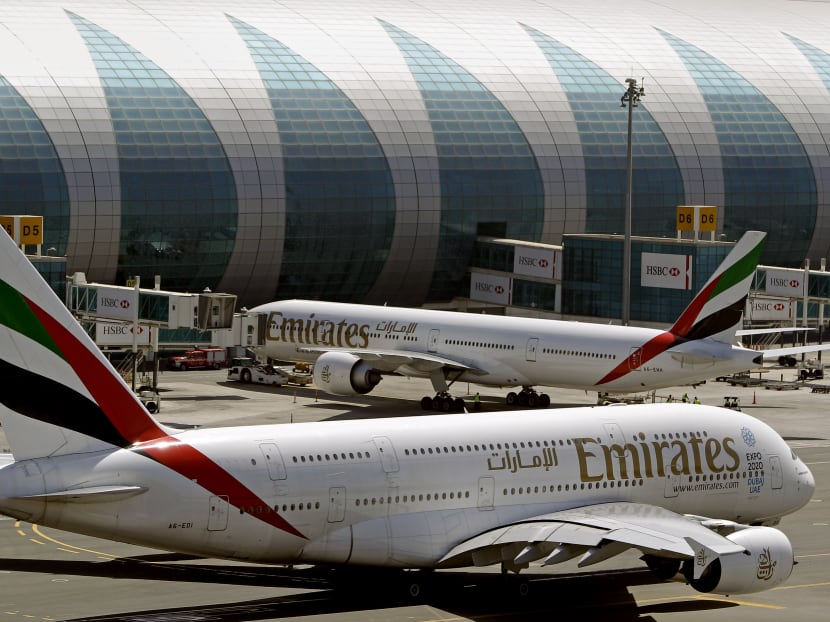
AP file photo
HONG KONG — Emirates ordered its Taiwanese cabin crew to remove the island’s flag from their uniforms on Tuesday (May 30), as the Middle East airline signalled it was willing to support Beijing’s one-China policy, sparking backlash from Taiwanese flight attendants.
In an emailed instruction to staff, the Dubai-based airline ordered cabin crew from Taiwan to replace the island’s flag pin with the Chinese national flag, but soon after performed a partial u-turn, granting Taiwanese crew members permission to not wear a flag pin.
The Chinese government “instructed” Emirates to conform to the policy, according to an email sent by one of the airline’s managers.
The one-China policy recognises that Taiwan is part of China, and Beijing has indicated it regards Taiwan as a renegade province.
The request by the airline to remove a flag pin echoes similar demands made by the same airline last year, when it made Hong Kong cabin crew wear the Chinese national flag alongside the Bauhinia flag.
For a global airline with a vast network of destinations and a mix of passengers from all over the world, the flag pin is used traditionally to highlight the cabin crew’s origin and language capabilities to the travelling public.
However, just hours after the instruction was issued, Emirates altered its demand by granting flight attendants permission to not wear a flag.
In an illuminating email, written by Nicola Parker, the airline’s uniform standards and development manager, she said: “We have been instructed by the Chinese government that with immediate effect, Emirates airline cabin crew are to follow the one-China policy.
“This means you must remove the Taiwanese flag from your service waistcoat and replace it with the Chinese flag.”
The airline underscored the change in policy and urged compliance: “This must be followed by all Taiwanese crew without exception.”
No sooner had the email been sent, the reaction from cabin crew was strong, and the policy was leaked online, risking further backlash from the public.
“After reviewing your responses to the email below the original request for you to wear a Chinese flag was incorrect and inappropriate,” Emirates’ Parker responded.
Cabin crew have been ordered not to wear the Taiwanese flag pins “until further notice”, giving a waiver to crew from the island to wear a flag pin.
“I do apologise for any upset that I may have caused,” Parker added at the end of the email, signalling a strong and swift reaction from flight attendants.
For airlines seeking to do business on the mainland, the wider goal is securing permission to launch more flights between China and their home countries.
Emirates is seeking more take-off and landing slots at Chinese airports and has a desire to fly to more destinations in the mainland and more frequently. The Dubai carrier operates 39 flights a week to Beijing, Shanghai, Guangzhou, Zhengzhou and Yinchuan, and in 2015 carried 1.3 million passengers, according to the airline.
The airline has also stated previously that it flies to 54 cities in 30 of the 65 countries identified along the Belt and Road Initiative.
Emirates has been contacted for comment. SOUTH CHINA MORNING POST
Stay in the know. Anytime. Anywhere.

Subscribe to our newsletter for the top features, insights and must reads delivered straight to your inbox.
By clicking subscribe, I agree for my personal data to be used to send me TODAY newsletters, promotional offers and for research and analysis.






