
Wasteful HK seeks to curb water usage
HONG KONG — While cities such as Singapore and London have successfully cut water consumption, water use in Hong Kong has risen 17 per cent per person over the past two decades.
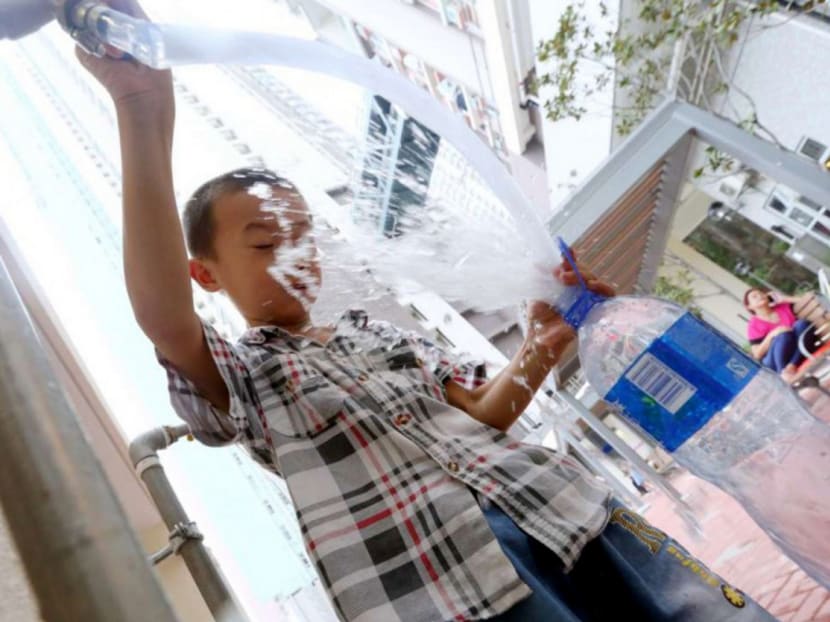
It is estimated that each Hongkonger has a water footprint of about 1,700 cubic metres per year — half of which is attributable to meat consumption. Photo: SCMP
HONG KONG — While cities such as Singapore and London have successfully cut water consumption, water use in Hong Kong has risen 17 per cent per person over the past two decades.
And that is not the worst of it.
Considering that Hongkongers import almost all their food, resource management experts warn that the impact of the city’s indirect consumption of water is far greater.
Last year, for example, despite the worst droughts ever witnessed in Brazil, meat-crazed Hong Kong still imported more than 15 million kilogrammes of frozen Brazilian beef in a single month — February — or about half of the city’s total imports of the meat.
As a major food importer, the environmental impact of the food Hongkongers consume often goes unseen, concealing the fact that water footprints are global, and meat consumption is a huge driver of them.
“Hong Kong is dependent on water resources to a much greater extent than just drinking water coming in through a pipeline from mainland China, and people don’t really consider that,” said Mr Arjen Hoekstra, a professor in water management at the University of Twente in the Netherlands.
THE water footprint
It is estimated that each Hongkonger has a water footprint of about 1,700 cubic metres per year — half of which is attributable to meat consumption, and just three to four per cent to domestic uses such as drinking or bathing, according to Professor Hoekstra.
That is about 20 per cent higher than the 1,400-cubic-metre world average. For some perspective, an Olympic-sized swimming pool measures about 2,500 cubic metres.
The University of Hong Kong’s (HKU) Jockey Club Water Initiative on Sustainability and Engagement is currently creating a water footprint calculator that aims to raise awareness of the subject. Designed as a mobile app, HKU’s footprint calculator will include 90 different restaurant dishes and allow users to find out a certain food item’s water footprint.
“It’s not really a scientific project, but more of a public awareness project,” said project co-investigator Dr Frederick Lee Yok-shiu. “It will help Hongkongers understand how their consumption relates to water resources.”
Supply chain
Prof Hoekstra, a visiting professor at the National University of Singapore’s Lee Kuan Yew School of Public Policy, was one of the first scientists to conceptualise the idea of a “water footprint”, and how usage is embedded in international trade and supply chains.
Such assessments measure the amount of water used to produce goods or services — from the raw materials to the retail shelf.
A 1kg piece of beef, for example, has a water footprint of about 15,000 litres, the majority of which is used to produce cow feed.
“The amount of virtual water flow from the rest of mainland China and other parts of the world is … hundreds of times bigger. A lot of water is being used to produce the commodities and food for Hong Kong and in many places (it comes from) it’s not sustainable,” he said.
“Worldwide, 30 per cent of a water footprint is used for animal products. In more developed countries, it’s more like 40 per cent,” he said. One quarter of the standard Chinese water footprint is made up of cereals, such as rice.
Yet Hong Kong cannot seem to see the forest for the trees, according to Dr Lee, who said the city had failed to comprehend the true impact of its resource consumption beyond its own borders.
Even domestically, Hong Kong’s water use is high. The 220 litres of water consumed per capita each year surpasses the global average of 170 litres.
change in diet
Geographers believe firm conservation policies are needed to ensure long-term water security.
Dr Lee, who also heads HKU’s Water Governance Research Programme, said: “If Hong Kong is to reduce water consumption and contribute to regional and global sustainability, it’s important to raise awareness of water as not just a commodity, but a valuable global natural resource.”
Prof Hoekstra said governments should introduce a cap for product water footprints and labelling and benchmarking for transparency. He added: “Different diets also help ... eating less meat will solve part of the problem.”
A spokesman for the Water Supplies Department said the concept of “virtual water” had been included in its conservation campaigns and exhibitions. Sustainability and resilience concepts would also be incorporated in the department’s review of its Total Water Management strategy. SOUTH CHINA MORNING POST
Stay in the know. Anytime. Anywhere.

Subscribe to our newsletter for the top features, insights and must reads delivered straight to your inbox.
By clicking subscribe, I agree for my personal data to be used to send me TODAY newsletters, promotional offers and for research and analysis.






