
Violent clash erupts as Sikhs mark storming of Golden Temple
NEW DELHI — Sikhs wielding swords and sticks clashed inside the compound of their religion’s holiest shrine yesterday, the 30th anniversary of a controversial raid by Indian security forces that flushed out separatist militants holed up in the temple.
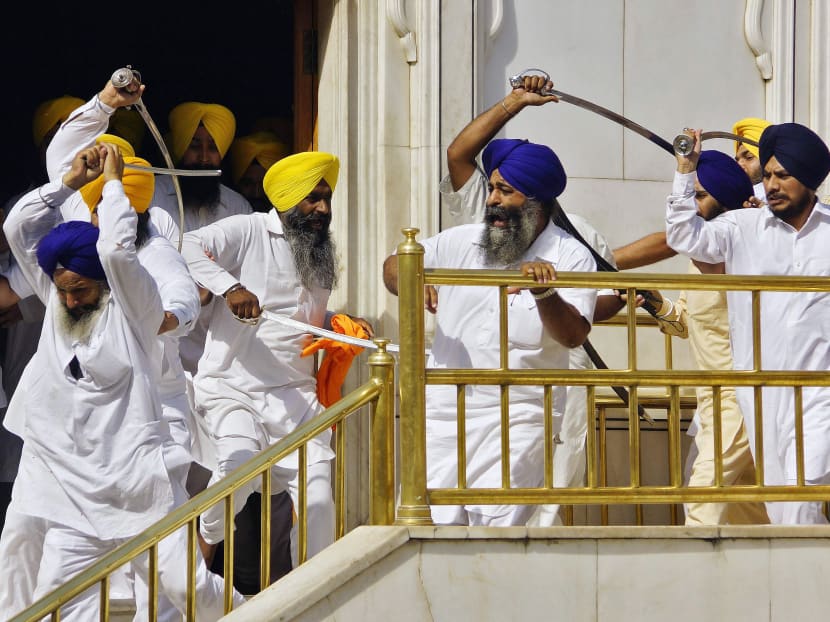
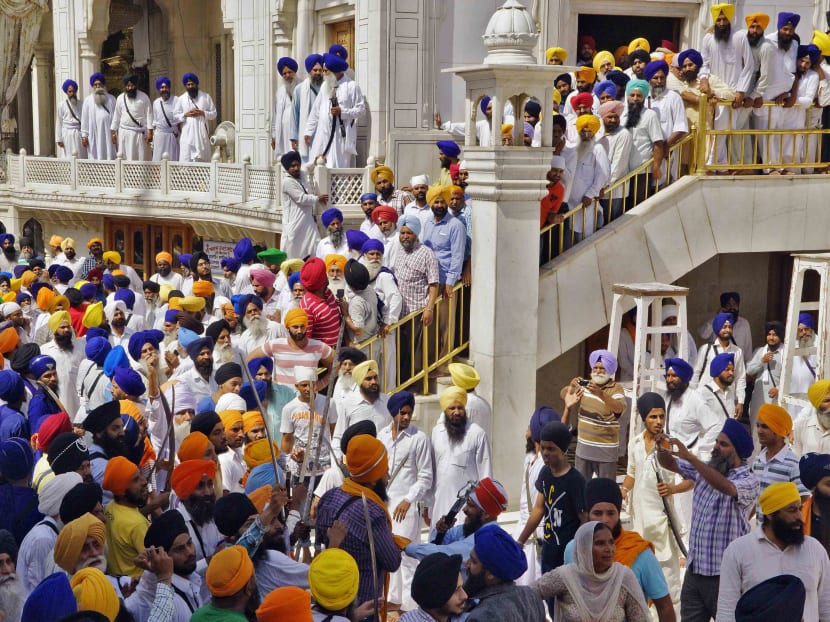
NEW DELHI — Sikhs wielding swords and sticks clashed inside the compound of their religion’s holiest shrine yesterday, the 30th anniversary of a controversial raid by Indian security forces that flushed out separatist militants holed up in the temple.
Televisions showed dramatic footage of rival groups of Sikhs, sporting blue and saffron turbans, rushing out of the Golden Temple in Amritsar in northern India, brandishing their swords against each other in a violent confrontation in which at least 10 people were injured.
The clash occurred during a ceremony marking the anniversary of the storming of the shrine by the Indian army in June 1984, said Ms Kiran Jyoti Kaur, a spokeswoman for the Golden Temple management.
Hundreds of Sikhs had gathered at the Golden Temple in Punjab state to pay their respects.
Ms Kaur said supporters of the Shiromani Akali Dal (Amritsar), a splinter group of the governing Shiromani Akali Dal (SAD) party, turned violent and were chased away by temple guards. They were shouting slogans for an independent Sikh homeland, she added.
Reports said the fight was over who would speak first at the ceremony and that a scuffle had broken out over a microphone.
Mr Naresh Gujral, a leader of the governing SAD in Punjab state, condemned the clash.
The CNN-IBN television channel said the police detained nearly 50 people and that many shops closed because of the tension.
“The violent clashes will be investigated and action will be taken against those who are accused,” said Mr Giani Gurbachan Singh, a leader of the elected body that manages Sikh temples.
The 1984 Indian army operation to establish control over the Golden Temple, Operation Blue Star, was ordered by then-Prime Minister Indira Gandhi. It was one of the most contentious episodes in the country’s battle against Sikh separatists in the 1980s.
Sikh militants had holed up in the temple for months. The army botched an attempt to clear them from the holy site, badly underestimating the resistance at first before being drawn into a three-day assault.
The attack outraged Sikhs and led to a catastrophic breakdown in communal relations.
When Gandhi was assassinated by her Sikh guards in a revenge attack a few months later, the country erupted. Mobs overran trains and went house-to-house across northern India, beating and killing thousands of Sikhs, hacking many to death and burning others alive. The insurgency was stamped out in the late 1980s.
India has suffered an upsurge of violence in various forms since a general election last month won by Prime Minister Narendra Modi’s Bharatiya Janata Party, a Hindu nationalist party.
In the most heinous crime, two girls were raped and hanged in a village in the northern state of Uttar Pradesh. Three men have been arrested over the killing, along with two policemen suspected of helping to cover up the crime.
This week, a lynch mob in the western city of Pune killed a Muslim information technology worker.
Seventeen men with links to a little-known radical Hindu group have been arrested over the killing, apparently provoked by a controversial Facebook post.
Mr Modi, who was sworn in on May 26, has not commented on any of the episodes of violence. AGENCIES
Stay in the know. Anytime. Anywhere.

Subscribe to our newsletter for the top features, insights and must reads delivered straight to your inbox.
By clicking subscribe, I agree for my personal data to be used to send me TODAY newsletters, promotional offers and for research and analysis.






