
How discounts affect enjoyment
The festive year-end season never fails to bring out throngs of shoppers as retailers compete for consumers’ cash using price discounts and a myriad of promotion strategies.
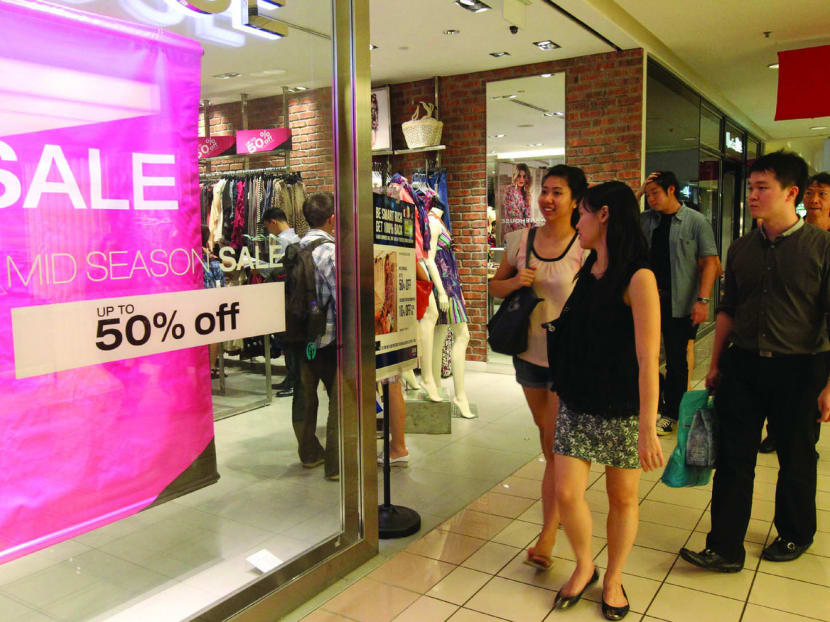
TODAY file photo

The festive year-end season never fails to bring out throngs of shoppers as retailers compete for consumers’ cash using price discounts and a myriad of promotion strategies.
Alibaba’s Nov 11 Singles Day perhaps marked the start of the festive sales period. This year, it saw a hefty 60 per cent increase in sales to US$14.3 billion (S$20.1 billion). This was followed by Black Friday and Cyber Monday, when Amazon also chalked up its best sales days in the calendar year.
Discounts are a common sight in retail. To shoppers, such promotions translate into real savings, guide buying decisions, encourage the trial of new products and make shoppers feel good. To retailers, discounts drive demand, albeit in the short term, and encourage brand switching.
However, discounts can also have negative consequences. They can make shoppers more price sensitive or have lower price expectations, making it difficult for firms to charge higher prices. As consumers, we often find ourselves buying products because they are on sale. Sometimes, when we stash these purchases and eventually use them, the discounted items do not seem such a great buy after all.
Would we have felt any differently if we had used the items right away after buying them? Or if we had bought the items at full price and used them after a delay?
Together with Ms Claire Tsai at the University of Toronto, we conducted four studies involving 638 shoppers who buy a range of products — music, chocolate truffles and orange juice. One of the studies also involved online purchases. In these studies, shoppers were divided into those who were offered a discount or not, and those who used the product immediately or delayed its use after payment.
The quality of the product was maintained so as not to influence the consumption experience.
The findings were similar. We found that price promotions can be a double-edged sword.
While price discounts can elevate shoppers’ mood by making the consumption experience pleasant, paying a lower price may also dampen consumption enjoyment.
It turns out that whether shoppers ended up happier or feeling more moody depends on when the discounted product is consumed — right away after payment, or after a delay.
While it is enjoyable to consume a discounted product or service right after payment, the same discount may reduce the good feelings if the product is used after a few days.
In one study, we had people buy chocolate truffles at either the regular price of US$1 or a discount of 50 cents. Half of them ate the chocolate right away, while the rest waited for a week before consuming it.
We observed that while discounts made people happier when the product was consumed immediately, it decreased enjoyment when consumption was delayed by a week.
Moreover, our results showed that paying only 50 cents while thinking that this is the regular price (hence not perceiving it as a price reduction, and thus not psychologically enjoying a discount) did not produce the same effect. This indicates that the phenomenon is due to perceived discounts and not absolute paid prices.
Why would price promotions affect enjoyment differently depending on when the purchased product is consumed?
HOW PRICE AND USAGE AFFECT ENJOYMENT
When people buy a discounted product, they immediately experience joy that positively affects their experience when using the product.
But this initial joy dissipates over time.
Hence, when people use the discounted product much later after the purchase, they become less motivated to justify why they had bought the item in the first place. This reduced motivation, in turn, makes them take less notice of the pleasure that accompanies product use.
In contrast, people who paid the full price but used a product only after a delay would have enjoyed using it much more even though they might have felt bad paying for it.
This increased enjoyment arises from the greater motivation to psychologically recover the cost of buying the product at full price and, hence, greater attention is paid to the enjoyment with product use.
Our research provides new insights into the mixed effects of promotions on sales and loyalty.
Discounts may induce purchase and consumption in the short run, but can have negative long-term effects on customer satisfaction and brand loyalty.
Price promotions can induce short-term sales and enhance consumption experience if the products are consumed immediately after purchase.
But for products consumed later, price promotions reduce enjoyment because less attention was paid to enjoyment during consumption. This negative effect may reduce repeat purchase and brand loyalty in the long run.
So, while Santa is making a list and checking it twice, shoppers can take a leaf from the jolly man in red and white: When you have no immediate use for a product, think twice before buying it just because it is on sale.
Succumbing to such temptation may not give shoppers a joyful feeling after all.
ABOUT THE WRITER:
Leonard Lee is Associate Professor of Marketing and Dean’s Chair at the National University of Singapore (NUS) Business School.
Stay in the know. Anytime. Anywhere.

Subscribe to our newsletter for the top features, insights and must reads delivered straight to your inbox.
By clicking subscribe, I agree for my personal data to be used to send me TODAY newsletters, promotional offers and for research and analysis.






