
The value of sports sponsorship in S’pore
Taking place from tomorrow until June 16, the 28th South-east Asian (SEA) Games will attract a potential audience of 600 million fans from the region’s diverse countries and cultures, all with a shared passion for sports and competition.
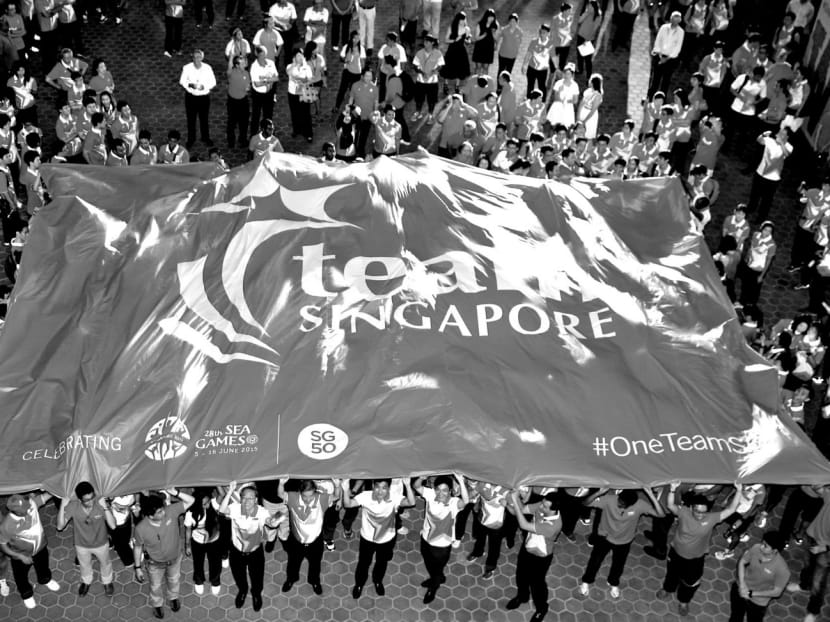
Sporting events are considered an influential channel for
reaching and engaging the masses. TODAY file photo

Taking place from tomorrow until June 16, the 28th South-east Asian (SEA) Games will attract a potential audience of 600 million fans from the region’s diverse countries and cultures, all with a shared passion for sports and competition.
While the SEA Games and other sporting events draw attention primarily to the athletes and the competition, they have evolved into mega-event extravaganzas that extend beyond the boundaries of sports.
Many domestic and global businesses, such as Singapore Airlines, Singtel and Deloitte, see enormous potential for sponsorship in these events in creating commercial and social value.
The total amount of sponsorship for the current SEA Games alone has crossed S$70 million. Although sports sponsorship requires a significant financial investment, it may help to raise the profile and visibility of a brand by associating it with the success and achievement of the event.
Businesses are increasingly viewing sports sponsorship as an effective long-term strategy to demonstrate their corporate values and social responsibilities. So how can businesses get the best bang for their buck in sports sponsorships?
BUILDING BRAND EQUITY
Sporting events are considered an influential channel for reaching and engaging the masses. Likewise, they may serve as an ideal platform to show how a brand is contributing positively towards social progress.
Some of the value of sponsorships may be implicit and long term, such as consumers’ emotional response and attachment to the sponsoring corporation and brands, particularly where a firm is making a meaningful contribution to individuals and communities through its sponsorship.
More broadly, corporate sponsorship has helped sporting events in Singapore achieve a level of scale and sophistication that would not otherwise be possible, thereby enhancing the overall experience for athletes, officials and fans, while also bolstering Singapore’s position as a leading international sports hub.
A study in the United States that examined five years of sponsorship spending data and business performance indicators of more than 50 US-based firms found that companies that consistently invest in sponsorship outperform market averages, and those that spend at an above-average level outperform those that spend below average.
Indeed, sports sponsorship has become a mainstay in strategic marketing communications today.
Sporting events in Singapore provide an opportunity for sponsors to develop and enhance their own brand identity by utilising the emotional values of the event such as integrity, determination, commitment to excellence and friendship, as powerful drivers of brand relevance, consideration and loyalty.
For more mature brands that already enjoy high brand awareness, the value of sponsorships may lie in strengthening consumers’ emotional connection with the brands by associating their brand with the events in a way that attracts, inspires and resonates with customers.
The events also offer a platform for sponsors to engage with consumers, helping to create loyalty that ultimately leads to improved financial performance.
CREATING SOCIAL VALUE FROM CORPORATE SPONSORSHIPS
Nonetheless, the potential value of sports sponsorships can go beyond profits and product preferences. Take Coca-Cola, which spends more on sports marketing than any other company in the world, and has been a partner of the Olympic Games since 1928. Apart from the usual commercial measures to evaluate the success of its significant investment in sports event sponsorship, Coca-Cola looks at the social value that sponsorship can create for people and communities.
At the 2012 Olympic Games, Coca-Cola Enterprises opened a new £15 million (S$31 million) joint venture recycling facility with ECO Plastics and more than 10.5 million Coca-Cola plastic bottles were recycled from the event venues.
Within just six weeks of disposal, these recycled bottles are returned to shelves as part of new bottles, saving an estimated 310 tonnes of carbon. Alongside these environmental initiatives, Coca-Cola used London 2012 to inspire people to develop more active and healthy lifestyles.
In Singapore, the increasingly sophisticated and socially-conscious consumer may respond more positively towards a brand if he or she feels that the brand is improving lives and communities.
Conversely, businesses are also becoming aware of the increasing importance of creating social value through their day-to-day commercial activities as they realise the need to engage with consumers in a powerful, emotional way that gives meaning to purchasing decisions and that strengthens loyalty.
As such, it is economically advantageous and even imperative for firms to consider the potential of sports sponsorship for creating social value for current and future generations in Singapore, such as contributing towards environmental protection, conservation of resources, helping the disadvantaged by improving their health and/or education, and facilitating social inclusion.
However, sponsors have to select a purpose or cause that has synergy with the company’s core values and product offerings.
Sports events can be a powerful catalyst for change, and leading sports sponsors are in a unique position to drive shifts in behaviour and views while leaving a lasting legacy beyond the sporting event.
For example, Hublot used its sponsorship in Euro 2008 to build awareness of its values in an original way. The watch company renounced the visibility it could have had in the football stadiums for the benefit of a foundation fighting against racism.
Instead, Hublot made way for the message “no to racism”, which was visible in large letters in the corners of the stadiums. As people discovered what Hublot had done, they learned more about the brand and its values and ultimately, Hublot sales grew.
People value brands that create genuine social value, and sports events such as the SEA Games represent an ideal opportunity for businesses to have a positive impact on Singapore’s communities by investing in worthwhile social projects.
If a brand uses its sponsorship in a meaningful way, delivers on its promises and adds value to the overall experience of the event for athletes, officials and fans, then sponsorship can generate even more substantial business benefits.
The relationship between sports and corporate social responsibility is growing. Sponsors that place social value at the centre of their sports sponsorship strategies will be well positioned to succeed in the long term, while creating impactful, sustainable change.
ABOUT THE AUTHOR:
Dr Leonard Lee is Associate Professor of Marketing and Dean’s Chair at National University of Singapore Business School.
Stay in the know. Anytime. Anywhere.

Subscribe to our newsletter for the top features, insights and must reads delivered straight to your inbox.
By clicking subscribe, I agree for my personal data to be used to send me TODAY newsletters, promotional offers and for research and analysis.






