
Why we may have to live with Zika
Unlike Ebola, and maybe even Mers CoV or H7N9, it always seemed to be a question of when, not if, a Zika outbreak would occur in Singapore. So the arrival of the Zika virus here did not come as a surprise. However, the speed at which it appears to have taken hold has caught many people off-guard.
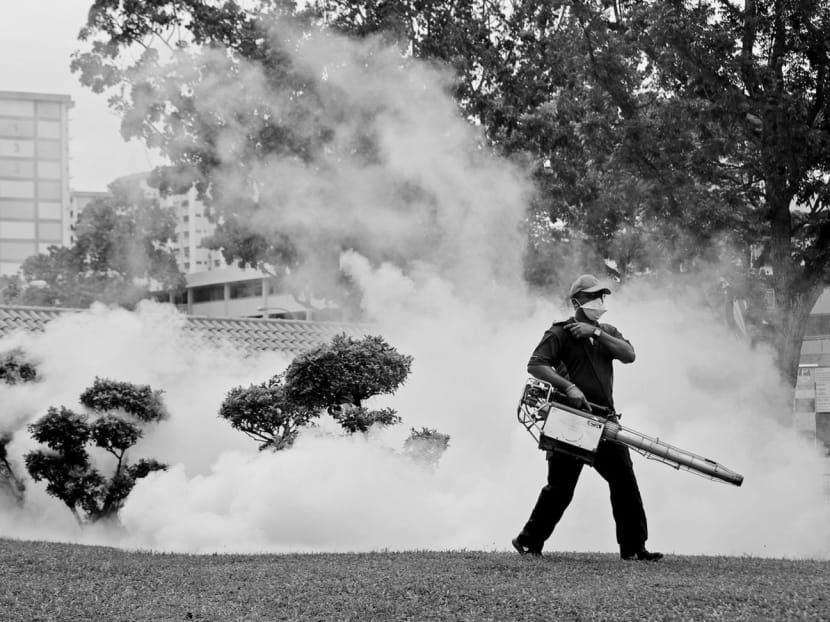
With clusters emerging in different parts of Singapore, there is little hope of stamping out the Zika virus. Photo: AP

Unlike Ebola, and maybe even Mers CoV or H7N9, it always seemed to be a question of when, not if, a Zika outbreak would occur in Singapore. So the arrival of the Zika virus here did not come as a surprise. However, the speed at which it appears to have taken hold has caught many people off-guard.
While much is still unknown about this virus, several factors make Singapore an ideal habitat for the Zika virus: Geography, climate, population density, urbanisation, an abundance of vectors — in this case mosquitoes — and a lack of previous exposure to the virus, known as herd immunity.
Part of the fast rise in numbers is also due to the resources made available to detect new cases. For example, fast and accurate testing, prompt access to healthcare, as well as effective community outreach and education programmes.
With clusters emerging in different parts of Singapore, there is little hope of stamping out the disease. The most effective way to achieve this would be to exterminate the Aedes mosquito in Singapore, something that has not yet been possible despite many efforts over the years in the fight against dengue.
With the continued presence of mosquitoes, any interruption in Zika transmission may only be a transient victory, as the virus could easily be re-introduced from overseas.
It is more likely that we will have to learn to live with the virus. This could be in one of three ways.
One, it could become as wide-spread as dengue. As the resident population in Singapore develops natural immunity against Zika, the number of cases would then fluctuate, much as it does with dengue.
Two, the outbreak might peak in a few weeks or months and then peter out, similar to the outbreak on the island of Yap. The western Pacific island state, which has a population of just over 11,000, saw the first large-scale outbreak of Zika in humans.
By the end of the outbreak in 2007, some 73 per cent of Yap’s residents over the age of three had been infected with the Zika virus. Although that number is staggering, there were no deaths, hospitalisations or neurological complications reported. The first signs of Zika’s deadly side emerged during an outbreak in French Polynesia in 2013-14, where a possible link to birth defects and severe neurological complications was first observed.
Thirdly, and this scenario is much more likely, the current outbreak runs its course and returns only sporadically, as is the case with chikungunya, another mosquito-borne disease.
The first case of locally transmitted chikungunya was reported in 2008, with the disease eventually affecting more than 1,000 people over the course of the outbreak, which lasted into 2009. The National Environment Agency successfully broke the chain of transmission at the time by eradicating the outdoor breeding grounds favoured by the Aedes albopictus mosquitoes that were responsible for spreading this particular variant of chikungunya. Since then, there has only been one further significant outbreak of chikungunya, which took place in 2013.
BATTLE ON THE MEDICAL FRONT
Whichever course the Zika outbreak takes in the end, there is an immediate need for effective preventive strategies, new treatments and, ideally, a vaccine to help the people who are affected.
Key to any containment strategy is rapid detection, and Singapore scientists have already developed a new diagnostic kit that can test for dengue, Zika and chikungunya at the same time. Alongside other diagnostic technologies developed, we should have a sensitive and specific rapid diagnostic kit soon.
In the United States, after screening more than 6,000 currently available drugs, researchers have found about a dozen that could be effective against Zika. While this offers some hope, it is unlikely that these treatments will be suitable for pregnant women, for whom safety data is rarely available.
In addition, as the symptoms of infection are often short or even entirely absent, getting treatment to those who are infected will be a challenge, particularly for less-developed countries.
At the same time, scientists at Nanyang Technological University’s Lee Kong Chian School of Medicine, along with several other groups, are studying the molecular biology of the virus. Working with scientists from the Agency for Science Technology and Research’s (A*Star) Experimental Therapeutic Centre, one interesting discovery that has emerged from their work is the identification of unique features of Zika viral proteins.
The researchers are focusing on one specific protein that is essential for the virus to replicate itself. Because this protein exists only in the virus, it is an ideal target for new drugs, with the potential for such treatments to be highly effective in stopping the virus.
With results from sequencing of the Zika virus genome from the outbreak in Singapore coming in, these efforts will receive much-needed information.
Ultimately, though, the best strategy in combatting infectious diseases is vaccine development. A first small-scale clinical trial testing the safety and efficacy of the first vaccine against Zika has just started in Puerto Rico. The vaccine, which is developed by Inovio Pharmaceuticals, contains a synthetic DNA fragment similar to part of the virus. Even if initially deemed successful, larger-scale clinical trials to confirm safety and efficacy may take years to complete.
Singapore’s management of the outbreak has been praised by the World Health Organisation as a textbook response. But there is room for further improvements to our safeguards against emerging infections. Existing virus-surveillance programmes that provide early warnings of new outbreaks should be reviewed for possible improvements. Pre-planning to ensure diagnostic capabilities can easily be adapted to detect new infectious diseases is another.
In the case of vector-borne diseases, continued vigilance within the community and an ability to rapidly deploy the most effective control measures are key prongs to stem the tide. On this front, the results of NEA’s Wolbachia-carrying Aedes mosquito trial-release programme could prove instructive.
Wolbachia bacteria cause mosquitoes and other insects to become sterile, and by releasing infected mosquitoes it is hoped that over time this will reduce the size of the mosquito population as eggs that result from mating with a Wolbachia-infected mosquito do not hatch.
Furthermore, by introducing only male Wolbachia-infected mosquitoes, no risk of infection is posed to humans as the males do not bite.
This, together with other control strategies, would nullify the threat of not only the Zika virus, but also other mosquito-borne diseases.
While total eradication of these diseases may not be possible, it will buy scientists precious time to work on an effective and safe vaccine.
ABOUT THE AUTHOR:
Annelies Wilder-Smith is Professor of Infectious Diseases at the Lee Kong Chian School of Medicine, Nanyang Technological University.
Stay in the know. Anytime. Anywhere.

Subscribe to our newsletter for the top features, insights and must reads delivered straight to your inbox.
By clicking subscribe, I agree for my personal data to be used to send me TODAY newsletters, promotional offers and for research and analysis.






