
Design thinking
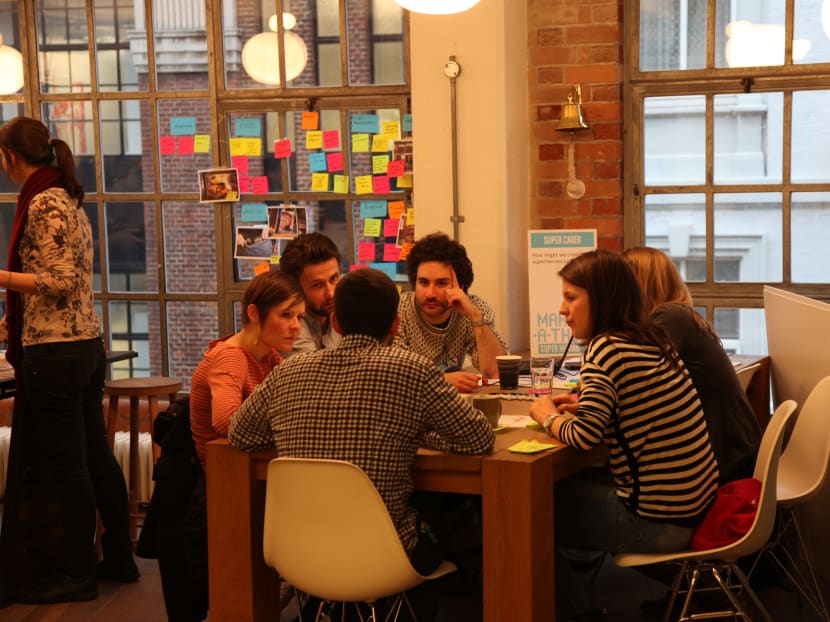
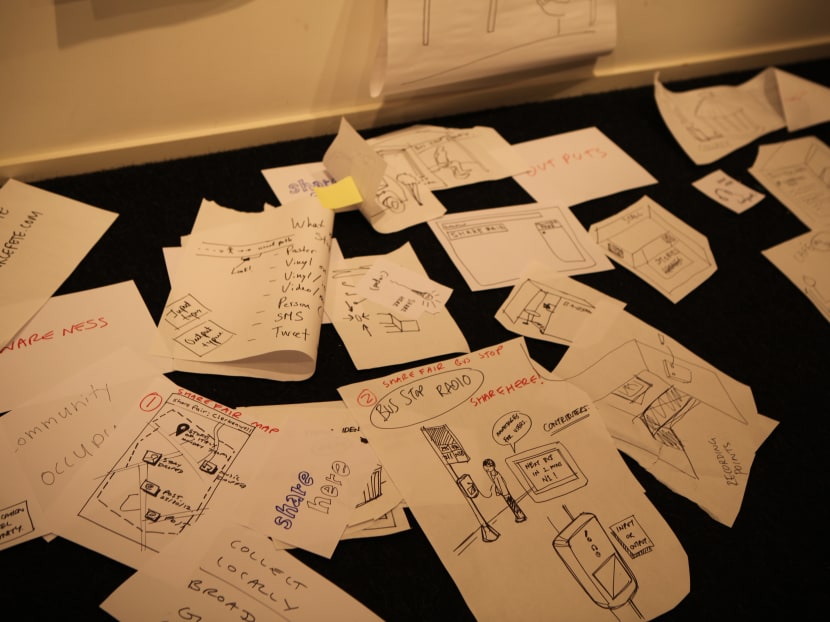
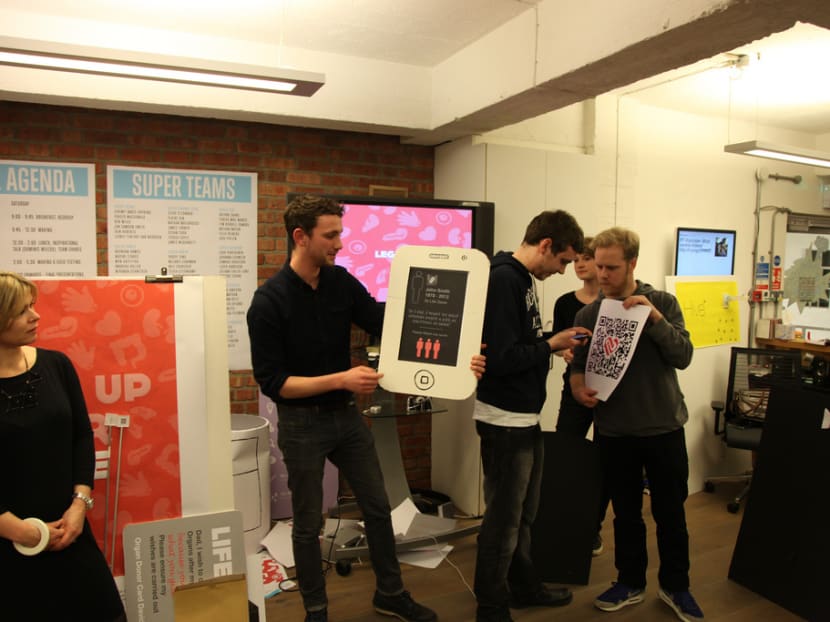
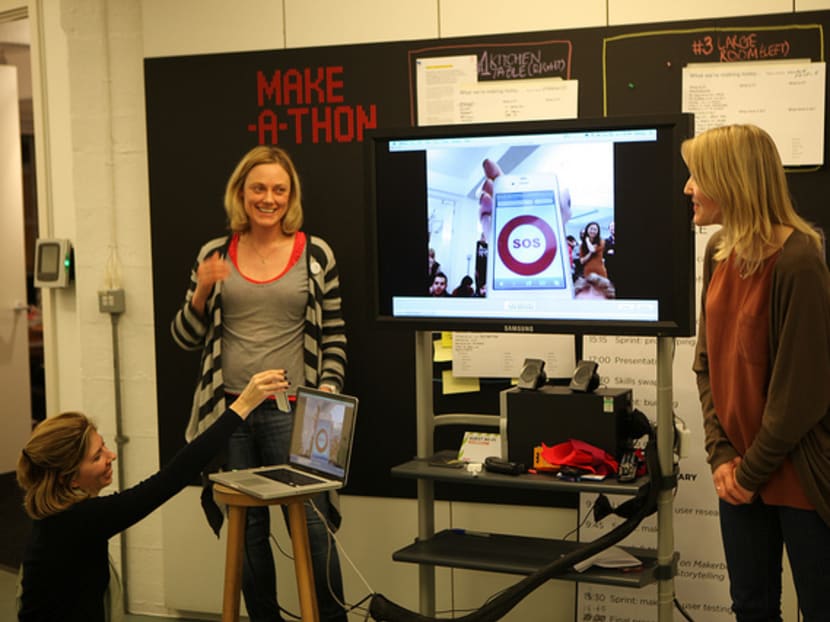
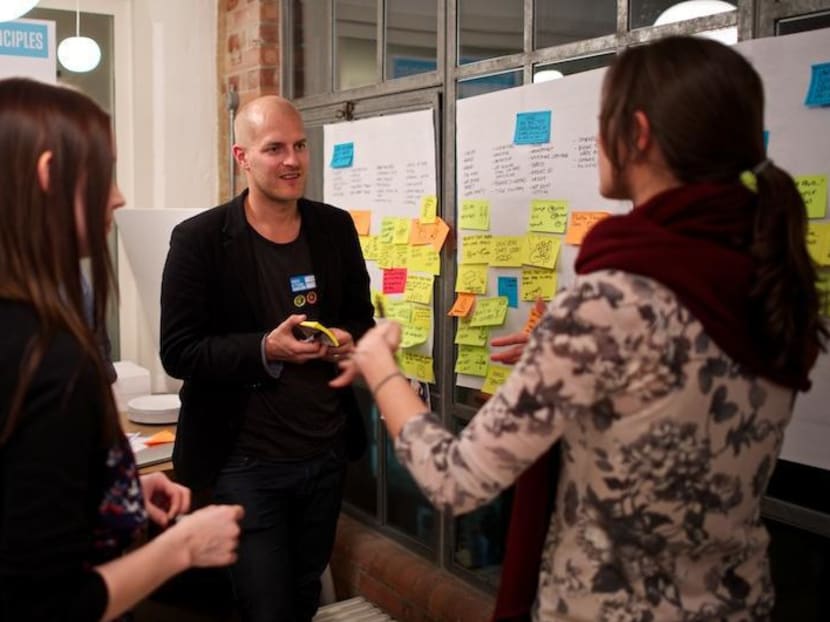
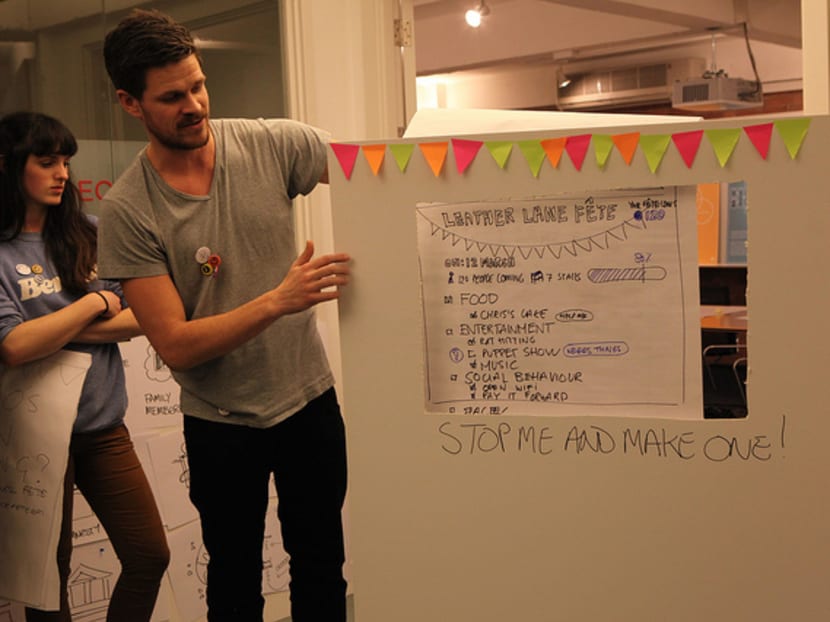
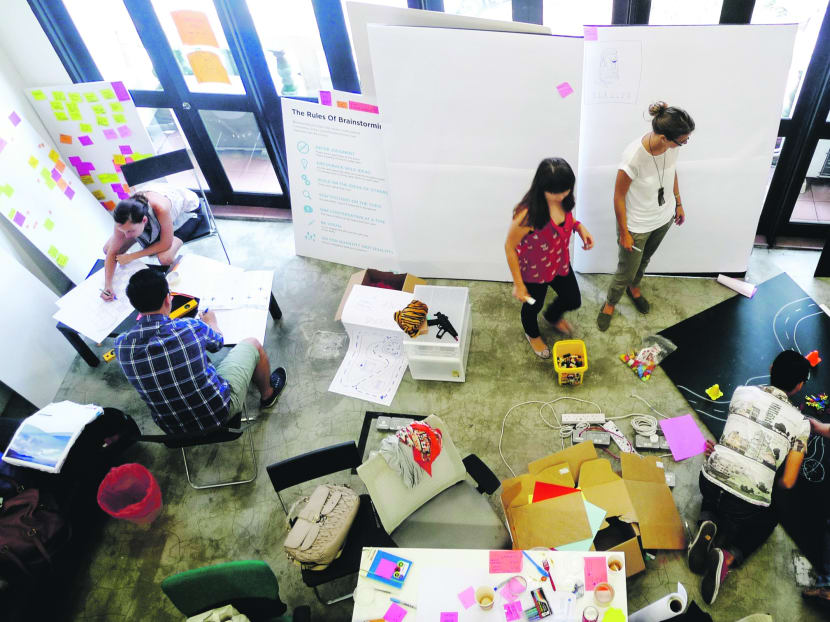
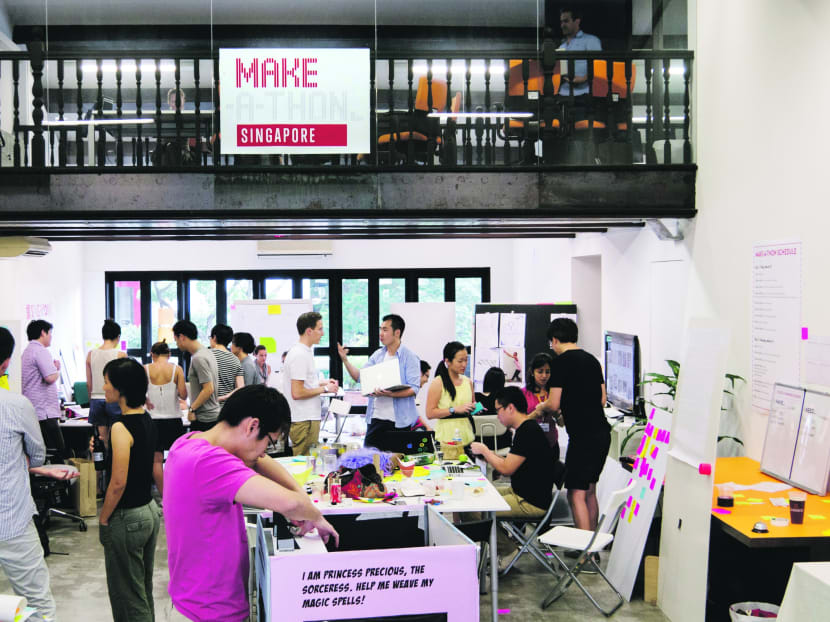
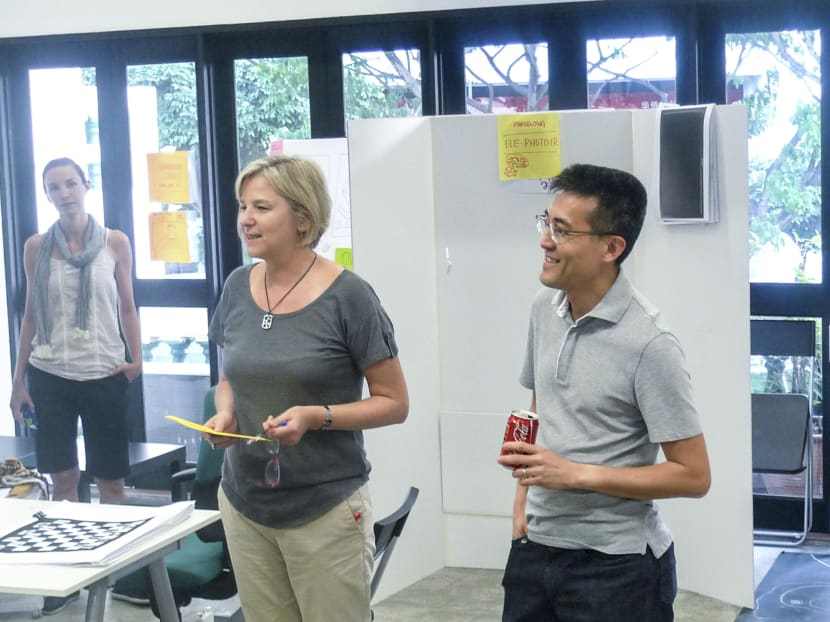
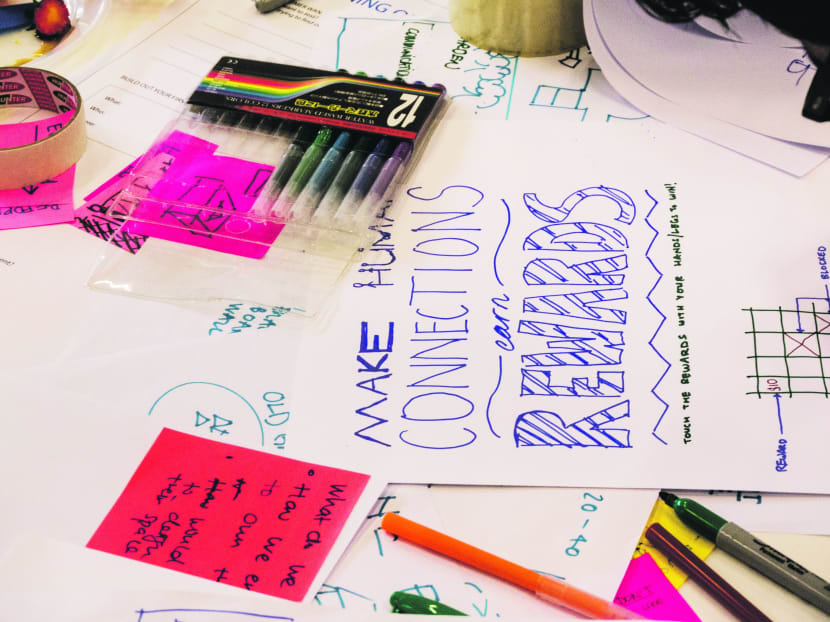
Imagine dining at a “social foodcourt” where you sit with strangers and exchange ideas on issues such as property prices. Or coming home to a void deck boasting an interactive notice board running a news feed to engage residents. That could happen sooner than you think, thanks to the first Asian Make-a-thon session held in Singapore last Friday and Saturday.
Make-a-thon is similar to the more popularly-known Hackathon in the digital field, where different software and graphic designers, programmers and developers come together to create a software project like an app. For this particular Make-a-thon organised by the National Environment Agency (NEA) and Ideo, a design and innovation consultancy, professionals from different walks of life — ranging from architects and entrepreneurs to civil servants and students — came together to brainstorm and create prototypes based on six different briefs that would improve our way of life.
EVERYONE HAS IDEAS
While this is Asia’s first ever Make-a-thon, sessions have been organised by Ideo in London, just recently in February, and in Chicago last October. Participants in these sessions thought up innovative solutions to the quirks of modern life. Bicycles outfitted with a sonar system and vibrating handlebars to alert cyclists when a vehicle is getting too close to them, for example.
The impetus for Singapore’s own Make-a-thon was borne out of Ideo’s collaboration with NEA. “We’ve been working with various government agencies to discuss ideas on changing or driving social behaviour,” said Andrea Kershaw, Managing Director of Ideo Singapore. “A policy from top-down might be too blunt an instrument, so we look at new ways government can interact with citizens — a government can design for citizens, design with citizens, or enable citizens to design for themselves. For example, NEA has a lot of data on recycling, but how can we design and present it in such a way that it becomes meaningful to the public and get them to think about recycling differently?”
Brandon Low, Acting Deputy Director of the Community & Outreach Department of the NEA, said the agency and Ideo started off looking at how residents could respect public spaces and tackle issues such as littering before it evolves into a larger picture of creating ownership in citizens and nurturing an environment where people can take the initiative to improve their surroundings. “We realise that crowd-sourcing for ideas is important and inspirational. We want to leverage on design-thinking, and get Singaporeans and the global audience to suggest what we can do,” he continued.
So in October last year, the NEA OpenIDEO Challenge was launched online to solicit ideas and concepts to those issues. Contributions poured in from all over the world. From San Francisco, a designated train carriage to promote “collaborative commute”, in which commuters get to voice their opinions and share contacts on topics such as volunteerism. From Sweden, a proposal of a community-based upcycling store and workshop to get residents to get together to make new items from their used clothes and furniture and encourage recycling. Singaporean Debbie Ng submitted her concept of a “connected music merry-go-round” inspired by the old merry-go-rounds of the past with the addition of music being generated as it turns to bring young and old together.
“The great thing is all these ideas belong to everyone. Neither Ideo nor NEA owns them. Citizens in Brazil can easily take them and make them tangible as many of these suggestions can be applied in different cities,” said Kershaw.
MAKE IT WORK
NEA OpenIDEO Challenge generated 102 final ideas which were distilled down to six general briefs that shaped last weekend’s Make-a-thon: Reframing our public spaces; visualising consumption and reuse; connecting HDB residents through common areas; a library for little used items; gathering people for social good; and dining to get things done. Participants were invited by Ideo to brainstorm, undertake research by doing quick field trips nearby, start creating prototypes fulfilling the briefs, and present these ideas — in a span of two days ala Project Runway.
“There are about 50 participants who were invited here from different creative backgrounds. It’s a multi-disciplinary approach to solving many of the challenges we have at hand. It’s not just having the answer and one approach. Also, the idea of design is very broad. It’s not only a physical product or poster. For one, we can design a conversation in terms of script-writing the appropriate conversation to motivate the public to undertake an action. Next, it’s important to prototype ideas to ensure that they can be tangible in the real world,” explained Peter Overy, lead designer at Ideo.
One of the participants is Adib Jalal, a lecturer at Temasek Polytechnic who first got to know about OpenIdeo through his peers. “I found it interesting from the start and that this entire exercise would have a real impact on our living environment at the end of it,” said Jalal, who’s also the festival director of Archifest. “So when Ideo got in touch about Make-a-thon, I didn’t hesitate to participate.”
Another participant, Sharon Lourde Paul, Managing Director of events and meeting space booking website wearespaces.com, found an NEA video posted on the OpenIdeo website which piqued her interest in the project. “It’s nice that we’re coming up with ideas from ground-up, which could be implemented.”
Likewise, Plans Officer at Ministry of Defence, Choy Yong Cong, hopes his group’s Social Foodcourt will see the light of day. “It was a good experience at Make-a-thon. And our prototype was inspired by talking to people at hawker centres, cafes and bars and I realised that while Singaporeans are shy to break the ice, we’re not unsociable.”
As for whether these prototypes will ever be a reality, Kershaw said they will be handed back to the NEA to see how it can develop them further. “We need to ensure that they’re feasible and viable before they are rolled out. The next step would probably be to test them out for a few months.”
This is a first attempt by any government agency at crowd-sourcing, said Low, and just having the process exist is a great start. “We’ve learnt how we can do things differently and take on a citizen-centric point of view at designing solutions.”
Stay in the know. Anytime. Anywhere.

Subscribe to our newsletter for the top features, insights and must reads delivered straight to your inbox.
By clicking subscribe, I agree for my personal data to be used to send me TODAY newsletters, promotional offers and for research and analysis.






