
Kid-friendly businesses on the rise in S’pore
The burgeoning number of local entrepreneurial ventures into the kids’ market here seems to point towards a growing local, kids-related retail and services industry.
The burgeoning number of local entrepreneurial ventures into the kids’ market here seems to point towards a growing local, kids-related retail and services industry.
Take ride-hailing platform Grab, which has announced a pilot run of GrabFamily, a collaboration with local kids’ brand Snapkis. GrabFamily cars will offer families with small children a safer ride with Snapkis carseats, while its drivers will be trained in child seat safety regulations and boast strong track records. This initiative came about from a Grab survey that showed that car safety was a key concern for parents, but most make do without car seats in private cars and taxis.
“There is a lack of child-friendly transport options in Singapore, and this is a top concern for parents. We feel this is a gap we can effectively fill with the GrabFamily private-hire car fleet — the first fleet in Singapore to be equipped with child safety restraints. We also realised that many new parents are pressured into buying a car due to the lack of child-friendly transport options in the market. With GrabFamily, we are making child seats available to parents through our existing private-hire car fleet, offering them a safe, affordable and worry-free travel, while also contributing to Singapore’s car-lite vision,” said Lim Kell Jay, head of Grab Singapore.
Even though the birthrate in the Republic is still low — it has been hovering around the 1.2 per cent mark in the past few years — such locally based kids-related enterprises signal the increasing affluence of Singaporean parents and a deeper involvement in their children’s development as key factors driving this trend, say industry players TODAY spoke to.
Art Attack
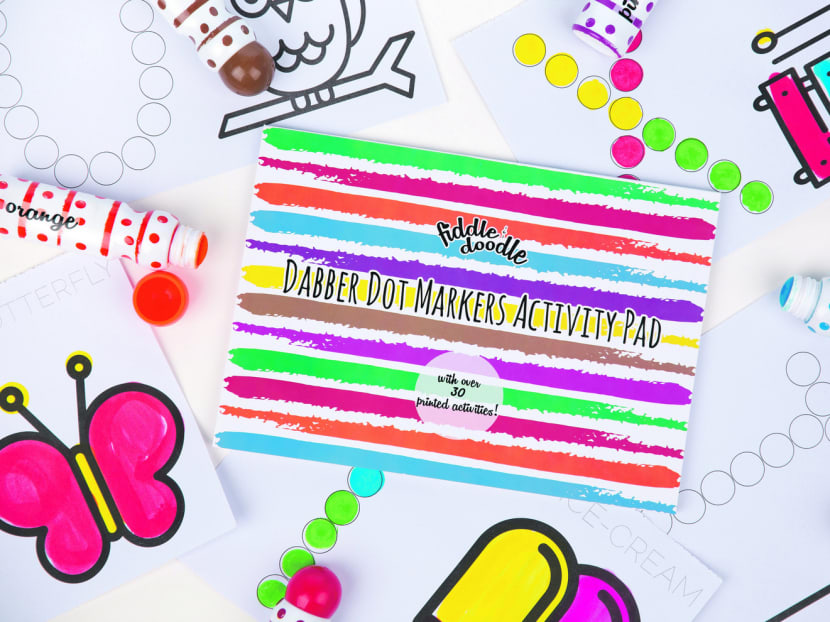
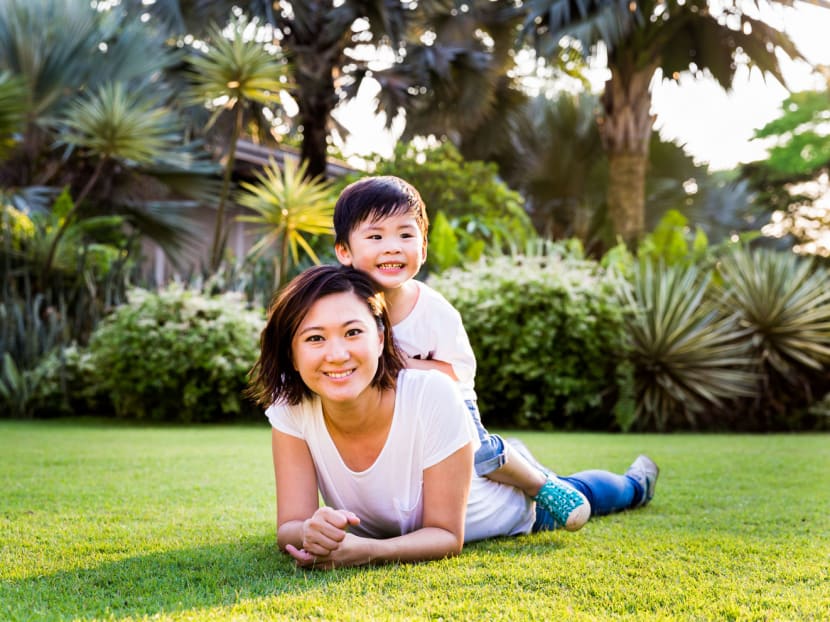
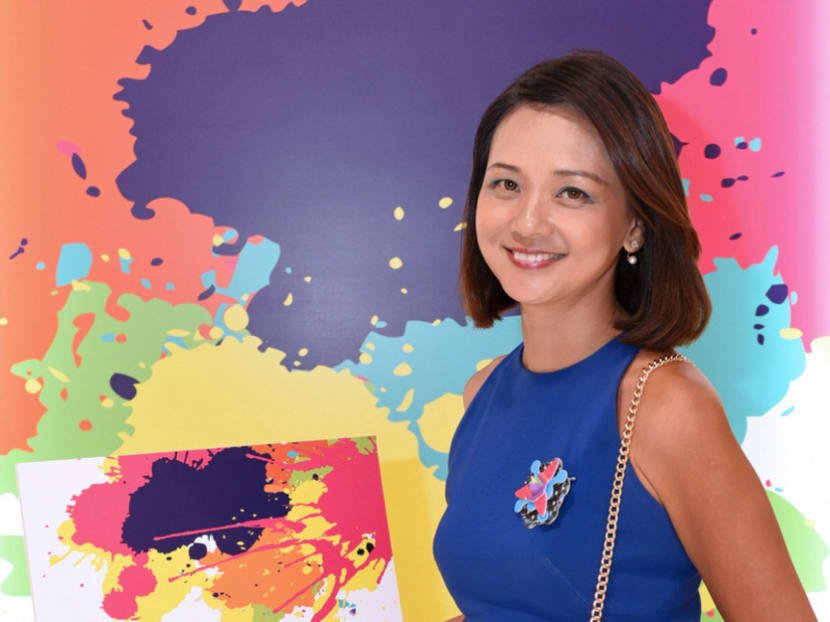
Three months ago, Ada Ee started her arts-and-crafts company Fiddle & Doodle and created the brand’s Dabber Dot Markers Starter Kit after trying to entertain her two-and-a-half-year-old son. “As our population is becoming more affluent, more kids are exposed to different things from a young age. As a mom, I’m always looking for fun and interesting ways to engage my active toddler via mum bloggers and Pinterest. Along the way, I realised that my son (and most kids) enjoy arts and crafts activities and those seem to capture his attention the most,” said Eee.
Yet she observed that many Singaporean parents do not wish to spend the time required to prepare for arts and crafts sessions with their children and are looking for convenient short-cuts. “Sometimes, I spend many hours preparing the arts and crafts activities and these activities can be over in less than 15 minutes. I would think to myself: If only I can buy these from somewhere! I believe there are many parents out there who want to do the same with their children, but they lack time to prepare the activities.”
The Dabber Dot Markers are retailing on Amazon and on the Fiddle & Doodle website from last month, and she has seen rapid sales since its June launch. Acknowledging that many parents here are time-poor and price-conscious, and tend towards online shopping, she is offering perks such as free delivery within Singapore and free downloadable activity sheets aimed at spreading the word and driving traffic to the site.
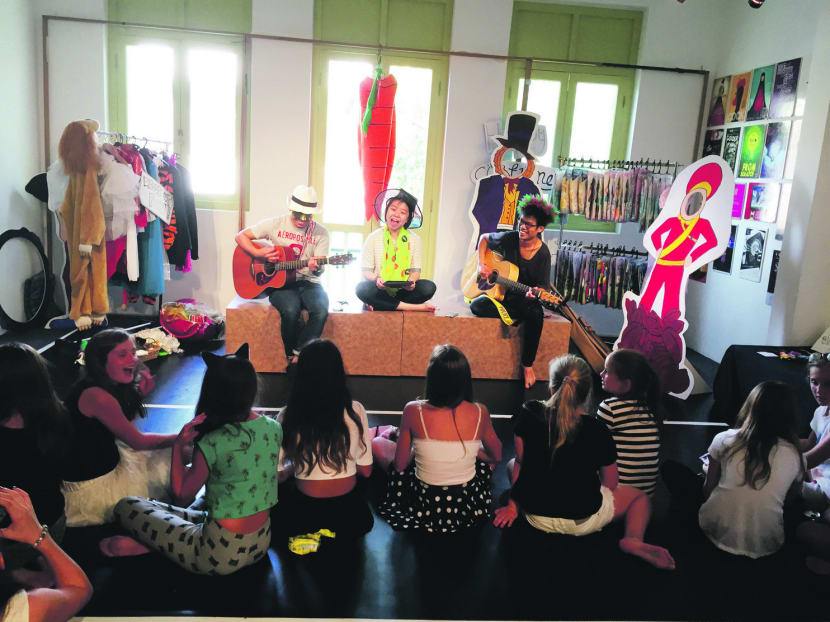
Co-founder of kids’ art and drama space Playtent, Claire Devine, was also inspired in 2013 to set up an artistic space for children to freely express themselves in 2013. The shophouse in Joo Chiat currently hosts art and drama workshops, Open Mic karaoke nights for children on every last Friday of the month and is a rehearsal venue for Buds Theatre, a youth drama group also founded by Devine.
Unlike other kids’ speech and drama centres, the Playtent founders envisioned it as a space to encourage free-form play and creativity that connects children to the arts community.
Its programmes have a social bent, such as Art Rojak! — a community initiative that sees artists conducting one-off jewellery-making and dramatic improvisation workshops for children that are priced between S$8 and S$12 per child — and Play Me, I’m Yours, a collaboration with the Singapore International Foundation to bring in British artist Luke Jerram’s artwork, which feature street pianos placed in public spaces such as void decks for people to play and be played to.
“It’s difficult to be unique. But the programmes we provide in theatre are very performance driven and not necessarily speech driven,” explained Devine. “As for the craft workshops, they are there to bring families together — to experience art rather than be the expert. This was the impetus for bringing Play Me, I’m Yours into Singapore, as it achieved all our aims — broadening our network, combining social-welfare organisations and providing entertainment for the masses.”
Importance of Childplay
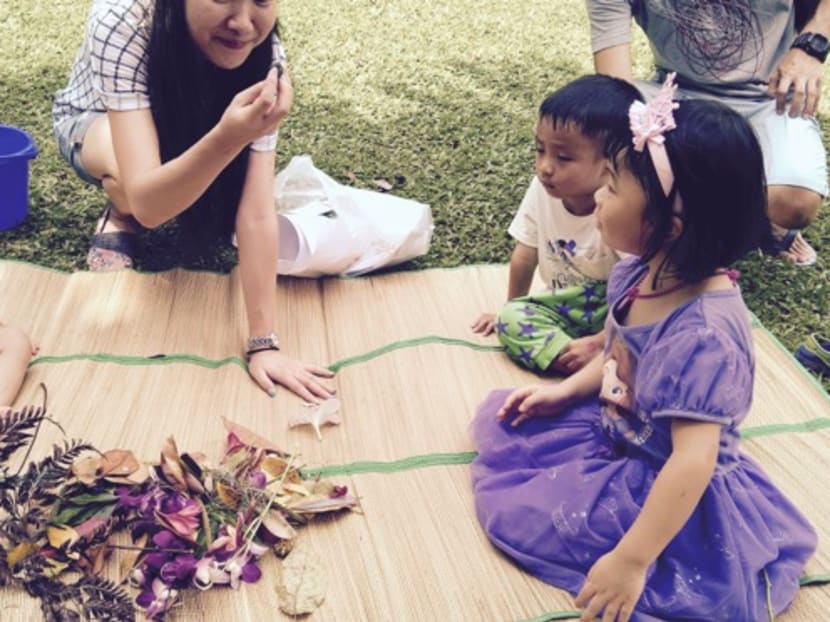
Merging free play with learning was also the impetus behind Treebubs, which offers outdoor playgroups for preschoolers conducted entirely in Mandarin. It came about after co-founder Stephanie Lim tried signing up her toddler daughter for outdoor playgroups and Mandarin classes, and realised that there was a gap in the market for something that combines the two.
“Singaporean parents are starting to become more aware of the benefits that being outdoors has on children’s concentration, behaviour and emotional well-being. However, Mandarin instruction tends to follow a more traditional approach of listening, speaking, reading and writing via rote, with a heavy emphasis on reading and writing,” said Lim.
“We wanted to adopt a more naturalistic approach that focuses on speaking and listening, which young children are primed to acquire ... and to provide a more hands-on experience to make the language more meaningful and relevant to young children,” she elaborated.
Treebubs has seen much interest since its launch this January, and currently has four regular participants and new drop-ins every week. Lim is planning to collaborate with local nature experts for kid-friendly treks around the island conducted in Mandarin. “There is definitely a need for more nature-based programmes of all sorts, especially ones that integrate authentic everyday experiences and local culture into learning,” she added.
Indie Retail for Kids
On the retail end, independent brands are popping up to offer parents unique alternatives to mass-market brands of kids-related merchandise.
Homegrown baby-feeding label Hegen was launched mid last year after five years of development, and was spurred by founder Yvon Bock’s experience gained from breastfeeding her four children.
“I started realising the gaps (on the market) in products available that specialised in helping breastfeeding or keeping breast milk intact,” said Bock. “Hegen was founded to design meaningful products that advocate breastfeeding, protect the integrity of breast milk and enhance the breastfeeding journey for parents all over the world.”
The brand’s bottles allow mothers who express breast milk to pump, store and feed their babies from the same bottle, minimising the hassle and risk of contamination from transferring the breast milk between different vessels. Hegen’s milk bottles also boast its patented Press-To-Close, Twist-to-Open (PCTO) bottle design, an off-centred elliptical teat to promote upright feeding and to reduce nipple confusion, and is compatible with most brands of breastpumps on the market. The brand is currently distributed in China and the United States, and is embarking on an aggressive international expansion plan over the next two years that includes new product development.
With the rising affluence of Singaporean parents and an increasing willingness to splurge on their kids, more mid-to-high-end labels are launching to meet that demand. Co-founder of bakery Little House of Dreams, Audrey Lee, opened Dreams and Confetti, a partyware and decor retail store at Great World City and online that carries premium brands such as Rosanna and Mosser Glass, last year. The mother-of-three is set to launch a new Little House of Dreams bistro-cum-bakery at Dempsey Hill in the next couple of months that is designed to host parties. Kids’ party packages include dessert-making workshops and dessert tables.
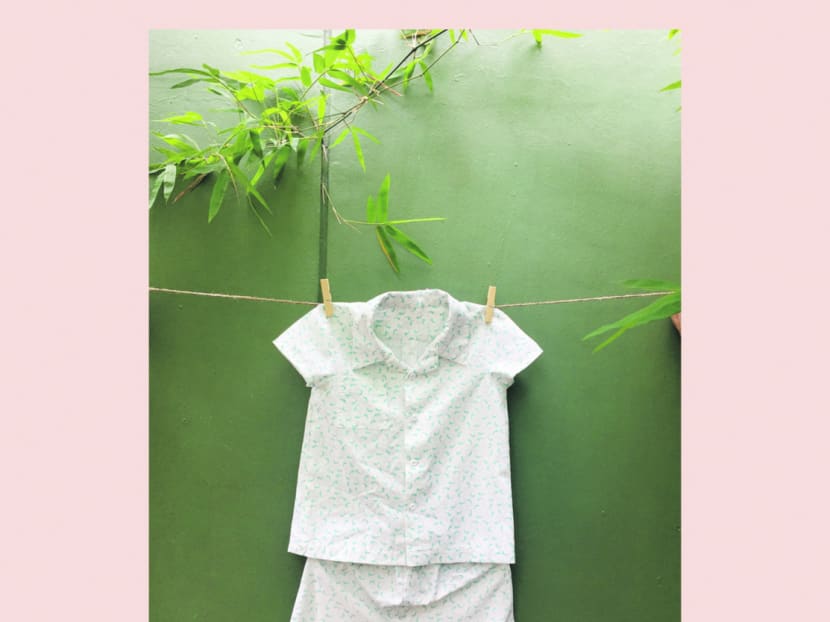
Another local brand coming up in November is Lucabebe, a vintage-inspired label of children’s nightwear founded by fashion magazine editor Lena Kamarudin and mother to four-year-old twins.
“My twins really love children’s film classics such as Mary Poppins and Chitty Chitty Bang Bang. Those were the days when children dressed properly even at bedtime and that was how I was inspired with the designs,” said Kamarudin. “There are lots of international boutiques that are already doing this, but the price points are very high. My goal is to be somewhere in between. Online is really the best way to launch a business, and the response is very effective if you’re hardworking with your social media updates.”
Perhaps the brand that is truly tapping a previously untrodden market is C’est Moi, a make-up label created specially for kids. Founder Jessica Tang launched the brand in 2014 after she could not find suitable make-up for her then-five-year-old daughter who was performing in ballet recitals. Her skin had reacted badly to existing make-up lines. “I didn’t think that the market here is ready for or receptive to (C’est Moi), but I know it is a ‘future’ business as it is a brand new need in the very near future. This business has a global appeal and opportunity as children around the world have the same needs as long as they belong to the performing community, or if it’s their culture to put on make-up when they attend social functions like birthday parties, like in Dubai,” says Tang.
C’est Moi make-up is currently retailing online and at Metro and Hamleys stores here, and is distributed in Dubai and Australia. Tang pegs monthly local retail sales to be in the region of S$35,000 and has plans to expand the product range to skincare for the young.
“Singapore does not have the critical mass. We do not have enough people to meet our desired minimum for such products, and the challenge is that we need to sell to international markets. We are on the lookout for angel investors with offices overseas and contacts to support us to penetrate key global markets more expediently,” added Tang.
Despite our population growth woes, perhaps—ironically—the kid-friendly businesses are set to become Singapore’s next big export market.
Stay in the know. Anytime. Anywhere.

Subscribe to our newsletter for the top features, insights and must reads delivered straight to your inbox.
By clicking subscribe, I agree for my personal data to be used to send me TODAY newsletters, promotional offers and for research and analysis.






