
Annual public sector audit flags lapses in finance, IT controls
SINGAPORE — The Auditor-General’s Office (AGO) has flagged lax financial controls, weaknesses in information technology controls and inadequate oversight of development projects in its annual audit of the public sector.
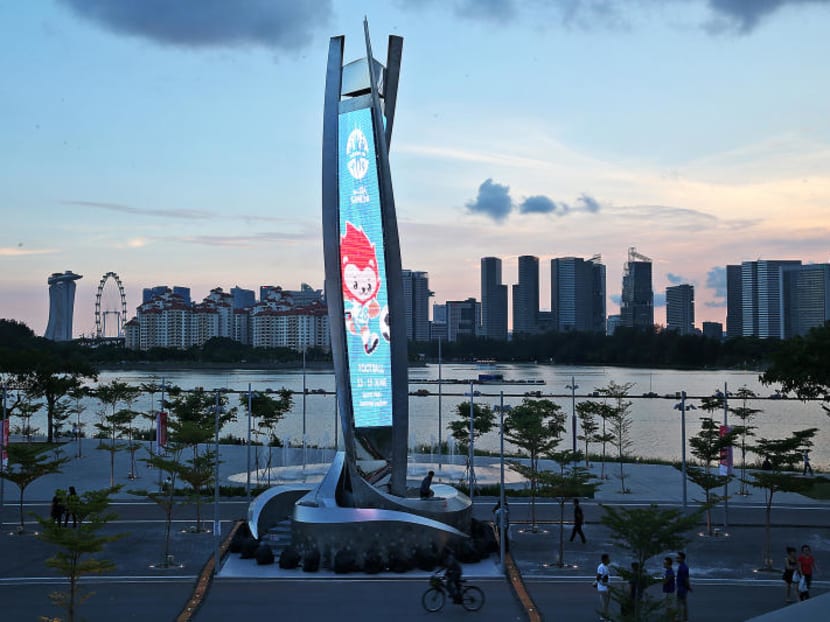
The Singapore Sports Council, now called Sport Singapore, received 3,946 units of sponsored mobile phones, tablets, digital cameras and smart watches valued at S$835,500 for operations and marketing activities related to two major sporting events in 2015, one of which was the SEA Games. TODAY file photo

SINGAPORE — The Auditor-General’s Office (AGO) has flagged lax financial controls, weaknesses in information technology controls and inadequate oversight of development projects in its annual audit of the public sector.
The AGO pointed out flaws in IT controls “across several public sector entities”, some of which were similar to those identified in its previous audits of other public sector organisations.
In a 58-page report released on Tuesday (July 18), the AGO said: “The lack of attention to these areas observed in some entities is of concern in view of the public sector’s high dependence on IT systems and data for Government operations, and the fast-evolving IT security threats.”
The inadequate oversight of agents appointed to manage projects on behalf of public agencies and the management of contract variations were also “of particular concern”.
“Such lapses were found across different public sector entities over the last few years, indicating that more could be done to strengthen these areas,” the report said.
The Ministry of Health (MOH), for example, was rapped for weaknesses in the management of development projects.
There was a lack of assessment on the need for expenditure before payments were made, and variation orders had been carried out ahead of obtaining proper approval.
On the development of Ng Teng Fong General Hospital, the AGO said the MOH had spent about S$4.08 million on site supervisory staff engaged by its agent without verifying whether the expenditure was reasonable.
“MOH also did not seek approval from its approving authority ... to bear the cost of the site supervisory staff engaged by its agent,” said the AGO.
On top of this, the MOH had paid for the site supervisory staff based only on the agent’s claims, without any contractual agreement.
“There was hence no assurance that MOH had exercised financial prudence in the use of public funds for the expenditure ... ,” said the AGO, adding that irregularities were found in 10 other MOH projects relating to the management of 40 contract variations amounting to S$3.76 million.
The MOH acknowledged that written approval should have been obtained from the approving authority for the ministry to bear the cost of the site supervisory staff, and that payment should have been made only after it had received approval.
The ministry told the AGO that it has put in place a more structured process for engaging site supervisory staff “to ensure prudence in the use of public funds”.
It added that there was “no indication of fraud or corrupt practices which warrant further investigation, or deliberate wrongdoing by the persons involved in the projects”.
Sport Singapore (SportSG) was one of the public sector organisations singled out for inadequate financial controls over payments, management of assets and contracting.
Among various late payments to vendors, SportSG had made 299 payments — amounting to S$661,900 — around one to three-and-a-half years after the invoice dates, without valid reasons. The payments were made from January 2014 to June last year.
“Delaying payments to vendors after satisfactory delivery of goods and services is contrary to Government’s instructions which require all invoices received to be processed promptly,” said the AGO.
SportSG has told the AGO that it will review its payment processes and has since instituted weekly payment meetings to prevent recurrences.
The AGO report also said that nearly 4,000 sponsored mobile phones, tablets, digital cameras and smartwatches were received by SportSG for operations and marketing activities for the 28th South-east Asian Games and the 8th Asean Para Games in 2015.
While the usual protocol is for sponsored items to be accounted for, and for recipients to acknowledge receipt, the AGO found that such procedures were not followed for 1,396 devices worth S$224,700.
SportSG said the lack of records was due to reasons including staff turnover and staff oversight.
In a media statement, SportSG said that it would address all AGO findings. “We are committed to good corporate governance and are reviewing our processes to ensure these lapses do not recur. Where necessary, disciplinary inquiries have been initiated and persons found negligent will be held to account,” a spokesperson said.
In a media statement following the release of the AGO report, the Ministry of Finance (MOF) said that the public sector’s “overall system of managing public funds remains sound”.
“However, there are areas where government agencies can do better, by strengthening their financial governance,” it added.
Noting the areas identified by AGO, the MOF said while it recognises that it is “not possible to completely eliminate individual human lapses, errors or misjudgment, the public service is taking a concerted effort to address the issues”.
Heads of the agencies responsible have reviewed each case and where warranted, appropriate actions have been or will be taken against those responsible.
The public service is taking steps to address the common issues in “a systemic way”, including strengthening financial controls in grants administration, management of development projects and contract variations, as well as audits and policies to improve IT governance.
Stay in the know. Anytime. Anywhere.

Subscribe to our newsletter for the top features, insights and must reads delivered straight to your inbox.
By clicking subscribe, I agree for my personal data to be used to send me TODAY newsletters, promotional offers and for research and analysis.






