
Authorities seize 3.7 tonnes of illegal ivory headed for Vietnam
SINGAPORE — The shipment from Kenya was declared as tea leaves, but upon closer inspection, it was found to contain about 3.7 tonnes of illegal ivory, making it the second largest seizure of illegal ivory by the local authorities since 2002.
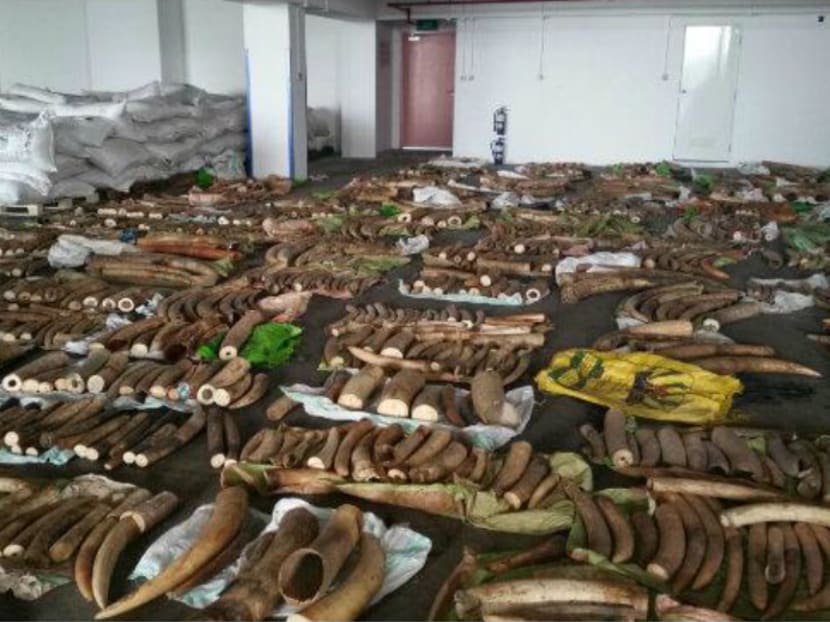

SINGAPORE — The shipment from Kenya was declared as tea leaves, but upon closer inspection, it was found to contain about 3.7 tonnes of illegal ivory, making it the second largest seizure of illegal ivory by the local authorities since 2002.
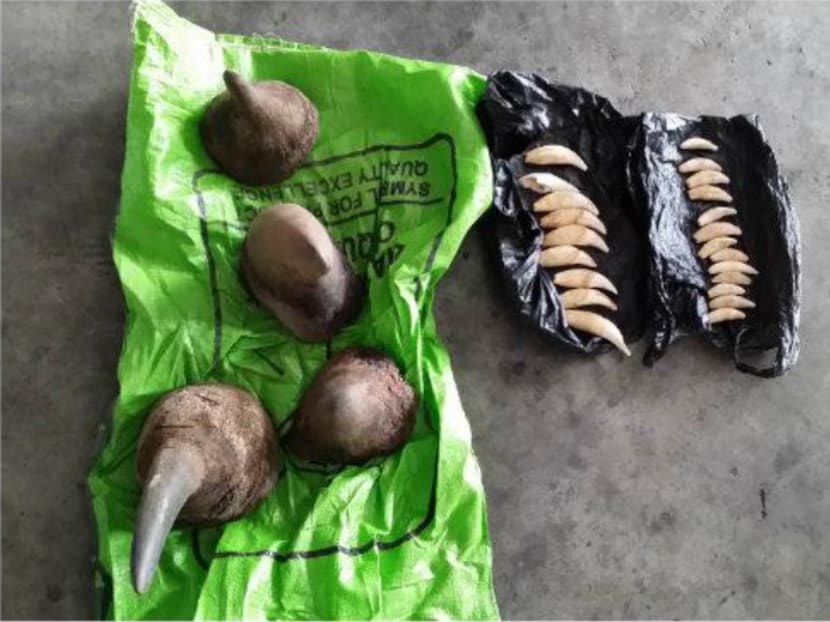
The seized shipment --- which also included four pieces of rhinoceros horns and 22 pieces of canine teeth, believed to be from African big cats -- is estimated to be worth S$8 million.
The goods were shipped in two 20-footer containers from the African country and were transiting through Singapore for Vietnam, the Agri-Food and Veterinary Authority of Singapore (AVA) and Singapore Customs said in a joint media release today (May 19).
Upon inspecting the containers, the AVA uncovered 1,783 pieces of raw ivory tusks, whole and cut, concealed among bags of tea dust; as well as the rhinoceros horns and canine teeth. Further investigations into the shipment, which was seized last week, are underway.
International trade in ivory, rhinoceros horns and certain species of big cats’ teeth are banned under the Convention on International Trade in Endangered Species of Wild Fauna and Flora (CITES), to which Singapore is a signatory.
“The illegal trade of endangered animal parts is fuelled by increasing demand and poaching ... The Singapore Government has zero tolerance on the use of Singapore as a conduit to smuggle endangered species and their parts and products,” said Ms Lye Fong Keng, Deputy Director of AVA’s Quarantine & Inspection Group, Wildlife Section.
“AVA will continue to cooperate and collaborate with partner enforcement agencies nationally and internationally to curb wildlife trafficking,” she added.
Under the Endangered Species (Import and Export) Act, a CITES permit is required for any import, export or re-export of CITES wildlife and their parts and products. The maximum penalty for the illegal wildlife is a fine of S$50,000 per scheduled specimen, not exceeding an aggregate of S$500,000, and/or imprisonment of up to two years.
CORRECTION: An earlier version of this article said the statement was a joint statement between the Agri-Food & Veterinary Authority of Singapore and Immigration & Checkpoints Authority. This is incorrect. The statement was by the AVA and Singapore Customs. We apologise for the error.
Stay in the know. Anytime. Anywhere.

Subscribe to our newsletter for the top features, insights and must reads delivered straight to your inbox.
By clicking subscribe, I agree for my personal data to be used to send me TODAY newsletters, promotional offers and for research and analysis.






