
Better design to ease soldiers’ loads, help them stay cool
SINGAPORE — Besides revamping soldiers' fitness regimes, the Singapore Armed Forces (SAF) will look at ways to lighten their load and have them stay cool while in action.
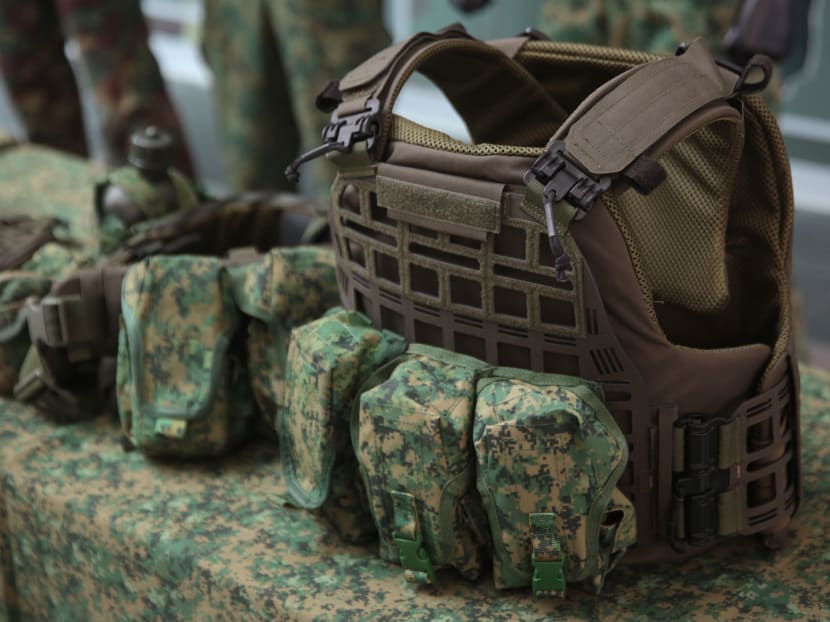
A next generation load bearing system prototype pictured during a Centre of Excellence for Soldier Performance (CESP) media event on 28 Nov, 2017. Photo: Jason Quah/TODAY



SINGAPORE — Besides revamping soldiers' fitness regimes, the Singapore Armed Forces (SAF) will look at ways to lighten their load and have them stay cool while in action.
.embed-container { position: relative; padding-bottom: 56.25%; height: 0; overflow: hidden; max-width: 100%; } .embed-container iframe, .embed-container object, .embed-container embed { position: absolute; top: 0; left: 0; width: 100%; height: 100%; }Selected equipment will soon be tested at a 200m course with 10 obstacles to see if tweaks to their design will improve a soldier's ability to move faster without feeling hotter.
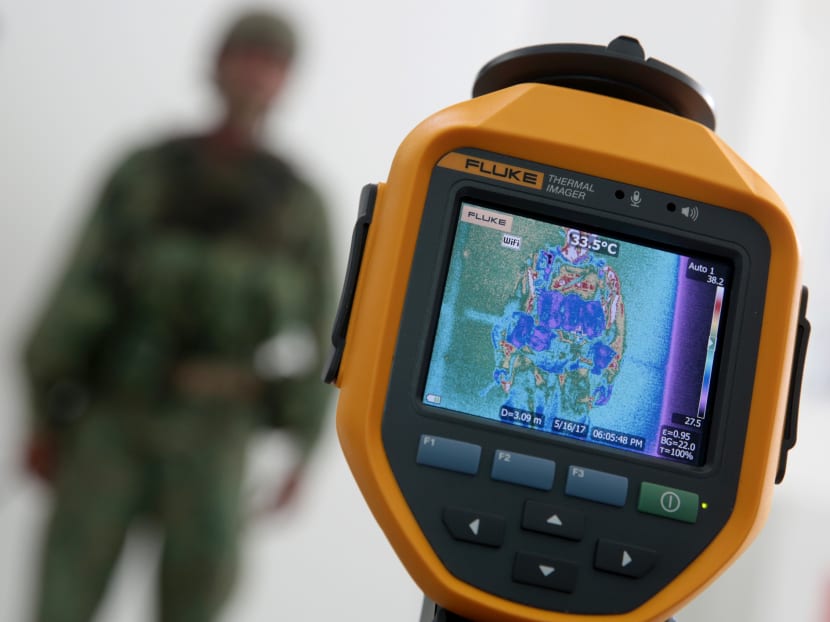
Soldiers in the tests will have their body temperatures mapped by a thermo-imaging system after they complete the tasks, which include a low crawl, an agility run and load transfers.
The SAF acquired the system, called the load effects assessment programme (LEAP), two months ago. It will collate the time taken to complete tasks and temperature data of every soldier, enabling equipment that improves mobility and performance to be identified.
The tests will be administered by human factors engineers – specialists in comfort and functional design – at the SAF's new Centre of Excellence for Soldier Performance, located at Selarang Camp in Changi.
The Republic is the first in Asia to tap on LEAP, which was started by the US Marine Corps, said Senior Lieutenant Colonel Yee Kok Meng, who heads the centre.
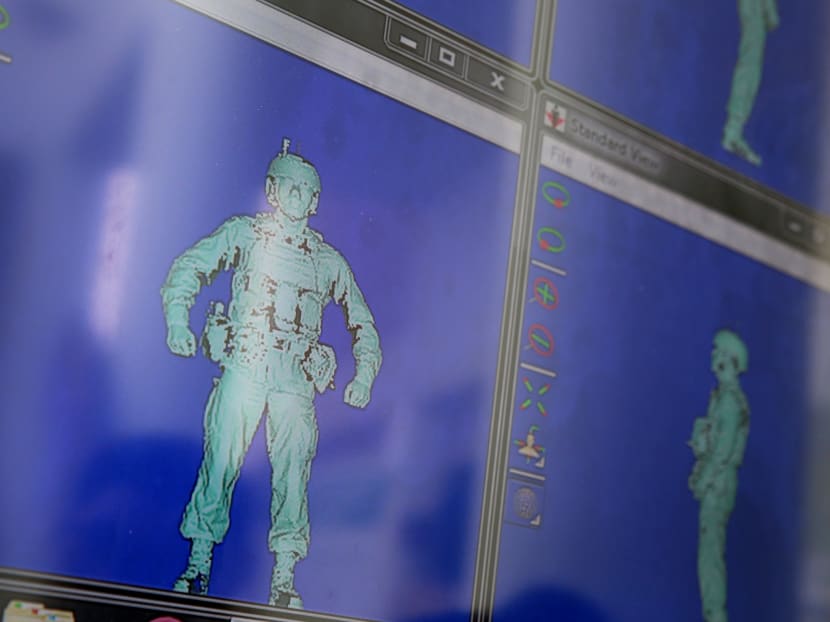
The human factors engineers will also improve the fit of soldiers' gear by tapping the science of measuring and applying body dimensions, or anthropometry.
This was applied on the design of a new load bearing system, which is in its final stage of development.
Projected to replace the integrated load bearing vest from March 2019, the new design will fit soldiers of different shapes and sizes more snugly as its belt and vest components could come in different sizes. The fit of the vest component can also be adjusted in five places.
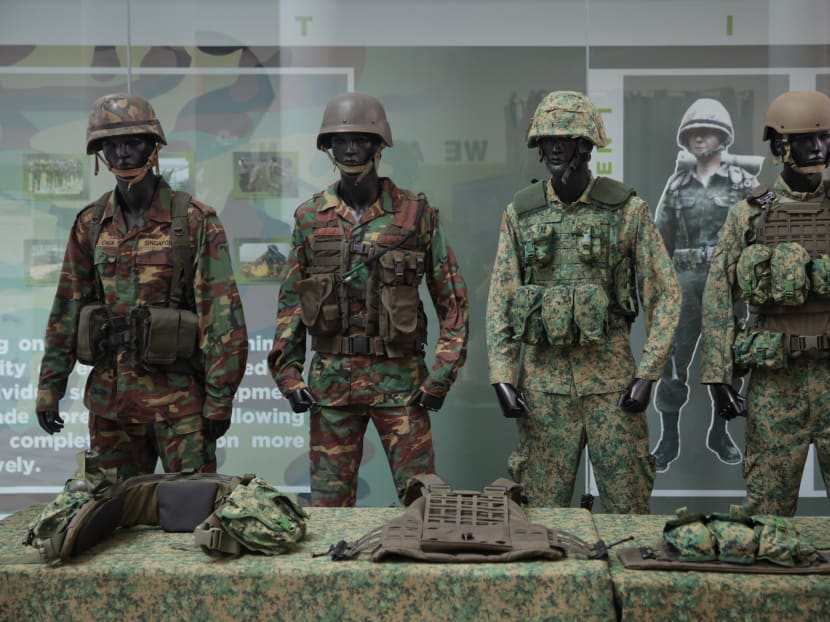
The current vest, used since 2009, comes in standard sizes with most of the weight resting on a soldier's shoulders, shared Mr Yee.
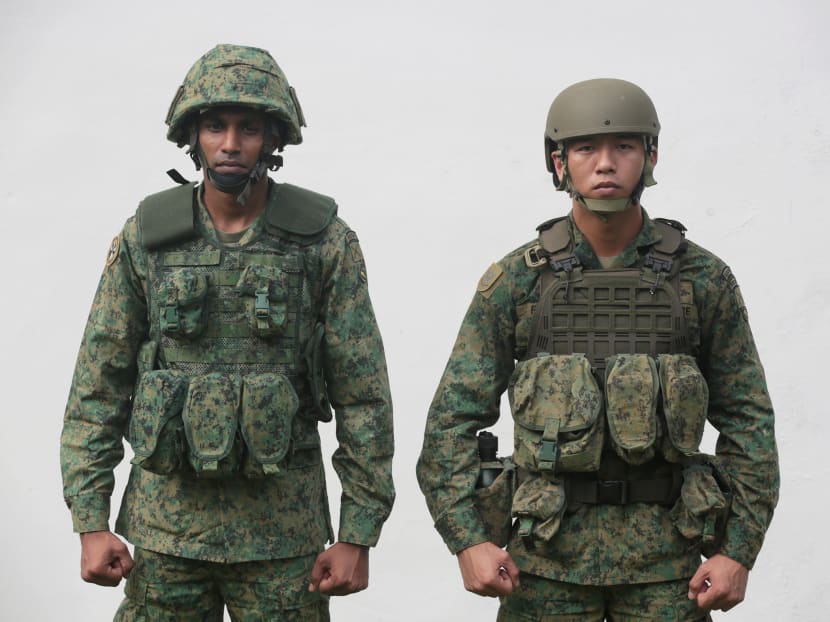
Soldiers who tried the new vest have given positive feedback, saying it feels lighter and more compact, said Second Minister for Defence Ong Ye Kung at the CESP's inauguration on Friday (Dec 1).
"Well-designed equipment that distributes weight well across the body can delay the onset of fatigue," he said.
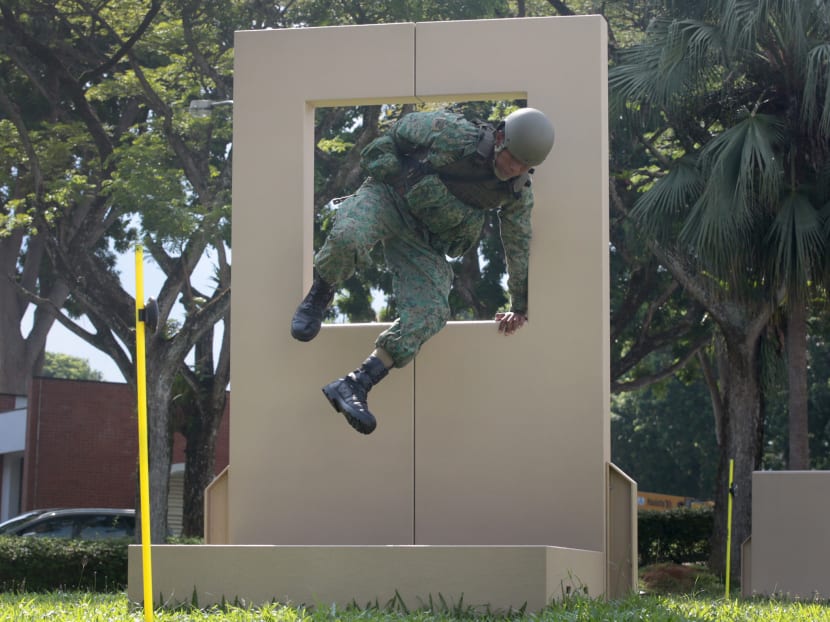
"It also improves the mobility of the soldiers significantly. This will ensure that the equipment our soldiers wear and use fits them well and allows them to perform their combat tasks effectively."
And from the first quarter of next year, soldiers may undergo 20-second body scans for data to be collected.
They will undergo more scans periodically, allowing the SAF to establish trends on body dimensions spanning a soldier's enlistment to retirement.
Stay in the know. Anytime. Anywhere.

Subscribe to our newsletter for the top features, insights and must reads delivered straight to your inbox.
By clicking subscribe, I agree for my personal data to be used to send me TODAY newsletters, promotional offers and for research and analysis.






