
Oxley Road dispute: Cabinet cannot avoid responsibility on matters of public interest, says DPM Teo
SINGAPORE — Responding to questions on the need for a Ministerial Committee to consider options for 38 Oxley Road, Deputy Prime Minister Teo Chee Hean said on Wednesday (June 21) the Cabinet cannot avoid responsibility on matters of public interest, and due process is needed. He added that setting up such a committee is “part of normal Cabinet working processes”, noting that even company boards form committees to examine issues.
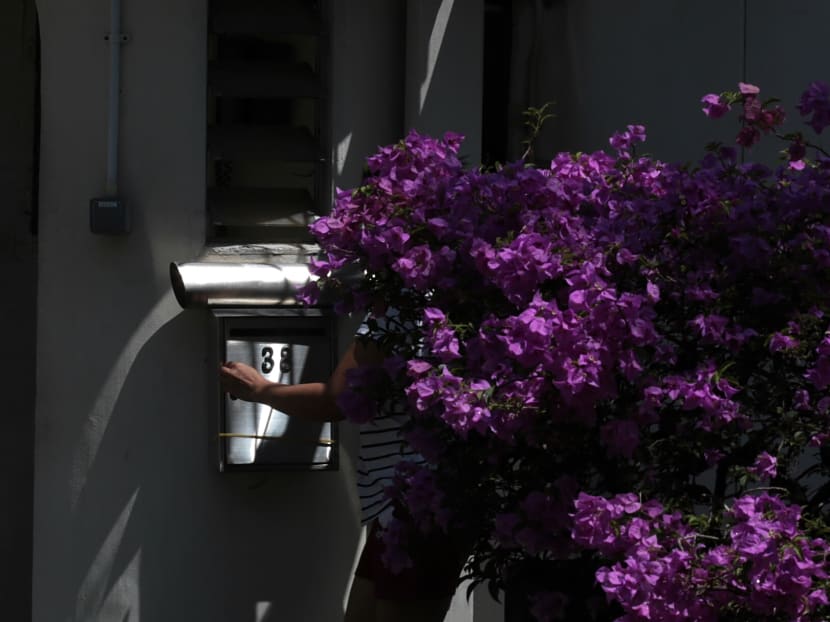
38 Oxley Road. Photo: Jason Quah/TODAY



SINGAPORE — Responding to questions on the need for a Ministerial Committee to consider options for 38 Oxley Road, Deputy Prime Minister Teo Chee Hean said on Wednesday (June 21) the Cabinet cannot avoid responsibility on matters of public interest, and due process is needed. He added that setting up such a committee is “part of normal Cabinet working processes”, noting that even company boards form committees to examine issues.
Weighing in on the dispute between Prime Minister Lee Hsien Loong and his siblings for a second time, Mr Teo also noted that the differences of views over the Lee family’s home did not arise because of the ministerial committee, which he chairs.
“We still hope that differences of views on private matters can be resolved within the family,” Mr Teo said in a statement. “But ultimately, the Cabinet of the day and its ministers cannot avoid taking responsibility for making the required decisions on matters where the public interest is involved, and due process is required. Mr Lee Kuan Yew himself understood this and would have expected the Government to do so,” he added.
Mr Teo’s latest remarks were in response to a commentary published in The Straits Times yesterday. The writer, the paper’s editor-at-large Han Fook Kwang, suggested disbanding the committee as part of an agreement between PM Lee and his siblings, Dr Lee Wei Ling and Mr Lee Hsien Yang. Another possibility, Mr Han added, is to let the Founders’ Memorial Committee decide on the fate of the Oxley Road house, the birthplace of the ruling People’s Action Party and where founding Prime Minister Lee Kuan Yew had lived since 1945 until his death.
The Founders’ Memorial Committee was set up in 2015 to look into how best to honour Singapore’s pioneer generation of leaders.
Mr Teo, however, said the Cabinet cannot “outsource decision-making”.
“Ultimately, it is the government of the day which has to be responsible for making a decision on the property, as this is where the powers reside under the law, specifically the Preservation of Monuments Act and the Planning Act in this case … It is therefore incumbent on the Cabinet to consider and decide on the issues,” he added.
But this “does not preclude public consultations or the involvement of some Memorial Committee at an appropriate time”, Mr Teo said.
The public dispute between the Lee siblings over the fate of their family home has escalated sharply over the past week. Besides disagreeing with PM Lee on their late father’s wishes for the house, as expressed in his will, Dr Lee and Mr Lee Hsien Yang had also criticised the setting up of the Ministerial Committee.
They alleged that the committee was set up to allow PM Lee to “get (his) way” with regard to the house. They also slammed the committee as “shadowy” and said they had been kept in the dark about its membership.
In his first remarks on the issue on Saturday, Mr Teo said there was nothing secretive about the committee. Disclosing its membership, he had said the committee’s interest in the late Mr Lee’s will is “confined to the light that it sheds on his wishes for the house”.
Reiterating this on Wednesday, he wrote: “Whoever makes a recommendation, the public or some Memorial Committee, and when the Cabinet eventually makes a decision, (the late) Mr Lee’s thinking is an important factor which we would all want to take into account.”
Mr Teo said it was “only proper” that the committee sought the siblings’ views to grasp the late Mr Lee’s thinking on the matter. “Indeed, the committee had to, since the siblings themselves told us they had different views and challenged each other’s interpretations of Mr Lee’s wishes.”
Saying that all views had been given “voluntarily”, including those in the form of statutory declarations, Mr Teo added: “This process was conducted through correspondence, and out of the public eye until it was brought out onto a public platform.”
Stay in the know. Anytime. Anywhere.

Subscribe to our newsletter for the top features, insights and must reads delivered straight to your inbox.
By clicking subscribe, I agree for my personal data to be used to send me TODAY newsletters, promotional offers and for research and analysis.






