
The Cat Museum in a bind over unapproved use of space for cats
SINGAPORE — The Ministry of National Development (MND) has told The Cat Museum to stop using the third floor of its shophouse premises as a shelter and adoption centre for cats because it constitutes an unauthorised use of the space.
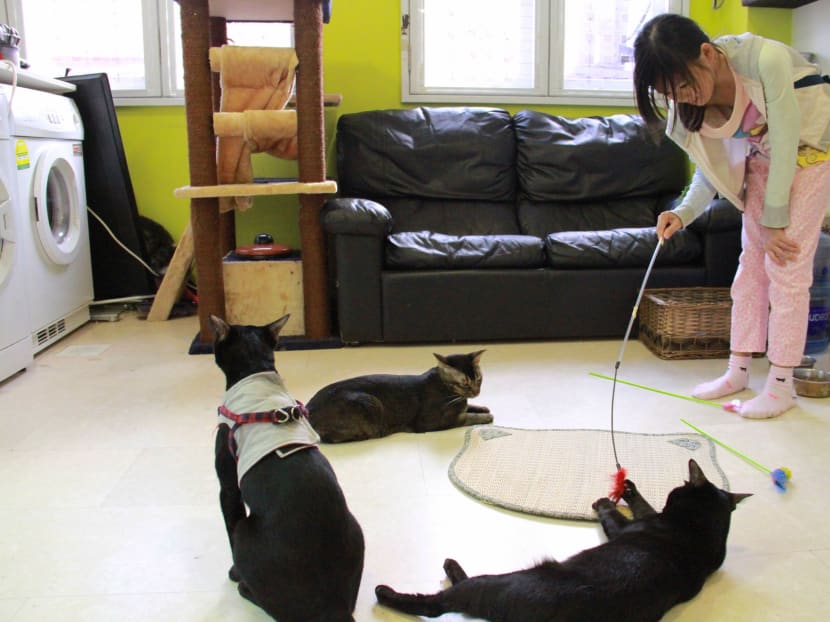
Melody Chan, 10, playing with cats at The Cat Museum located at Purvis Street. Photo: Esther Leong/TODAY



SINGAPORE — The Ministry of National Development (MND) has told The Cat Museum to stop using the third floor of its shophouse premises as a shelter and adoption centre for cats because it constitutes an unauthorised use of the space.
The establishment — which occupies three floors of the shophouse along Purvis Street — will only be allowed to operate out of its second floor, which now houses a gallery of artwork.
With this move, The Cat Museum is looking to put 30 of its 50 cats up for adoption. The landlord is not renewing the lease for the third- and fourth-floor spaces after this month.
In a Facebook post on Thursday (Sept 7) night, the MND said that Cat Museum founder Jessica Seet had "illegally converted" the third floor into a cat shelter and adoption centre, following inspections by Urban Redevelopment Authority (URA) officers early this year.
Only the second floor was approved for commercial use, while the third and fourth floors were approved for residential use. However, what has been going on is that visitors who head to the third floor to see or play with the cats have to show that they have bought a ticket before they can enter, the authorities noted.
There are about 30 orphaned cats (kittens and adult felines) on the third floor, which has been modelled after a home environment. Visitors also get to adopt the kitties there if they wish.
The URA had sent The Cat Museum an enforcement notice, asking it to turn the third-floor space back to residential use. The notice did not restrict Ms Seet from keeping and fostering cats while she lives on the fourth floor.
In a letter dated Aug 3 addressing Ms Seet's appeal against the enforcement notice, the MND also mentioned that volunteers at The Cat Museum "had required visitors to show proof of ticket purchase" on the third floor.
However, Ms Seet claimed that the volunteers are only ensuring that the visitors had been invited to meet and adopt the cats, and they are not just members of the public.
No admission fees are collected at the entrance to the third floor, she added. Visitors buy a ticket on the second floor for S$9, and this allows them to walk freely around the second and third floors.
The enforcement notice has upset the landlord of the shophouse, and Ms Seet's lease for the third and fourth floors will not be renewed when it expires at the end of this month.
She is looking for bigger premises for The Cat Museum, as the lease for the second floor runs out next June.
The MND said that it would do its best to help her should she be looking for alternative spaces for a cat shelter and adoption centre.
"We appreciate the good work being done by Ms Seet in caring for the stray cats. But this should not be done through illegal usage of residential space," it added.
Ms Seet said that the orphaned cats would be moved to a nursery located at a volunteer's home as a temporary measure.
"I am really just disappointed," she said. "We're just trying to do something for the community cats. It's become not just a place for the cats, but an incredible space where volunteers come together."
The Cat Museum, set up in January 2015, has rehomed 300 stray cats to date. It will be holding fundraising weekends over the next three weeks, in hopes that members of the public would come forward to adopt its cats.
Stay in the know. Anytime. Anywhere.

Subscribe to our newsletter for the top features, insights and must reads delivered straight to your inbox.
By clicking subscribe, I agree for my personal data to be used to send me TODAY newsletters, promotional offers and for research and analysis.






