
Deferred prosecution agreements to be part of proposed changes to Criminal Procedure Code
SINGAPORE — The Singapore courts could soon turn to a new legal tool called deferred prosecution agreements for certain corporate offences, announced Law and Home Affairs Minister K Shanmugam at a dialogue with lawyers on Monday (Jan 15).
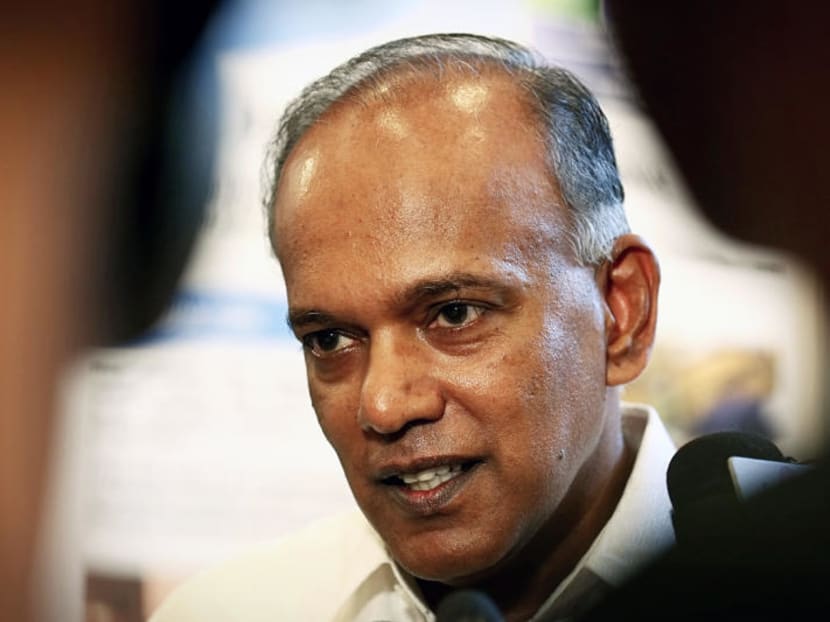
The Singapore courts could soon turn to deferred prosecution agreements for certain corporate offences, where the prosecutors will agree not to prosecute a corporate entity if they comply with specific conditions, said Law and Home Affairs Minister K. Shanmugam. TODAY file photo

SINGAPORE — The Singapore courts could soon turn to a new legal tool called deferred prosecution agreements for certain corporate offences, announced Law and Home Affairs Minister K Shanmugam at a dialogue with lawyers on Monday (Jan 15).
Under such agreements, prosecutors agree not to prosecute a corporate entity if it complies with specific conditions.
Deferred prosecution agreements recently featured prominently in media reports of the corruption probe involving Keppel Corporation's offshore and marine unit.
Keppel Offshore & Marine had entered into a deferred prosecution agreement with the United States Department of Justice, and has to pay a US$422 million fine to authorities in three countries for handing out bribes of more than US$50 million over 13 years to officials in Brazil in exchange for business deals.
Mr Shanmugam made no reference to the Keppel Offshore & Marine case on Monday at the "Modernising Criminal Justice: New Developments in Criminal Procedure" dialogue organised by the Law Society of Singapore (LawSoc).
Other jurisdictions in the United States and United Kingdom already have deferred prosecution agreements and it was "about time" Singapore introduced it, he said.
Corporations taken to task would avoid criminal conviction if they meet the conditions of the agreement but could pay higher fines compared to what the current criminal law provides for, he noted.
Such agreements are only for corporate offenders represented by counsel and are fully voluntary. The agreements will contain the statement of facts, expiry date and relevant financial penalty where applicable, among other things.
The terms of the agreement have to be approved by the High Court.
For this reason, LawSoc president Gregory Vijayendran said deferred prosecution agreements provide transparency and are not a case of "going light on corporations versus individuals".
They provide "a very practical avenue for which there can be discussions, for which there can be some protection in place for the public because the High Court is still going to scrutinise the matter", he told reporters.
There are also complexities in cases involving corporations. For instance, corporations are considered "artificial legal persons" and it can be difficult to pinpoint whose state of mind should be blamed for a corporate's wrongdoing, he noted.
"What constitutes the mind of the corporation and whose state of mind should be imputed to the corporation, these are difficult questions," he said.
Mr Vijayendran said the introduction of such agreements was "forward-looking" and will allow for more negotiations and discussions between defence counsel and prosecutors.
"There is going to be a focus on many of the corporations, multi-national corporations that are set up in Singapore… to want to be able to carry on (with) business and to be able to put a bad episode behind," he said.
In his speech, Mr Shanmugam said the LawSoc's feedback on proposed amendments to the Criminal Procedure Code and the Evidence Act have been very helpful and useful to the ministry.
Last July, the Ministry of Law (MinLaw) had announced 50 proposed changes to the Criminal Procedure Code and the Evidence Act, which were put up for a month-long public consultation from July till Aug last year. Another six amendments, including the introduction of the deferred prosecution agreements, were added after discussions with the LawSoc.
The proposed amendments are expected to be tabled in Parliament this year.
Among the proposals are video-recording of crime suspects when they have their statements taken by the police, so that the courts can better determine whether the statements were made voluntarily and how much weight to place on them. This will be mandated for suspects of certain offences, such as serious sexual crimes.
Vulnerable witnesses, such as alleged victims of sexual offences, may also have their interviews video recorded to save them the trauma of repeatedly recounting their ordeal during a trial.
Mr Shanmugam said on Monday that video recording of interviews, a long-standing request by the Bar, will be implemented in phases. This is because law enforcement officers will have to be trained in this area, among other reasons, he said.
Defence lawyers will be given transcripts of the recordings and will be able to view the footage at a secure location, but the authorities are not in favour of providing them with a copy of the footage, he said. In other jurisdictions, the tapes have found their way into the black market, he added.
Under changes proposed on the cross-examination of victims of sexual offences, lawyers are barred from dredging up or posing questions about the victims' sexual history and appearance and will have to apply to the court for permission if they want to do so.
After feedback from the LawSoc, Mr Shanmugam said the ministry made some adjustments to the proposed amendment, which will take into account the Bar's own guidelines on cross-examination.
Last November, TODAY reported that the LawSoc has drafted guidelines for legal practitioners involved in the cross-examination of child witnesses, complainants and alleged victims of sexual crimes.
According to the MinLaw, the proposed amendments seek to "strengthen the law and increase protection for the vulnerable, while maintaining a fair balance between the Defence and the Prosecution".
The CPC was last overhauled in 2010, while major amendments to the Evidence Act were made in 2012.
Stay in the know. Anytime. Anywhere.

Subscribe to our newsletter for the top features, insights and must reads delivered straight to your inbox.
By clicking subscribe, I agree for my personal data to be used to send me TODAY newsletters, promotional offers and for research and analysis.