
Dengue cases hit record high of 853 last week
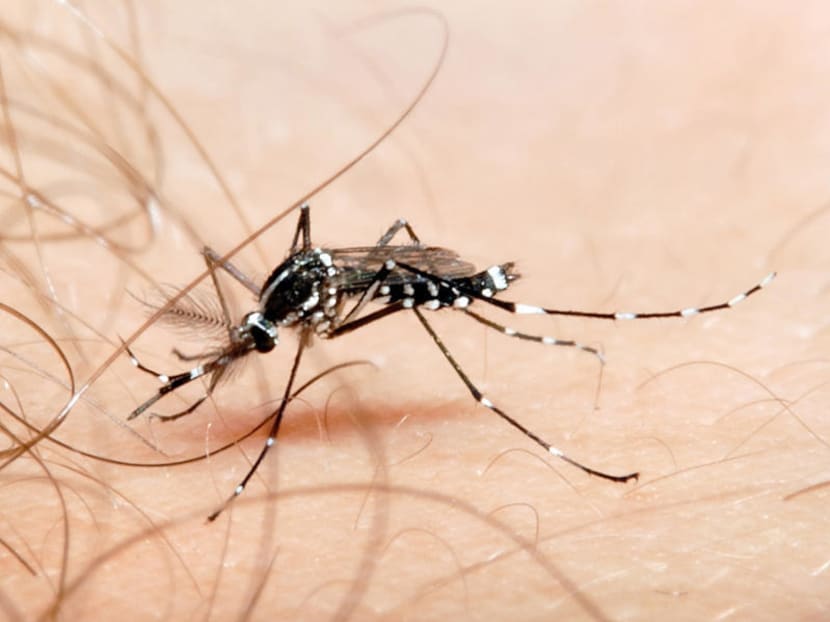

SINGAPORE — The number of weekly dengue cases hit an all-time high of 853 last week, quashing online speculation that the haze had blunted the march of the mosquito-borne disease.
The number also reversed a hopeful dip the previous week, when numbers fell for the first time in 11 weeks to 810 cases. The previous high was 814 reported cases at the start of this month. The total number of cases this year stands at 10,960 as of last week, with two deaths recorded.
Commenting in a Facebook post, Environment and Water Resources Minister Vivian Balakrishnan said: “We still had 853 cases of dengue last week — so there is no basis for the theory that haze would reduce the mosquitoes.”
The current strain of dengue is from a new serotype, or sub-group, and is propagating faster than previous strains.
Responding to queries on a possible link between dengue and the haze, the National Environment Agency (NEA) yesterday said “there is no evidence to support the hypothesis that haze may reduce the impact of dengue”.
A study published in 2010 by the National University of Singapore (NUS), Duke-NUS Graduate Medical School, Tan Tock Seng Hospital and Singapore Clinical Research Institute had found “no association between dengue activity and haze”.
Another scientific correspondence between Duke-NUS, DSO National Laboratories, NUS, University of Hawaii and the NEA’s Environmental Health Institute pointed out that though there was haze from 1997 to 1998, “the number of dengue cases (here) during those years were the highest recorded in the 1990s”. “Dengue cases were also similarly high in other South-east Asian countries during the period,” the NEA added.
The NEA said it is adopting “appropriate precautionary measures” against the haze for the health and safety of its dengue inspectors and control operations over dengue will continue with “minimal disruptions”.
All NEA officers tasked with checking public areas and outdoor sites will have N95 masks. Older NEA officers and those with respiratory and heart problems have been advised to be mindful of their health and report to supervisors if they encounter difficulty working outdoors and to seek medical attention if they feel unwell.
Related topics
dengueStay in the know. Anytime. Anywhere.

Subscribe to our newsletter for the top features, insights and must reads delivered straight to your inbox.
By clicking subscribe, I agree for my personal data to be used to send me TODAY newsletters, promotional offers and for research and analysis.






