
Every condo block to have a recycling bin
SINGAPORE — To get more households to recycle that extra milk carton or plastic bag, all condominiums will be required to provide a recycling bin for every block from August next year.
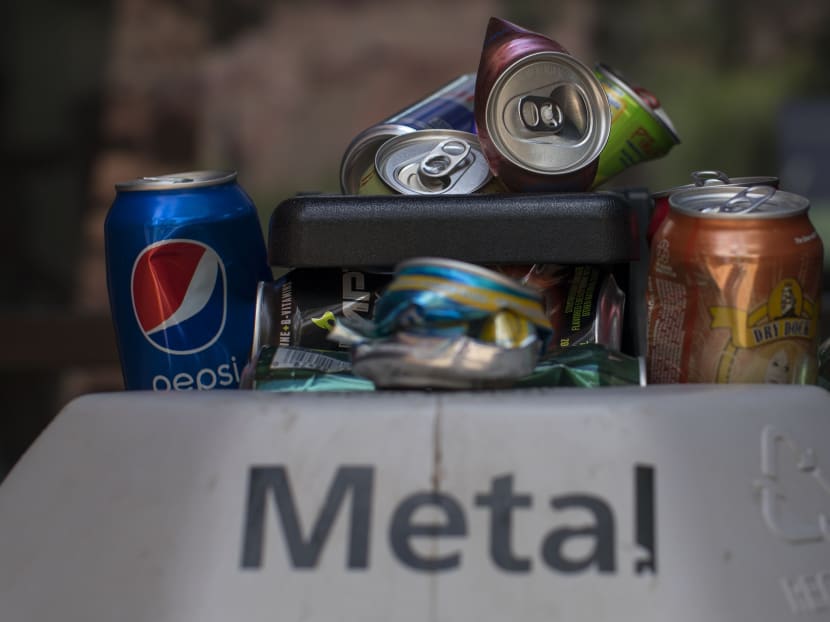
Domestic recycling rates inched up from 19 to 21 per cent between 2015 and last year but is still a far cry from the target of 30 per cent by 2030, as set out in the 2015 Sustainable Singapore Blueprint. Photo: The New York Times

SINGAPORE — To get more households to recycle that extra milk carton or plastic bag, all condominiums will be required to provide a recycling bin for every block from August next year.
More than half of the respondents in the National Environment Agency’s (NEA) customer satisfaction survey said they preferred to have a recycling bin at their block instead of only one common bin for the whole estate, the agency told TODAY.
“Over the years, NEA has received feedback from residents that they were not able to locate the recycling bins or that there were insufficient recycling bins within their estates,” a spokesperson said.
He added: “NEA is therefore making it a requirement for condominium managements to provide one recycling bin per block from 1 August 2018.”
In a similar move in 2011, the NEA required public waste collectors to provide a blue recycling bin at every Housing and Development Board block. Its full rollout took about three years.
Before that, five blocks shared a recycling bin. Since 2008, all condominiums and private high-rise apartments have been required to provide recycling receptacles — such as bins or bags — for paper, plastics, cans and glass.
With the new requirement, condo managements of some 3,000 developments here must submit a declaration of compliance to NEA, who will conduct follow-up inspections, the spokesperson said.
Domestic recycling rates inched up from 19 to 21 per cent between 2015 and last year but is still a far cry from the target of 30 per cent by 2030, as set out in the 2015 Sustainable Singapore Blueprint.
While the additional bins would encourage more residents to recycle, they may target those who are already keen, said Associate Professor Tong Yen Wah of the National University of Singapore’s Department of Chemical and Biomolecular Engineering.
“It’s a matter of convenience,” he said.
The bins could also get more people to start thinking about recycling, added Assoc Prof Tong.
Apart from providing the infrastructure, there should be more educational outreach on recycling, said Mr Eugene Tay, executive director of Zero Waste SG, a non-profit.
Domestic recycling rates have remained quite low despite the presence of a National Recycling Programme since 2001, he added.
But NEA said the household participation rate of the National Recycling Programme was more than 70 per cent last year.
In April last year, Senior Minister of State for Environment and Water Resources Amy Khor said about 30 to 50 per cent of materials thrown into the recycling bins were not suitable for recycling.
A study conducted by Assoc Prof Tong’s student found that recycling rates among some 1,000 residents significantly improved after outreach efforts by non-governmental organisations.
A resident of Kovana condominium who only wanted to be known as Ms Ling, 27, only recently noticed the bin on the sub-ground floor and said it should be placed at a more noticeable location.
"Honestly, I wouldn't have spotted it if not for my friend who pointed it out when we were standing outside the condo. It should be placed on the ground floor next to the general bins," she added.
Ms Ling does not recycle often, but said that for a start, having one recycling bin is sufficient. The condominium only has one block of residential units.
"At least it is convenient without having to go elsewhere to recycle," she added.
Others like engineer Angeline Lee, 24, who already recycles regularly, said more incentives, such as supermarket rebates, could encourage more people to pick up the habit.
Ms Lee began sorting her waste after studying in Norway two years ago. She now throws paper and plastic waste into their respective bins at her block in Jewel@Buangkok.
She avoids the common recycling chute provided at her condominium after once seeing it used for normal waste disposal, when the usual chute was full.
“That made me think, how exactly do they collect that (recyclable) waste?” she said.
Stay in the know. Anytime. Anywhere.

Subscribe to our newsletter for the top features, insights and must reads delivered straight to your inbox.
By clicking subscribe, I agree for my personal data to be used to send me TODAY newsletters, promotional offers and for research and analysis.






