
LawSoc disputes advocacy group’s ‘mischievous and defamatory’ online post
SINGAPORE — Advocacy group Transient Workers Count Too (TWC2) has removed a post on its website stating legal advice is “unnecessary” for workers with work injury compensation claims, following a forceful response from the Law Society of Singapore that branded parts of it defamatory.
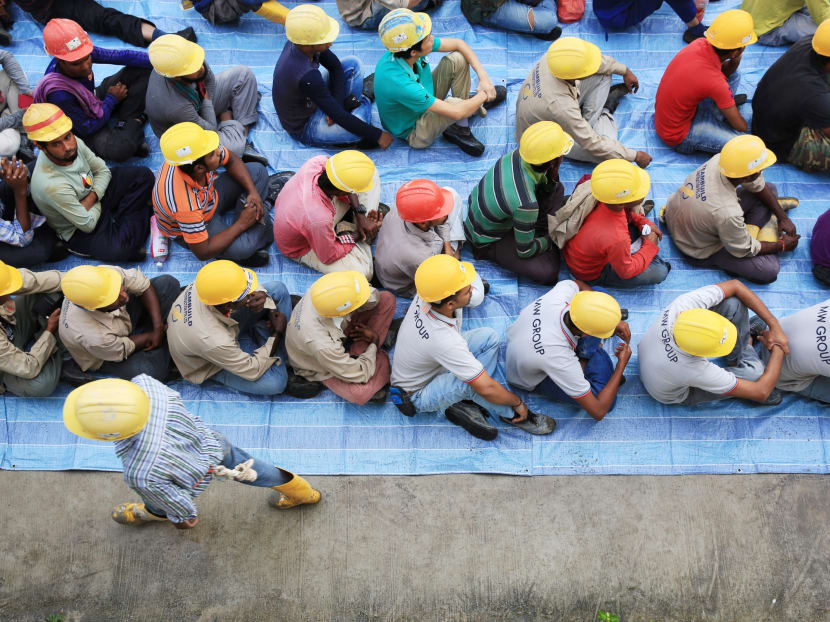
LawSoc president Gregory Vijayendran and its personal injury and property damage committee chairman Willy Tay took issue with Advocacy group Transient Workers Count Too’s “naming and shaming” of law firms and said the article unfairly suggested it was neither necessary nor advantageous for work-injury victims to engage lawyers. TODAY file photo

SINGAPORE — Advocacy group Transient Workers Count Too (TWC2) has removed a post on its website stating legal advice is "unnecessary" for workers with work injury compensation claims, following a forceful response from the Law Society of Singapore that branded parts of the article defamatory.
In the Nov 12 article titled "Injury Lawyers Ever Eager To Take Their Cut", TWC2 executive committee member Debbie Fordyce had included a list of 14 law firms most commonly engaged by workers that later appeared before TWC2. From 2014 to Aug this year, TWC2 helped more than 4,500 workers with injury claims – of this number, the vast majority had engaged a lawyer.
Ms Fordyce went on to describe how some lawyers or their assistants allegedly capitalised on foreign workers' ignorance to engage in unethical practices such as touting, taking up cases for which legal assistance is unnecessary, and doubling up as housing agents for workers denied support from their employers.
Unlike civil lawsuits, claims under the Work Injury Compensation Act (Wica) are a no-fault process. Ms Fordyce wrote that in TWC2's experience, most Wica claims do result in compensation for the victims and workers can get help with the claims from TWC2 or at the Ministry of Manpower (MOM) at no cost.
In its work injury compensation guide for employees available online, MOM's advice is also that workers do not need a lawyer as the compensation amount is based on a fixed formula. The ministry has interpreters who can speak Bengali, Tamil, Mandarin and Malay to help workers, the guide stated.
Approached by TODAY, LawSoc president Gregory Vijayendran and its personal injury and property damage committee chairman Willy Tay took issue with TWC2's "naming and shaming" of law firms. The article unfairly suggested it was neither necessary nor advantageous for work-injury victims to engage lawyers, they said.
"To tabulate a list of law firms… and prominently display the same on their website is both mischievous and defamatory of the law firms concerned," said Mr Vijayendran and Mr Tay.
"TWC2's zeal for a worthy cause has regrettably not been matched with a sense of balance, fair play and circumspection on this occasion."
The society wrote to TWC2 asking for the list of law firms to be removed. TWC2 removed the entire post from its website on Wednesday night (Nov 29). Ms Fordyce said it apologised for any offence caused.
"Our objective is not to malign the legal profession, but when we notice continuous and deliberate exploitation of the vulnerability of migrant workers by groups purporting to represent their interests, we feel the need to speak out," she said.
Mr Vijayendran and Mr Tay said it previously advised TWC2 to help workers with ethical grievances to lodge complaints, and the group did so. A proper inquiry of genuine complaints would be undertaken, they said.
In the last five years, eight of 450 complaints against lawyers lodged with the LawSoc related to workplace injury claims, the society told TODAY. Half of these were dismissed on merits, one was withdrawn by the workers, and two resulted in warnings. The last is still pending.
One of the listed lawyers who responded to TODAY's queries said the volume of cases handled by the law firms listed by TWC2 show the firms have served injured workers well.
"It is fallacious and misleading to say that injured migrant workers are afraid to discharge their respective lawyers. (Each worker) is aware of his right of access to justice...and is sufficiently experienced and knowledgeable enough to decide which law practice to engage, and if necessary, change his legal representative," said Mr Joseph Chen.
Ms Fordyce said she stands by her point that legal assistance is unnecessary for the bulk of Wica claims.
"It is easy money for doing nothing...The work injury compensation system is (also) available to all Singaporeans… Do Singaporeans regularly use lawyers (for this)?" she questioned.
In her post, Ms Fordyce had said some lawyers "pressurise" their clients to withdraw claims filed under the Wica and seek compensation through a civil suit, which could yield a higher amount of damages.
"But the process is not transparent and workers fear, justifiably, that their lawyer will extract a larger but unknown portion of the amount," she wrote.
Lawyers are not allowed to tout or pay referral fees, said Mr Vijayendran and Mr Tay. "The few black sheep in this Bar will face the music in the usual way," they said.
They maintained lawyers play a "valuable and critical role in advising foreign workers of their rights and remedies".
The choice between a common law claim (a lawsuit) and a statutory compensation claim (a Wica claim) is an important decision for an injured worker to make, they said.
"The choice must be a legally informed one requiring the advice and assistance of a lawyer. Some lawyers even assist pro bono. Injured workers engaging lawyers to advise and act for them is natural, necessary and part and parcel of the normal practice of law," they said.
Stay in the know. Anytime. Anywhere.

Subscribe to our newsletter for the top features, insights and must reads delivered straight to your inbox.
By clicking subscribe, I agree for my personal data to be used to send me TODAY newsletters, promotional offers and for research and analysis.






