
MPs raise concerns on issues that could affect public bus sector
SINGAPORE — As laws were passed to give the Land Transport Authority (LTA) more teeth in running the public bus industry, Members of Parliament (MPs) today (Aug 18) flagged potential problems that could trip up the sector down the road.
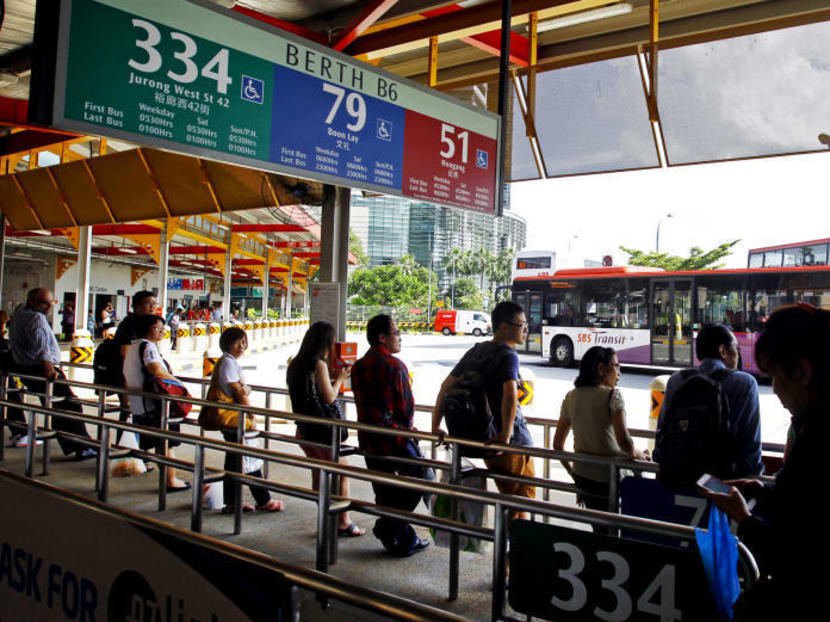
TODAY file photo

SINGAPORE — As laws were passed to give the Land Transport Authority (LTA) more teeth in running the public bus industry, Members of Parliament (MPs) today (Aug 18) flagged potential problems that could trip up the sector down the road.
Increased competition from new operators under the bus contracting model may inadvertently lead to more problems on the manpower front in a tight labour market, they said. And in the transition to the new model, how will the authorities ensure that service standards are upheld by both new and incumbent operators, they asked.
The Bus Services Industry Bill was passed in Parliament today, which will provide for the Land Transport Authority (LTA) to take over the regulation of the operators of bus services, depots and interchanges from the Public Transport Council (PTC). It also empowers the LTA with “step-in” rights to take over operations in cases where a bus operator that serves large number of commuters is no longer able to operate, or fails repeatedly to meet standards and LTA feels it is necessary to take over.
The new act will also put in place a licensing regime with two classes, similar to the regime under the PTC. Class 1 licences are for major bus operators, namely those which bid for bus service packages under the bus contracting model, like SBST, SMRT Buses and Tower Transit. Class 2 licenses are for private bus operators and operators of individual public bus services like City Direct Services.
Class 1 licensees will be subject to stricter requirements. For example, licensees must seek LTA’s approval in appointing or removing their chief executive officer and board directors. Where conditions are breached, the LTA can also impose financial penalties, issue directions for operators and suspend or revoke a license, among other actions.
Nominated MP Thomas Chua said the new competition brought in by the bus contracting model would “exacerbate the manpower shortage” in the industry. New entrant Tower Transit intends to recruit 700 drivers, which would “present a great challenge” to the operators of current bus services, school bus services and logistics services, he said.
Jurong GRC MP Ang Wei Neng, who is also senior vice-president in SBST, said an SBST bus captain’s basic pay is now 48 per cent higher than in 2010, but the proportion of local drivers as a percentage of the total number of drivers has fallen by more than 10 per cent.
Last year, SBST only managed to hire 76 Singaporeans, compared to more than 1,000 Malaysians. Noting that Singaporeans shun bus captain positions due to the “unearthly hours” and a lack of respect for the profession, Mr Ang said better pay and working conditions like better rest areas at bus interchanges, are needed.
In response, Transport Minister Lui Tuck Yew said the bus contracting model is expected to bring some improvements to the profession. Bus operators will have to “consider enhancing their human resource practices and making offers that are attractive enough to potential employees”. LTA will give positive consideration to bids that provide a strong plan for local recruitment and retention, he added.
LTA has also been building depots and interchanges with better facilities and rest areas to improve staff welfare and will “as much as possible” try to retrofit existing interchanges and depots, he noted.
As for difficulties bus captains face, Mr Lui said: “I think all of us can certainly do more to be more patient, tolerant, forgiving, and also to encourage the bus captains along, because indeed their hours of work are very long and tedious.”
Non-Constituency MP Gerald Giam asked how the LTA would ensure incumbents maintain high service levels as they transition out of contracts they had lost. He also noted that with bus operators responsible for the maintenance of bus assets, “LTA’s lack of direct involvement in bus operations could result in information asymmetry between the regulator and the operators”, which may result in LTA not being able to take necessary regulatory action.
Mr Lui assured that operators are required to adhere to LTA’s maintenance requirements, and the authority will hold regular audits and deduct from their service fee for failure to meet standards.
Also passed today were amendments to the PTC Act, which will institutionalise the PTC’s new advisory role to the Government. The changes also formalise changes to the fare review mechanism, and empower the PTC to require public transport operators to implement concession schemes as part of fare applications.
The PTC will research global trends and best practices and gather feedback on public transport, and is expected to publish its recommendations to the Government once a year.
Also introduced were penalties against taxi companies who flout new regulations standardising the taxi fare structure announced in March. Currently, drivers can be fined up to S$2,000 or jailed up to six months, or both. With the amendments, companies could also be fined up S$100,000, jailed up to six months, or both.
It will also be easier to nab fare evaders. Previously, only those who have travelled a distance on a public bus or train without paying fares will be penalised. With the amendments, fare cheats will only need to have attempted to travel – such as by jumping fare gates - to be penalised.
The new laws are expected to take effect early next year.
Stay in the know. Anytime. Anywhere.

Subscribe to our newsletter for the top features, insights and must reads delivered straight to your inbox.
By clicking subscribe, I agree for my personal data to be used to send me TODAY newsletters, promotional offers and for research and analysis.






