
More hospitals and polyclinics by 2030
SINGAPORE — By 2030, Singapore’s healthcare system could feature 10 new acute and community hospitals and up to 12 more polyclinics.
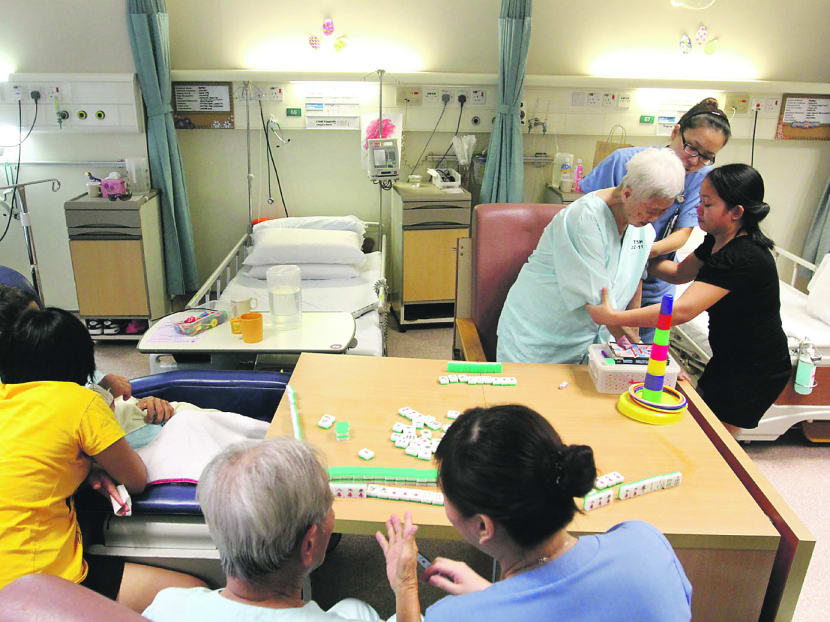
Primary healthcare capacity is anticipated to grow in the coming years. TODAY file photo

SINGAPORE — By 2030, Singapore’s healthcare system could feature 10 new acute and community hospitals and up to 12 more polyclinics.
Unveiling the infrastructure plans in Parliament yesterday, Health Minister Gan Kim Yong said Singapore is on track in its bid to enhance access to healthcare services.
Six of the hospitals — two acute hospitals, Ng Teng Fong General Hospital and Sengkang General Hospital, and four community hospitals — will open between end-2014 and 2020.
Together with expanded capacity at existing facilities like the National University Hospital, they will add 4,100 more acute and community hospital beds by 2020 — 400 more than what was announced last year, and about a 50 per cent increase from current capacity.
Between 2020 and 2030, Mr Gan said the Government anticipates “we may need to build four new acute hospitals”.
“We are ... studying regional demographic profiles to identify the likely locations of these new hospitals, and we will review our infrastructure plans nearer 2020,” he said in the Ministry of Health’s Committee of Supply debate.
In recent years, the total number of days spent by citizens and permanent residents overnight in public acute hospitals has grown by about 4 per cent yearly — from about 1.5 million bed-days in 2006 to 1.8 million bed-days in 2011, said Mr Gan. The increase was largely due to an ageing population.
The number of foreign patients has remained constant at about 2 per cent of the public sector’s total patient load over the years.
Primary healthcare capacity will also grow in the coming years. Mr Gan announced that a new polyclinic will be built near Pioneer in the Jurong West area. The Punggol polyclinic — first announced in 2011 by former Health Minister Khaw Boon Wan — will open by 2017, Mr Gan added. He anticipates that Singapore will need another four polyclinics by 2020, and another six to eight by 2030.
In the meantime, Tampines, Ang Mo Kio and Bedok polyclinics will be refurbished or redeveloped to cater to more patients.
Mr Gan was responding to several Members of Parliament, including Dr Lam Pin Min and Dr Teo Ho Pin, who asked about expanding primary healthcare facilities to meet future needs. He also spoke of two community healthcare initiatives involving the private sector — Community Health Centres (CHCs) and Family Medicine Clinics (FMCs).
Three new CHCs sited in Bedok, Jurong East and Tiong Bahru will open by the end of this year, adding to the only one in Tampines currently. General practitioners (GPs) in each area will be able to refer their patients for services like eye screening provided by allied health professionals and other support staff at the CHCs.
Four FMCs will be piloted this year at Clementi, Lakeside, Ang Mo Kio and Bedok. They will feature six to 12 private GPs, nurses and allied health professionals housed under one roof, enabling patients to receive comprehensive care by a regular care team.
Mr Gan said the ministry will continue to explore different operating models with GPs to best suit their needs as well as that of patients.
Stay in the know. Anytime. Anywhere.

Subscribe to our newsletter for the top features, insights and must reads delivered straight to your inbox.
By clicking subscribe, I agree for my personal data to be used to send me TODAY newsletters, promotional offers and for research and analysis.






