
MRT tunnel flooding: SMRT shelled out S$2m in repairs, replacements
SINGAPORE — Rail operator SMRT spent about S$2 million to repair and replace equipment and components after the flooding of MRT tunnels in October last year, Transport Minister Khaw Boon Wan said.
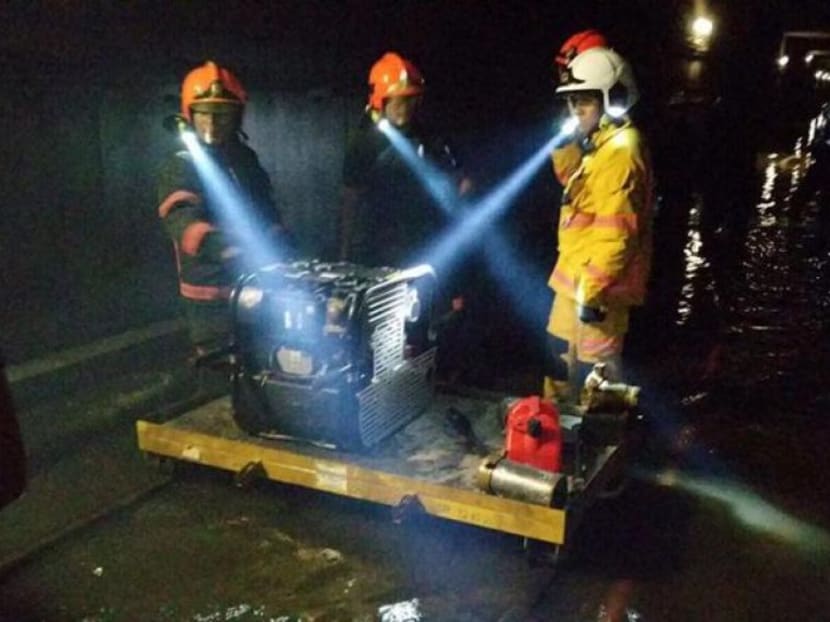
Rail operator SMRT spent about S$2 million to repair and replace equipment and components after the flooding of MRT tunnels in October last year, Transport Minister Khaw Boon Wan said. Photo: SCDF



SINGAPORE — Rail operator SMRT spent about S$2 million to repair and replace equipment and components after the flooding of MRT tunnels in October last year, Transport Minister Khaw Boon Wan said.
The flooded tunnels between Bishan and Braddell stations had “submerged trackside equipment as well as components installed on the undercarriage of the train that had stalled in the tunnel”, Mr Khaw said in a written parliamentary reply to Mr Leon Perera, Non-Constituency Member of Parliament from the Workers’ Party.
Mr Perera had asked what was the extent of damage to equipment or facilities, and the estimated cost of repairs and restoration work.
The unprecedented incident in October disrupted train services for about 231,000 commuters along a long section of the North-South Line over two days.
The investigation report released by the Land Transport Authority (LTA) last month found three problems — all owing to negligence by maintenance workers — as possible causes of why the anti-flooding pumps near Bishan MRT Station failed to activate even though they were in working order.
Earlier, SMRT’s maintenance workers were found to have doctored maintenance records for nearly a year when they had not carried out their work.
Two of the problems cited by the LTA in the investigation report had to do with a massive stormwater tank, called a sump pit, not being cleaned.
For instance, there was sludge or silt build-up at the bottom of the tank. The sludge and other materials that collected in the tank could have impeded the proper functioning of the float switches, which activate the water pumps when water reaches certain levels. These could also have “hampered the efficiency of the pumps, one-way non-return valves and the piping system along which the extracted water would flow to the surface drainage”, the LTA said.
Another possible cause identified had to do with the erroneous setting of pump controls by maintenance workers. Investigations found that SMRT’s maintenance team may not have returned the pumps to “automatic” mode after corrective maintenance was done on the pumps in July last year.
The authority, however, said that it could not be determined whether it was one or more of these failings that allowed the stormwater tank to overflow, as remedial steps were taken immediately after the tunnel flooding. This made it impossible to recreate the exact conditions that led to the incident.
In the wake of the fiasco, the LTA and SMRT cranked up anti-flooding measures at the Bishan station’s sump pit to prevent a repeat, including replacing all the float switches and repositioning the pump control panel away from the tracks to allow swifter access to controls during operation hours.
SMRT also fired eight staff members over the incident and could pursue legal action against two former executives. Three others were disciplined.
Stay in the know. Anytime. Anywhere.

Subscribe to our newsletter for the top features, insights and must reads delivered straight to your inbox.
By clicking subscribe, I agree for my personal data to be used to send me TODAY newsletters, promotional offers and for research and analysis.






