
Surge in applications for unmanned drones
SINGAPORE — Applications to operate unmanned drones weighing less than 7kg surged six-fold last month from the monthly average of 12 last year, said Senior Minister of State (Transport) Josephine Teo in Parliament today (Feb 12).
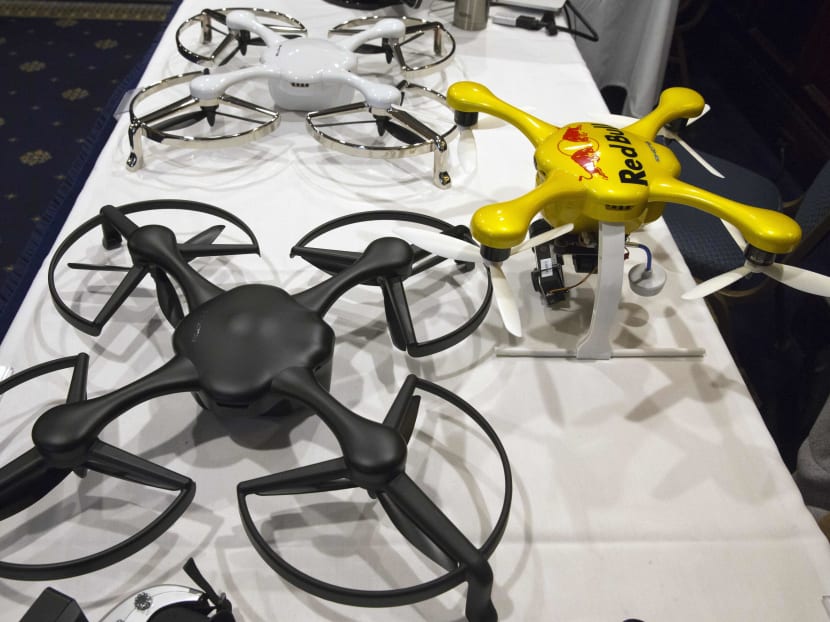
Ghost drones are displayed at an event with the Small Unmanned Aerial Vehicles (UAV) Coalition, Jan 20, 2015, at the National Press Club in Washington. Photo: AP

SINGAPORE — Applications to operate unmanned drones weighing less than 7kg surged six-fold last month from the monthly average of 12 last year, said Senior Minister of State (Transport) Josephine Teo in Parliament today (Feb 12).
About 70 to 80 per cent of the 70 applications were approved, while the rest were rejected, mainly for safety reasons, said Mrs Teo.
She was responding to a supplementary question raised by Member of Parliament (MP) for Nee Soon GRC Lim Wee Kiak about the number of permits issued for unmanned aircraft weighing less than 7kg.
In recent years, drones have been rising in popularity among film-makers, photographers and hobbyists. Drones are radio-controlled aircraft that can go on autopilot and cost anything from tens to thousands of dollars.
Their popularity has raised concerns about privacy, especially with camera drones, and the dangers they pose if there was a collision or crash.
Unmanned drones weighing more than 7kg (without fuel) are subject to the same strict regulations and controls as manned aircraft, such as registration, air-worthiness and flight operations requirements.
For unmanned aircraft weighing less than 7kg, a permit from the Civil Aviation Authority of Singapore is needed if they are being flown within 5km of an aerodrome or, outside that radius, at an altitude higher than 61m above mean sea level.
In July last year, Transport Minister Lui Tuck Yew had said there would be a new framework to regulate drones and their operation, following a review by the authorities on the safety and security risks from unmanned aircraft activities.
When Dr Lim asked when the review would be concluded, Mrs Teo said it was a multi-agency effort. “As we are doing the review, we are also taking a closer look at countries such as the United States and Australia who are similarly looking at the regulatory framework, because there are lessons to be learnt and experiences to be shared.”
The consultation with relevant stakeholders will take place in the next few months, she added.
Stay in the know. Anytime. Anywhere.

Subscribe to our newsletter for the top features, insights and must reads delivered straight to your inbox.
By clicking subscribe, I agree for my personal data to be used to send me TODAY newsletters, promotional offers and for research and analysis.






