
Schools ‘must look out for students but cannot obstruct investigations’
SINGAPORE — Schools will always take appropriate steps to look after their students’ interest but they cannot do so in a way that obstructs police investigations, Acting Minister for Education (Schools) Ng Chee Meng said in Parliament on Tuesday (March 1).
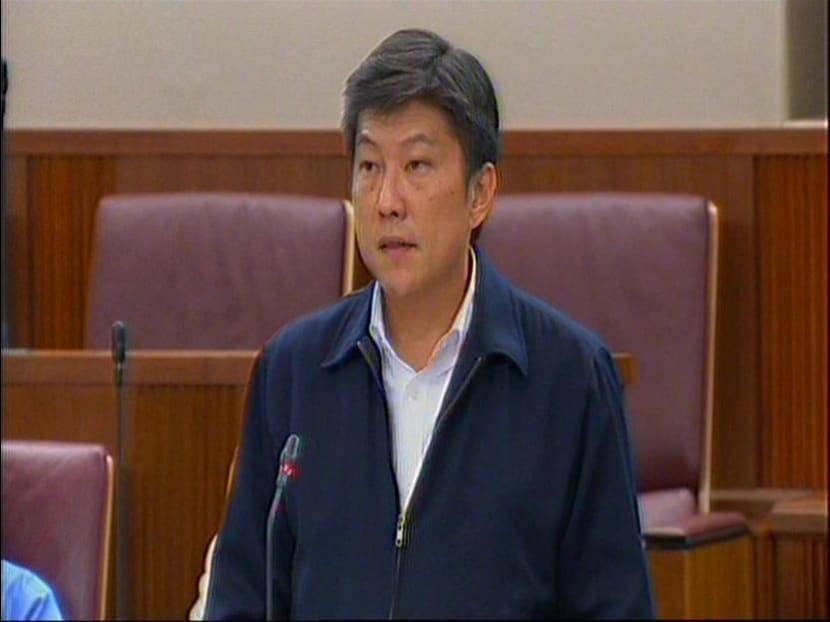
Acting Minister for Education (Schools) Ng Chee Meng in Parliament on March 1, 2016.

SINGAPORE — Schools will always take appropriate steps to look after their students’ interest but they cannot do so in a way that obstructs police investigations, Acting Minister for Education (Schools) Ng Chee Meng said in Parliament on Tuesday (March 1).
In a ministerial statement addressing public queries arising from the death of teenager Benjamin Lim, Mr Ng stressed that schools have dual responsibilities when a student becomes a suspect in a police case.
Benjamin was questioned by the police on Jan 26 for allegedly molesting a girl. He was found dead later that same day at the foot of his family’s HDB block.
Six Members of Parliament posed questions to Mr Ng in Parliament on Tuesday, asking whether the school could have done more in this case, and in general, provide more support to students when they return to school after being questioned by the police.
In his speech, Mr Ng noted that some members of the public have suggested that schools should shield their students from the police, and not allow them to be taken away for questioning without their parents’ consent.
While such suggestions sounded “plausible”, the reality “is not so straightforward”. “The police carry out an important public function to uphold the law and keep Singapore safe and secure. It is reasonable, and indeed expected that our schools cooperate with police investigations,” Mr Ng said.
Addressing public concerns over the case, Mr Ng shared that secondary schools deal with an average of 1,350 arrest cases involving students each year, for offences such as theft, mischief by fire, wilful trespass, sexual offences, rioting and in some cases, endangerment to life. The Ministry of Education added that the number of student arrests has stayed at this relatively low level over the past few years.
Laying out the approach taken by schools when students are asked to assist with police investigations, Mr Ng said first, teachers and school staff are to be discreet when bringing a student to meet the police.
They will check the student’s physical and emotional well-being before letting the police speak to the student, and request to be present if an initial interview is conducted at the school.
In deciding whether an interview should be conducted in the school or the police station, the prerogative lies with the police, said Mr Ng. Other steps taken by schools include requesting that the student not be handcuffed if he or she is brought to the station, and closely monitoring the student’s well-being when he or she returns to school.
Pointing out that these steps are not new, Mr Ng said Benjamin’s school had worked with the police to ensure the relevant procedure was followed. For example, the principal instructed the school counsellor on the same day to call Benjamin’s mother to check on the teenager’s well-being.
During the debate, Mr Ang Wei Neng (Jurong GRC) suggested the MOE consider assigning its staff to accompany students who are brought to the police station until their parents arrive, while Dr Intan Azura Mokhtar (Ang Mo Kio GRC) asked if the school counsellor should have met with Benjamin and his mother personally instead of discussing the matter of the school camp over the phone.
Non-Constituency MP (NCMP) Daniel Goh also questioned if a psychological assessment for suicide risk should be conducted for students who have been questioned by the police, while NCMP Leon Perera proposed providing counselling or a hotline to support students who are under police investigation.
Mr Ng said that school counsellors can tap on a network of Family Service Centres if they decide a student requires further counselling but nonetheless said it was a suggestion he would look into. He also reiterated that school processes will be adapted and refined where needed, to align them with the recommendations arising from the police review, such as having requiring school staff to act as an “appropriate adult” at the police station.
Stay in the know. Anytime. Anywhere.

Subscribe to our newsletter for the top features, insights and must reads delivered straight to your inbox.
By clicking subscribe, I agree for my personal data to be used to send me TODAY newsletters, promotional offers and for research and analysis.






