
Stiffer fines proposed for firms that cause haze
SINGAPORE — The Government has proposed stiffer fines of up to S$2 million for companies that cause unhealthy levels of haze, following feedback that suggested fines were too low.
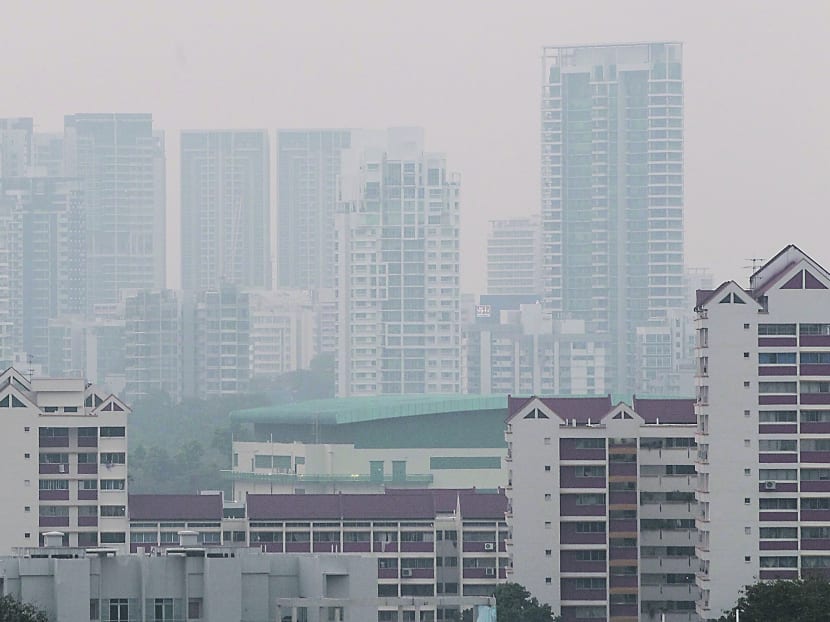
Under proposed laws introduced in Parliament yesterday, a firm can be fined up to S$100,000 a day for every day of unhealthy haze that blankets Singapore.
Today file photo

SINGAPORE — The Government has proposed stiffer fines of up to S$2 million for companies that cause unhealthy levels of haze, following feedback that suggested fines were too low.
Under proposed laws on transboundary haze pollution that were introduced in Parliament yesterday, a firm can be fined up to S$100,000 a day for every day of unhealthy haze that blankets Singapore — for a continuous period of 24 hours or more — at about the same time as the company’s haze-causing activities.
Also, companies that fail to comply with notices to take preventive measures during a period of haze could be fined up to an additional S$50,000 a day. The maximum penalty for each of the offences is capped at S$2 million.
Amendments to the draft legislation were made following a month-long public consultation earlier this year, in which respondents noted that the proposed fines were too low. The Government had initially proposed that errant firms be fined up to S$300,000 if they were found to have caused or contributed to the haze, or up to S$450,000 if they deliberately ignored requests to prevent, reduce or control the haze.
Some who provided feedback on the draft Bill also felt that non-landowning entities — which have agreements such as leases and licences with landowners — should also be held responsible for contributing to transboundary haze. Hence, the Government is proposing that an “owner” be defined as any person or entity that holds a valid lease, licence or permit to carry out farming or forestry operations, or one who has an arrangement with its landowner to do so. These persons or entities can also be held accountable for causing the haze.
Speaking to reporters last Friday, Minister for the Environment and Water Resources Vivian Balakrishnan said the penalties have been increased to send an “unequivocal signal” to deter companies from engaging in irresponsible behaviour.
However, he also reiterated that proving that parties are responsible for transboundary haze will be a challenge and that the Bill cannot act in isolation. “This is an ASEAN (Association of Southeast Asian Nations) problem. We need effective collaboration and cooperation between governments. We need to share information and the results of our investigations,” he said.
To make enforcement more effective, officers will be empowered to serve a notice in writing to obtain documents and information that are relevant to investigations and prosecution. The court can also require people to remain in the country to ensure the parties comply with the notice.
The Bill tabled yesterday, which also allows for civil action for losses due to haze, does not stipulate the level of haze that Singapore has to experience before firms or other entities are found to have committed an offence. This is expected to be addressed in the second reading of the Bill. A spokesperson for the Ministry for the Environment and Water Resources said the “unhealthy level” of haze would be determined based on the Pollutant Standards Index framework.
Air pollutants and climate change expert Jason Blake Cohen of the National University of Singapore welcomed the stiffer proposed fines, noting that companies would choose the “polluting way” if penalties on environment-related issues were too low.
However, he added that the causes and timeline on when a piece of land has been burned are also issues that need to be considered, especially in instances in which a firm steps in to use the land only after it has been cleared and is thus not held responsible for causing transboundary haze.
Stay in the know. Anytime. Anywhere.

Subscribe to our newsletter for the top features, insights and must reads delivered straight to your inbox.
By clicking subscribe, I agree for my personal data to be used to send me TODAY newsletters, promotional offers and for research and analysis.






