
Town council’s lapses ‘affect residents’ interests, safety’
SINGAPORE — Lacking in transparency, appointing a related party as its managing agent and failing to promptly deal with problems — such was the pattern of behaviour on the part of Aljunied-Hougang-Punggol East Town Council (AHPETC), and this has implications on residents’ interests and safety, said National Development Minister Khaw Boon Wan yesterday.
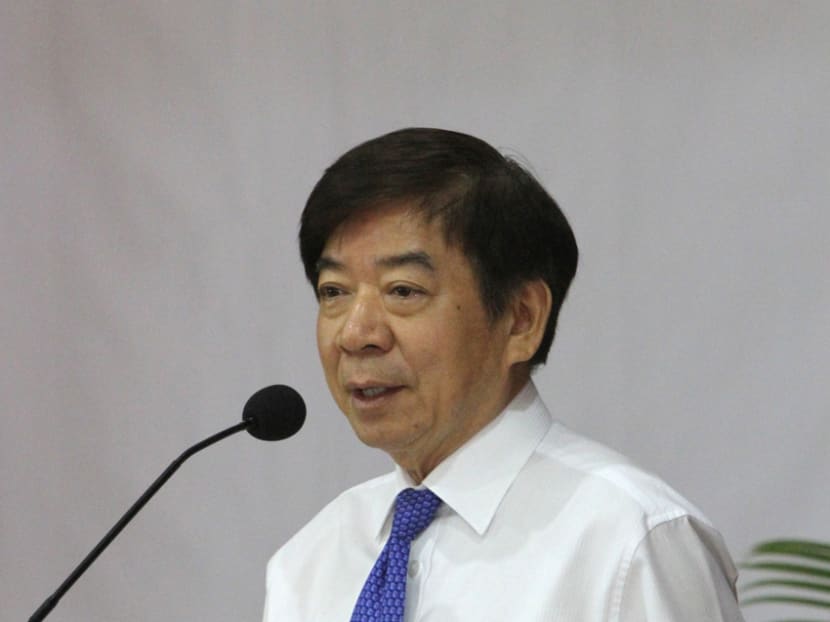
Today File Photo

SINGAPORE — Lacking in transparency, appointing a related party as its managing agent and failing to promptly deal with problems — such was the pattern of behaviour on the part of Aljunied-Hougang-Punggol East Town Council (AHPETC), and this has implications on residents’ interests and safety, said National Development Minister Khaw Boon Wan yesterday.
Kicking off a motion in Parliament to address the issues raised by the Auditor-General’s report on AHPETC’s finances and management, Mr Khaw noted that this was the first time the Auditor-General had undertaken a special audit on a town council to look into concerns about its financial circumstances.
Questions on how AHPETC is spending its funds — which include grants from the Ministry of National Development — directly affect the interests and safety of the constituencies’ residents. “They are not trivial technical issues raised merely to satisfy the accountants and auditors or meet financial regulations,” Mr Khaw said. “Unfortunately, the observations in AHPETC auditor’s report have raised serious questions about the reliability and accuracy of its financial and accounting systems.”
Lapses such as not having a proper accounting system and failing to submit financial reports mean AHPETC’s financial statements failed to accurately reflect the town council’s financial position. Thus, AHPETC runs the risk of easily slipping into financial difficulties without realising it.
On top of this, the town council’s failure to transfer monies to its sinking fund could eventually lead to residents living in blocks where lifts are unsafe or unreliable, or other infrastructure often breaking down, Mr Khaw said.
The sinking fund is used for the improvement and long-term maintenance of properties.
Noting that AHPETC had failed to transfer the required amount of monies into its sinking fund within the stipulated time frame, Mr Khaw said: “There is always the temptation, when a town council is financially strapped, to postpone saving and say it will make up the shortfall later ...
“Just spend, use the savings first. Sounds appealing, but the town council will then be simply running down its reserves and mortgaging the future of its residents away.”
The failure to carry out cyclical maintenance work is an even graver safety concern, he said. AHPETC’s FY2013 cyclical maintenance work report on delays on replacing major infrastructure — such as replacing lifts after 28 years — was late for more than six months as well as incomplete and inaccurate, Mr Khaw added.
“If the town council (delays) the replacement of a lift beyond its recommended operating life, we require the town council to disclose it and declare that it remains in serviceable condition and has been duly certified by qualified personnel. But AHPETC does not seem to be exercised over such reporting.”
As for related-party transactions where AHPETC did not adequately manage its conflicts of interest, Mr Khaw said this could mean the town council might not have obtained the best value for money or might not even be able to detect or prevent wrongdoing or unethical practices.
With AHPETC awarding close to S$27 million worth of contracts to its two related parties, Mr Khaw said: “Residents and taxpayers need to know their monies are properly spent and that they are getting the best value for money. When these contracts are awarded to parties related to the town council, the town council needs to be upfront with its residents as well as with taxpayers at large, so there is transparency and proper scrutiny.”
The two parties in question are FM Solutions and Services, and FM Solutions and Integrated Services, which were engaged to carry out managing agent services as well as essential maintenance and lift rescue jobs.
Mr Khaw cited AHPETC’s lack of a proper system to monitor its service and conservancy charges arrears as an example of its failure to “deal expeditiously” with problems.
Though the problem surfaced in June 2013, the town council said it started looking into enhancing its aggregated arrears reporting module only in November last year.
Mr Khaw said: “The Auditor-General’s findings confirm that something is very wrong at the AHPETC. They paint a picture of financial mismanagement, incompetence and negligence in corporate governance. If an auditor makes such a finding on a listed company, it would immediately cause consternation among the shareholders and a call for the removal of the CEO and the board of directors.
“In Japan, the CEO and board of directors will call a press conference and take a deep bow and, in the good old days, they may even commit hara-kiri. Where there are breaches of the Companies Act, both the company as well as the individuals responsible will be charged, and if found guilty, punished with fines and/or jail terms for the individuals.
“Unfortunately, throughout this saga we have found the MPs running the AHPETC to be evasive, unresponsive and misleading.”
Stay in the know. Anytime. Anywhere.

Subscribe to our newsletter for the top features, insights and must reads delivered straight to your inbox.
By clicking subscribe, I agree for my personal data to be used to send me TODAY newsletters, promotional offers and for research and analysis.