
When it is not enough for SMRT to apologise for breakdowns
The Mass Rapid Transit (MRT) service disruption on Oct 7 due to flooding of the tunnel between Bishan and Bradell MRT stations was one of the longest service disruptions on the North-South Line (NSL).
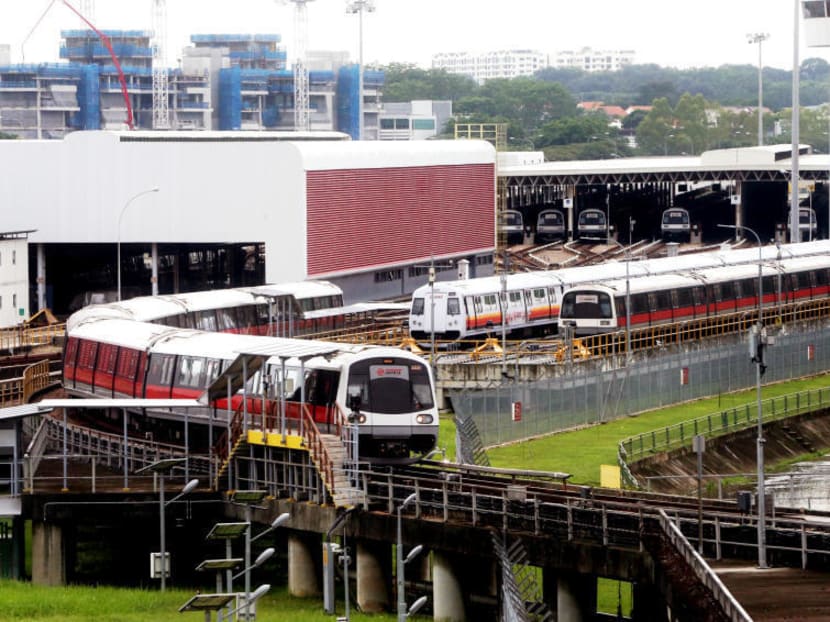
Transport Minister Khaw Boon Wan said that the SMRT team in charge of the anti-flood system at Bishan station had “failed us”. TODAY File Photo

The Mass Rapid Transit (MRT) service disruption on Oct 7 due to flooding of the tunnel between Bishan and Bradell MRT stations was one of the longest service disruptions on the North-South Line (NSL).
Nine days later, Coordinating Minister for Infrastructure and Minister for Transport Khaw Boon Wan called a press conference to explain the cause of the disruption.
An anti-flood system in the tunnel had failed to work and was not replaced in time. Mr Khaw said that the SMRT team in charge of the anti-flood system at Bishan station had “failed us”. He and the SMRT senior management apologised for the incident. SMRT Corporation and SMRT Trains Chairman Mr Seah Moon Ming added that the bonuses of the maintenance staff would be cut.
One could sense Mr Khaw’s frustrations in his comments on the incident. The disruption had taken place in spite of the immense investments and efforts that have been made to overhaul the rail system, including adding new trains, replacement of wooden sleepers with concrete ones, putting in place a new signalling system, and changing the third rail, which supplies electrical power to the trains.
In addition, the Land Transport Authority had launched the Singapore Rail Academy earlier this year to deepen rail engineering expertise.
These measures, which cost the Government hundreds of millions of dollars, have translated to measurable MRT service improvements, and gone some way in assuaging the anger of Singaporeans after two serious service disruptions in December 2011 and July 2015.
Mr Khaw was obviously disappointed that the efforts to regain public trust were set back by the latest disruption, which was caused by the SMRT maintenance team not doing what it was supposed to do.
Up till then, major service disruptions were attributed to structural issues such as ageing infrastructure, high passenger loads, and insufficient resources dedicated to maintenance, which the government could and have addressed. But the government cannot undertake the day-to-day operations of SMRT.
The key justification for outsourcing the maintenance of the train network to the private sector is to tap on competitive market forces to appoint a commercial setup that can most effectively and efficiently maintain the rail network to acceptable standards.
Once outsourced, the government cannot and should not intervene excessively into the operator’s day-to-day functions, unless it becomes clear that the operator is no longer capable of maintaining the system properly.
It was interesting to note that though commuters were visibly upset during the Oct 7 disruption, many took it in their stride.
Some chose to vent their frustrations on the internet in humorous ways, such as depicting the MRT trains as amphibious “duck” trains.
Others had in fact graciously extended praise to the staff of SMRT, who worked hard to help affected commuters to their destinations through various alternatives, such as the free shuttle buses.
Commuters’ responses were almost stoic.
However, a louder and angrier uproar followed the media conference by Mr Khaw and SMRT on Oct 16. Many Singaporeans felt that it was unfair to put the blame squarely on the maintenance team and not have the bosses take responsibility for the breakdown.
Some were quick to point out that the bonus cuts will affect some rank and file employees. In contrast, there was no indication that the SMRT’s top management would be penalised, even though it was responsible for creating the corporate culture and processes to ensure that individual staff error and negligence do not affect organisational outcomes.
The manner in which the SMRT’s maintenance team in Bishan had failed to maintain the water pump has indeed cast some doubts over whether there was a lack of executive control and accountability within SMRT and if that would affect the corporation’s ability to ensure that its rail systems run properly.
In that event, what lever does the government have over SMRT to ensure that it pull up its socks to deliver a reliable MRT system that Singaporeans can trust?
The government has taken a collaborative approach to work with SMRT to solve the problems of the MRT system.
Mr Khaw said he did not want to create an adversarial relationship between the regulator and the operator based on a system of penalties and fines and preferred “working together to resolve the issue”.
Neither did he want to create a blame culture that would affect the morale of the rank-and-file staff at SMRT. This is admirable.
Indeed, the SMRT staff had been commendable in how they rose to the occasion to help commuters affected by train disruptions, and took up increased workloads to upgrade the infrastructure.
Making the maintenance team take the blame solely will surely deflate staff morale. But in any case, it will take more than high staff morale to prevent the operational problems relating to our rail systems from recurring.
In addition to creating a good corporate culture, SMRT must put in place the systems and processes to ensure a high level of rail reliability.
Otherwise, the government must be prepared to step in to take back the rail maintenance work from SMRT or hand it over to another operator who has a better track record.
This will be the strongest signal that it will no longer be enough for SMRT to apologise for failures like the Oct 7 disruption, when it fails again to deliver, not when the government has already invested so much resources to upgrade the rail infrastructure and take over the operating assets.
ABOUT THE AUTHOR:
Lee Kok Fatt is a director of Future-Moves Group, an international strategic consultancy and executive education provider based in Singapore. He previously spent two decades in the civil service, where among others, he served as Principal Private Secretary to President Tony Tan and director of fiscal policy at the Ministry of Finance.
Stay in the know. Anytime. Anywhere.

Subscribe to our newsletter for the top features, insights and must reads delivered straight to your inbox.
By clicking subscribe, I agree for my personal data to be used to send me TODAY newsletters, promotional offers and for research and analysis.






