
Podcasts create a golden age of audio
LONDON — “You’ve got the kick drum in the left speaker and the open snare in the right, but then you’ve got the reverb coming through back into the left.”
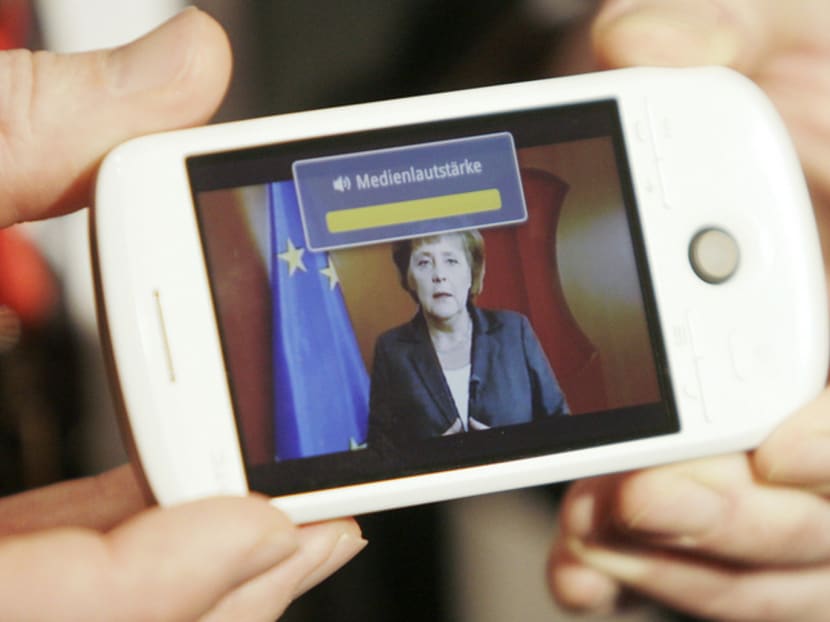
The ecosystem of podcasts is the nearest digital technology has come to a distinctive culture, one that had no equivalent before the Internet. Photo: Reuters
LONDON — “You’ve got the kick drum in the left speaker and the open snare in the right, but then you’ve got the reverb coming through back into the left.”
The Peach & Black podcast is the work of four Australians who convene semi-regularly to discuss the music of Prince. In some detail. Their review of Parade (1986) is three times longer than the 40-minute album. Sign O’ The Times (1987) is studied over the course of two episodes that total nearly four hours.
Live sets, televised performances, obscure and half-forgotten releases all go under their lens. The podcasts are not padded out with extensive clips of the music. Only a three-second aural glimpse per song interrupts the symposium, with its strident minority verdicts and heroically assumed knowledge.
A generation ago, devotees of an artist had to live on whatever analysis broadcasters and print media gave them. They can now dive into this kind of specialist trove at their leisure — and at no cost. Football fans, too, have an inexhaustible supply of podcasts that are refreshed by the week, some by professional journalists at grand newspapers but many more by enthusiasts parsing matches from a tactical angle for the love of it.
While bored ex-players waffle uncomfortably on television in their bad shirts, I can listen to an American student telling me things I never knew using data and the curiosity of an obsessive.
Two residents of Guernsey, in the Channel Islands, produce the acclaimed World Cricket Show (episode 239: A B de Villiers is Chuck Norris). A pair of Liverpudlian musicians make the Sodajerker podcast, in which masters of their craft (Joan Armatrading, Johnny Marr, Mike Stoller) are probed on the songwriting process.
On my phone are all of the above, plus podcasts on science, literature, photography, food and the kind of mis-cellany that would never find a silo in mainstream broadcasting. The majority are made by fervent amateurs. All are free.
After a quarter-century of life, the Internet has turned the distribution of culture upside down without changing culture itself very much. You can stream music through the ether, but that music is still the four-minute song and the dozen-track album. Films still have conventional plots that unfurl over two hours or so. Kindles have not changed the size and structure of novels. A music video is more or less what it was a generation ago, even if you now watch it via YouTube.
The ecosystem of podcasts is the nearest digital technology has come to a distinctive culture, one that had no equivalent before the Internet. The near-zero cost of making them has enabled a punkish movement, with enthusiasm in place of anger as the spur. Unbound by editors and time limits, podcasters can go fathoms-deep into their narrow passions in a way old media never could.
Their work is not just a differently distributed species of orthodox radio — unless orthodox radio ever offered prolonged four-person scrutiny of the syncopated drum-work in The Ballad of Dorothy Parker.
It makes more sense to regard podcasts as what blogs promised to be: Hobbyists filling the niches left by mainstream media and weaving communities of like-minded people in the process. And because they are generally made by friends in pairs or larger groups, the repartee is natural, like that sensation of eavesdropping into someone’s convivial front room that professional broadcasters strain to create.
This golden age of audio sprung from the same creative impulse as the concurrent golden age of television: Trust in the audience, or even a certain indifference to it. Podcasts tend to the analytic and the upper-middle brow because there are no fortunes to be coined in this game.
Even the makers of Serial, a work of non-fiction narrative that is probably the most downloaded podcast in the anglophone world, had to ask listeners for donations to fund a second season.
Circumstantial demand might explain as much as high-minded supply. Geography was not phased out by the Internet. Professional, educated people still commute and crave stimulation during the ordeal.
They also exercise, struggle to sleep and demand ocular relief from the enervating blue-white fuzz of a computer or smartphone screen. In all these instances, podcasts fit our lives in a way virtual reality headsets may never. They liberate our eyes.
According to tech lore, podcasts did not get a mention by name until a Guardian article in 2004.
But they were already the dowdy niece of the Internet by the turn of the decade, when ideas waned and audiences waned with them. Some feat, then, to become the focus of such creativity — and to have sunnier prospects than the Apple device from which they stole their name. FINANCIAL TIMES
Stay in the know. Anytime. Anywhere.

Subscribe to our newsletter for the top features, insights and must reads delivered straight to your inbox.
By clicking subscribe, I agree for my personal data to be used to send me TODAY newsletters, promotional offers and for research and analysis.






