
Security law makes debut as Najib fights critics
KUALA LUMPUR — Tough new security legislation came into force in Malaysia yesterday, with critics saying the “draconian” law threatens democracy and could be used against opponents of Prime Minister Najib Razak.
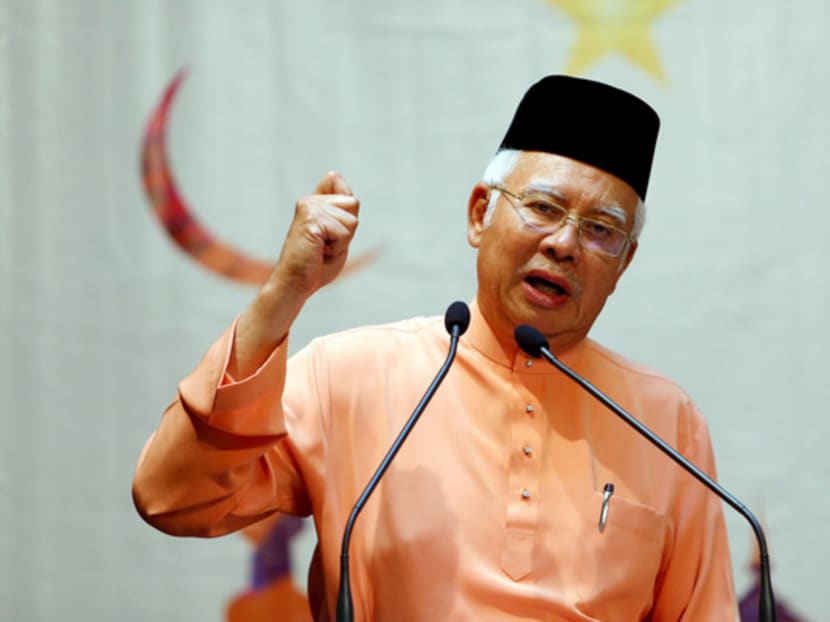
Malaysia's Prime Minister Najib Razak. Photo: Reuters

KUALA LUMPUR — Tough new security legislation came into force in Malaysia yesterday, with critics saying the “draconian” law threatens democracy and could be used against opponents of Prime Minister Najib Razak.
The National Security Council Act was pushed through Parliament in December by Mr Najib’s government. Mr Najib has for more than a year faced calls to resign over an alleged corruption scandal involving the 1Malaysia Development Berhad (1MDB) state investment fund he founded and oversaw.
The Act gives the government the power to declare virtual martial law in areas deemed to be a “security threat”.
Critics have accused Mr Najib and his government of enacting the law, and other tough recent legislation, to ward off political and legal challenges.
“The law will definitely put fear in people planning to participate in street protests,” said Mr Wan Saiful Wan Jan, the head of Malaysian think-tank Institute for Democracy and Economic Affairs. “The public perception in terms of the timing of the draconian law is that Najib wants the law in order to stay in office.”
The legislation allows a National Security Council (NSC), headed by the prime minister, to essentially suspend civil liberties in designated security areas, giving security forces sweeping powers to search, seize and arrest. It also allows investigators to dispense with formal inquests into killings by the police or armed forces in those areas.
Mr Najib has defended the law as necessary to combat terrorism. He said last week that the issue has been deliberately misinterpreted by critics, and that it was not the same as a declaration of national emergency, the powers for which lies with the King.
“We were criticised for passing these laws, including by some who fearmongered for political reasons,” he said.
“My government will never apologise for placing the safety and security of the Malaysian people first,” Mr Najib added. “These laws were necessary and other countries have since followed our lead.”
The passage of the law came amid the ongoing furore over the billions of dollars allegedly stolen from 1MDB.
Last month, the US Justice Department launched proceedings to seize more than US$1 billion (S$1.34 billion) in assets which it says were purchased with money stolen from 1MDB.
The US move has heightened expectations of further anti-Najib protests in Malaysia.
Last August, tens of thousands of people paralysed the capital Kuala Lumpur in rallies demanding he stand down.
“The NSC law represents an extremely dangerous step for Malaysia as it concentrates extraordinary powers in the PM and the NSC,” said lawyer Ambiga Sreenevasan, who was one of the organisers of last August’s protests.
“No person or entity should have such absolute and unfettered powers. Concentration of power leads to abuse, particularly in times of political crisis,” she said.
The United Nations’ (UN) human rights agency and other human rights organisations have expressed concern that the law will be used to crack down on peaceful protests under the guise of national security.
“We are gravely concerned that ... the Act may encourage human rights violations,” Mr Laurent Meillan, acting head of the UN Human Rights Office for South-east Asia, said in a statement last week. AGENCIES
Stay in the know. Anytime. Anywhere.

Subscribe to our newsletter for the top features, insights and must reads delivered straight to your inbox.
By clicking subscribe, I agree for my personal data to be used to send me TODAY newsletters, promotional offers and for research and analysis.






