
Fresh US probe of Chinese aluminum imports ups ante with Beijing
WASHINGTON — The Trump administration launched an aggressive new trade action against China on Tuesday (Nov 28), opening the first United States government-initiated anti-subsidy and anti-dumping probes in decades into imports of Chinese aluminum alloy sheet, amid fears that it is preparing for the opening skirmishes of a trade war.
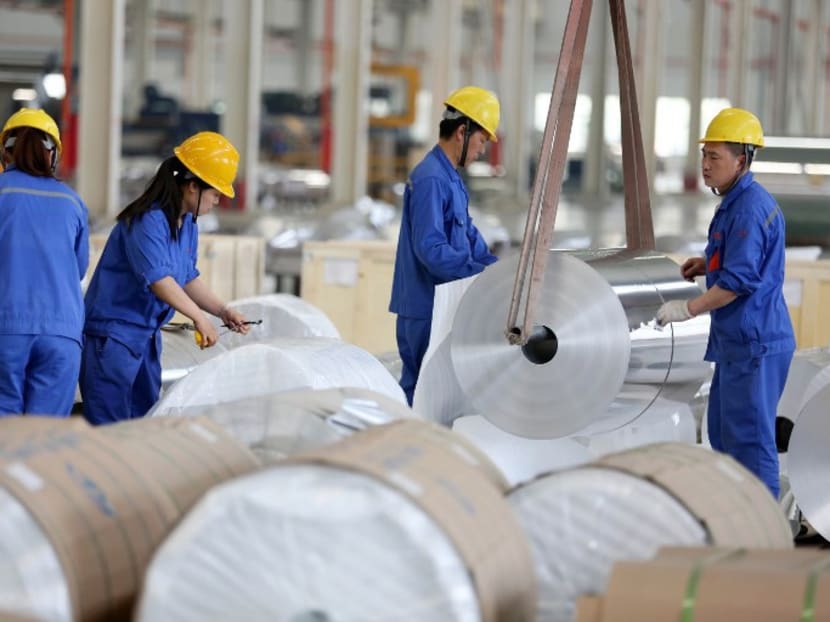
Chinese workers packaging aluminium tapes at an aluminium production plant in Huaibei, China. The United States step up its trade confrontation with China, ordering an investigation into imports of aluminum sheet worth hundreds of millions of dollars a year. Photo: AFP

WASHINGTON — The Trump administration launched an aggressive new trade action against China on Tuesday (Nov 28), opening the first United States government-initiated anti-subsidy and anti-dumping probes in decades into imports of Chinese aluminum alloy sheet, amid fears that it is preparing for the opening skirmishes of a trade war.
The seldom-used tactic is aimed at accelerating the imposition of duties against unfairly subsidised and dumped products, and immediately drew a strong reaction from Beijing. China expressed its "strong dissatisfaction" at the move, with its Ministry of Commerce saying in a statement on Wednesday the action would hurt both countries' interests.
US companies and industries claiming injury from imports would normally first ask the Commerce Department to open such probes, but government-initiated cases skip that step.
“President (Donald) Trump made it clear from day one that unfair trade practices will not be tolerated under this administration, and today we take one more step in fulfilling that promise,” Commerce Secretary Wilbur Ross said in a statement.
“We are self-initiating the first trade case in over a quarter century, showing once again that we stand in constant vigilance in support of free, fair and reciprocal trade.”
The Commerce Department last initiated an anti-subsidy duty investigation in 1991 on softwood lumber from Canada and last initiated an anti-dumping probe in 1985 on semiconductors from Japan.
“While the general use of antidumping and countervailing duties is normal fare for the US government, an administration that self-initiates an investigation is sending an aggressive signal that it is eager to impose import protection,” The Financial Times quoted Mr Chad Bown, a trade expert at the Peterson Institute for International Economics as saying.
“The Trump administration is not simply going to wait for US industries to come forward and ask for it — they are showing a desire to provide import protection, perhaps even if the American companies themselves do not want it.”
In a statement on the website of China's Ministry of Commerce, Wang Hejun, director of the ministry's Trade Remedy and Investigation Bureau, said he hoped the US would stick to the consensus recently reached by the two countries' heads of state on trade and act to promote "healthy and stable" trade relations.
Mr Wang also said China would take necessary measures to safeguard the rights and interests of Chinese enterprises.
The aluminum move against China comes less than a month after Mr Trump’s first trip to Beijing, during which he heaped praise on Chinese President Xi Jinping and lauded US business deals with China valued at hundreds of billions of dollars.
The US also has slapped punitive duties on imports of Chinese aluminum foil and plywood, and announced earlier Tuesday it had done likewise for imports of Chinese-made tool chests and cabinets.
The anti-dumping and anti-subsidy probes are separate from Commerce’s national security investigations into aluminum and steel imports that could lead to broad import restrictions for both metals.
US steel and aluminum makers both blame Chinese excess capacity for depressing global prices and threatening their financial viability.
In a separate anti-dumping an anti-subsidy investigation into aluminum foil, the Commerce Department in October imposed combined preliminary duties of 108 to 243 per cent.
Mr Ross told US aluminum industry executives on a conference call that Commerce has evidence that China’s aluminum producers were selling flat-rolled sheet products in the US at prices below fair value and were benefiting from unfair government subsidies.
“Available evidence also indicates that US producers of aluminum sheet are suffering injury caused by these imports,” Mr Ross said.
The Commerce Department estimated anti-dumping duties of about 56.54 per cent to 59.72 per cent in the aluminum case.
It said imports from China of the flat-rolled metal typically used in construction and in transportation and electrical equipment totaled about US$603.6 million (S$812.57 million) in 2016.
The probe excludes aluminum used in beverage can manufacturing.
The case is expected to follow the normal process of a Commerce Department anti-dumping and anti-subsidy investigation, subject to injury reviews by the independent US International Trade Commission.
If allowed to proceed, preliminary anti-subsidy duties could be issued in February 2018 with preliminary anti-dumping duties issued in April. AGENCIES
Stay in the know. Anytime. Anywhere.

Subscribe to our newsletter for the top features, insights and must reads delivered straight to your inbox.
By clicking subscribe, I agree for my personal data to be used to send me TODAY newsletters, promotional offers and for research and analysis.






