
As malaria resists treatment in South-east Asia, experts warn of global crisis
BU GIA MAP (VIETNAM) — When Mr Tran Viet Hung was a soldier patrolling these forested hills in southern Vietnam six years ago, he came down with a fever and chills. He tested positive for malaria and spent a few days recovering in a government clinic.
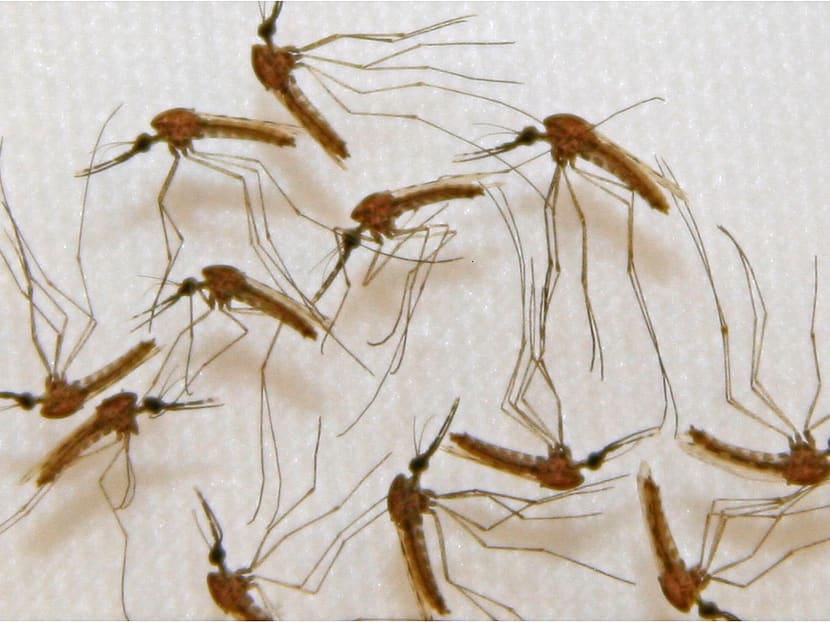
Malaria infected mosquitoes ready for dissection in a lab. A new, drug-resistant strain of malaria, impervious to current drugs threatens to up-end years of worldwide eradication efforts — straining health care systems and raising the prospect that the death toll could increase again. Photo: AFP

BU GIA MAP (VIETNAM) — When Mr Tran Viet Hung was a soldier patrolling these forested hills in southern Vietnam six years ago, he came down with a fever and chills. He tested positive for malaria and spent a few days recovering in a government clinic.
Now Mr Hung, 37, shrugs off the incident as an occupational hazard of working in this corner of Binh Phuoc province, a malaria hot spot along Vietnam’s porous border with Cambodia.
“We have modern technology,” he said at a rubber plantation in Bu Gia Map district where he now works as a farmhand. “If we don’t feel well, we’ll see a doctor and everything will be fine.”
There is a logic to his optimism: Deaths from malaria are practically unheard of nowadays in Vietnam, and only 85 people died from the mosquito-borne disease across mainland South-east Asia in 2015, down from more than 4,000 people 15 years earlier, according to a report this year by the Global Health Group, a think tank based at the University of California, San Francisco.
Much of the region’s success in battling what was once a leading cause of death can be attributed to two-drug combination pills containing artemisinin, an inexpensive and effective drug invented in China decades ago.
But a new, drug-resistant strain of the disease, impervious to artemisinin and another popular drug with which it is frequently paired, piperaquine, threatens to upend years of worldwide eradication efforts — straining health care systems and raising the prospect that the death toll could increase again.
In recent years, public health officials have tracked the spread of deadly falciparum malaria parasites from western Cambodia to Thailand and Laos, and most recently into Vietnam. The parasites’ presence in Binh Phuoc was reported in the October issue of The Lancet Infectious Diseases, a British medical journal.
A much bigger worry is that resistance could spread to sub-Saharan Africa, where malaria kills nearly 3,000 children a day despite the widespread use of artemisinin.
“It has a big potential to spread,” said Dr Arjen Dondorp, a co-author of the Lancet study and the deputy director of the Mahidol Oxford Tropical Medicine Research Unit in Bangkok.
“We should be very worried that other countries in South-east Asia can be affected by this, and, of course, that it will reach Africa at some point.”
A drug-resistant “superbug” is not some concern of science fiction. Chloroquine, introduced after World War II, was the miracle cure of its day. But resistance eventually spread from western Cambodia to sub-Saharan Africa via India, rendering the drug useless.
A similar spread of resistance from Asia to Africa later occurred with Fansidar, a blend of two drugs, sulfadoxine and pyremethamine. Malaria experts now fear losing artemisinin and its partner drugs the same way.
Under World Health Organization (WTO) protocols, artemisinin must always be paired with at least one other drug. Artemisinin kills rapidly but disappears from the blood within a day or two. Typically, a three-day treatment regimen pairs the drug with other less effective but longer-lasting drugs to mop up any remaining parasites.
Artemisinin resistance began emerging in South-east Asia about a decade ago, soon after unregulated pharmaceutical companies began selling pills that contained only the drug itself.
Now, as evidence grows that combination drugs are also failing, experts are debating how to move forward.
The ambitious goal of eliminating falciparum malaria from mainland South-east Asia by 2030 has support from major international donors, including the Global Fund to Fight AIDS, Tuberculosis and Malaria.
The Global Health Group estimated that success would cost US$2.4 billion (S$3.25 billion), but would save 91,000 lives and US$9 billion in lost productivity and extra medical costs.
As part of the effort, donors are funding the distribution of mosquito nets and training health workers.
“If this gets to Africa, it’s going to be catastrophic,” Dr Christopher Plowe, a malaria expert at the University of Maryland School of Medicine, said in a Skype interview from Myanmar.
A key challenge, experts said, is that malaria is most intense in forests and jungles, and people living there are notoriously difficult to monitor. The problem is even worse where there is fighting, such as along Myanmar’s border with China.
Dr Do Kim Giang, a Vietnamese medical official who has worked in Bu Gia Map district, said he saw no hope of eradicating malaria there. “We can only prevent cases from turning deadly,” he said during an interview at a no-frills health clinic in a neighbouring district.
Binh Phuoc province, which includes Bu Gia Map, accounted for 39 per cent of Vietnam’s 1,601 confirmed cases of falciparum malaria in the past year, according to WHO data.
Experts are cautiously optimistic that the next “miracle cure” will be available soon.
The WHO said that Vietnam was on track to eliminate malaria by 2030, but that success was in no way ensured.
“If we fail here, it will spread to other parts of the world,” said Dr Kidong Park, the WHO’s representative in Vietnam.
Because the potential consequences for Africa are so catastrophic, some experts argue that the WHO should declare South-east Asia’s growing resistance problem a global emergency.
“Why are people so reluctant to call it that?” said Dr Lorenz von Seidlein, a researcher at the Mahidol unit in Thailand who previously worked in western Africa.
The sheer abundance of drugs in development may create a sense of “false confidence” that one could become a panacea, he said in a recent review of the top candidates.
Another concern, several experts said, is that Cambodia, the epicentre of resistance, is fighting it ineffectively.
Cambodian government data obtained by The New York Times show that confirmed malaria infection rates rose this year in 10 provinces, especially along the border with Vietnam, and more than doubled in Mondulkiri province, which borders Bu Gia Map.
Vietnam’s malaria-control programme is more efficient than Cambodia’s, experts said, but infected migrant labourers can easily walk across the border.
“It’s not for lack of effort” that people still contract malaria in Bu Gia Map, said Ms Tra Thi Nhan, a pharmacist in the district who owns a drugstore on a road that snakes through forests and rubber plantations.
“It’s our topography,” she said. THE NEW YORK TIMES
Stay in the know. Anytime. Anywhere.

Subscribe to our newsletter for the top features, insights and must reads delivered straight to your inbox.
By clicking subscribe, I agree for my personal data to be used to send me TODAY newsletters, promotional offers and for research and analysis.






