
Malaysia’s Bumi-centric policies didn’t cultivate ability: study
KUALA LUMPUR — Widescale Bumiputera preferential programmes in Malaysia have not been effective in developing the group’s capability, competitiveness and confidence, according to a recent study.
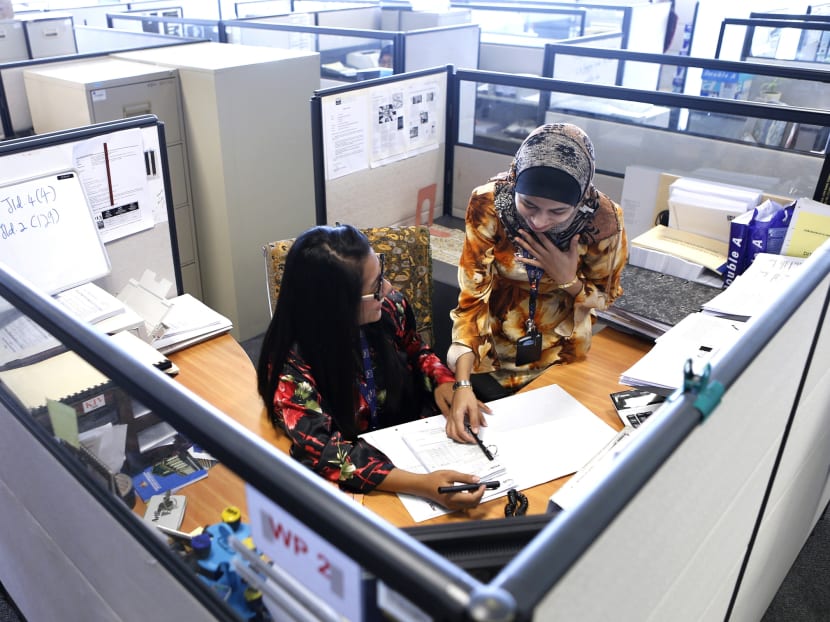
Widescale Bumiputera preferential programmes have not been effective in developing the group’s capability, competitiveness and confidence, according to a study from ISEAS — Yusof Ishak Institute. Photo: Reuters

KUALA LUMPUR — Widescale Bumiputera preferential programmes in Malaysia have not been effective in developing the group’s capability, competitiveness and confidence, according to a recent study.
The report by Dr Lee Hwok-Aun from ISEAS — Yusof Ishak Institute titled “Malaysia’s Bumiputera preferential regime and transformation agenda: Modified programmes, unchanged system”, which examined Bumiputera policies in higher education, high-level employment and enterprise development, said it found some evidence that need-based and merit-based factors were incorporated into selection processes, but many gaps remained.
“Various lessons can be derived from the ongoing initiatives, particularly the GLC (government-linked corporation) Transformation Programme and new ventures under BETR, but whether these are analysed and replicated remains to be seen, and it is unclear whether the disparate operations of government agencies, with vested interests and uncoordinated operations, can be overcome,” said Dr Lee’s report.
BETR refers to the Bumiputera Economic Transformation Roadmap, a government programme aimed at improving the wellbeing and prosperity of the country’s predominant ethnic group.
Dr Lee’s study urged Malaysia to focus more on issues of fairness and opportunity, and to redress unfair advantages arising from structural privilege or political patronage, rather than to pursue ethnic proportionality in every sphere.
“Moving forward entails redressing socioeconomic disadvantage more systematically, especially in education, and focusing on empowerment and readiness to roll back preferential treatment in all spheres, while being continually vigilant against rent-seeking,” said the report.
The study said that merely professing “need-based, merit-based and market-friendly affirmative action” did not automatically result in structured and coherent alternatives to the current system.
“Credible reform initiatives must recognise the existence of Bumiputera preferential treatment and specify how these selection mechanisms will be amended or removed,” said the report.
Dr Lee’s report highlighted the lack of clarity in the government’s New Economic Model (NEM) and transformation programmes about the long-term paths of affirmative action.
“BETR has placed emphasis on target setting and delivery, not timelines or graduation clauses,” said the report.
“Contemporary rhetoric surrounding National Transformation 2050 (popularly known as TN50) implies that pro-Bumiputera programmes might be phased out by then, but the government remains diffident towards this prospect, even while recognising the undesirability of maintaining ethnic preferences in perpetuity.”
The study said reforms and departures from pro-Bumiputera policies must be programme-specific and systematically integrated, stressing that merely declaring a time limit, such as the New Economic Policy’s 20-year window (1971-1990), was not enough.
“Policy spheres must be analysed separately, with robust attention to how need-based and merit-based selection can enhance Bumiputera empowerment and make broader reforms palatable and possible.
“This complex state demands national deliberation over time horizons and milestones, whereby overt ethnic preferences are rolled back after a certain passage of time or arrival at some threshold achievement, or a combination of both.”
The report also said Malay quotas of between 75 and 80 per cent have been reported for specific ranks of officials, mostly in authoritative corps like the Administrative and Diplomatic Service, police, judicial and legal services and customs services. These constitute less than 10 per cent of civil service employment.
“There are no specific quotas for professional and technical services, but non-codified ethnic preference is clearly practiced,” said the study.
Lee’s report said the overall workforce in the G20, which are the top GLCs in Malaysia, comprised 79 per cent Bumiputera, 10 per cent Chinese, 8 per cent Indian and 3 per cent others. For executive positions, they comprised 73 per cent Bumiputera, 19 per cent Chinese, 6 per cent Indian and 2 per cent others.
G20 companies are controlled by five government-linked investment companies, which are Employees Provident Fund (EPF), Khazanah Nasional Bhd, Lembaga Tabung Angkatan Tentera (LTAT), Lembaga Tabung Haji (LTH) and Permodalan Nasional Bhd (PNB).
G20 companies include banking giant CIMB Group Berhad, airport operator Malaysia Airports Holdings Berhad, construction and property development company Malaysian Resources Corporation Berhad, conglomerate Sime Darby Berhad, telco Telekom Malaysia Berhad, utility company Tenaga Nasional Berhad and others.
“The lack of legislation overseeing fair labour practices is a major omission, and an obstacle to pursuing equality and diversity in the public and private sectors.
“Moving forward entails fair employment legislation, to frame and regulate unfair discrimination — lending clarity to the application of merit and group representation — and provide guidelines for pursuing affirmative action and workplace diversity,” said Dr Lee’s report.
The report also found out that Malaysia’s preferential access to government contracts has failed its objective of grooming Malay businesses and even stifled the process in some ways.
It said that 75 per cent of Bumiputera contractors licensed under the Finance Ministry were in the smallest G1 class (formerly F) reserved for the ethnic group.
Those in the G1 category need only have RM5,000 (S$1,650.09) minimum paid-up capital and are eligible for projects below RM200,000 in value. Out of 41,000 such contractors accredited by the ministry, 94 per cent were Bumiputera.
In contrast to the construction industry as a whole, only 44 per cent of contractors in the Construction Industry Development Board’s (CIDB) registry were at the G1 level. Only 47 out of 29,000, or 0.2 per cent, of class F contractors had upgraded to a higher class.
“Bumiputera contractors’ political partisanship is marked; the Malay Contractors Association is formally aligned with the ruling Barisan Nasional (BN) coalition.
“Umno connections have been intertwined with the contracting system, although recent changes — particularly, e-procurement, competitive tenders, and balloting for small contracts — have brought more integrity and transparency to the system,” said Dr Lee’s study. MALAY MAIL ONLINE
Stay in the know. Anytime. Anywhere.

Subscribe to our newsletter for the top features, insights and must reads delivered straight to your inbox.
By clicking subscribe, I agree for my personal data to be used to send me TODAY newsletters, promotional offers and for research and analysis.






