
US dollar weakens on signs pace of rate rises may slow
SINGAPORE — The United States dollar continued to weaken in Asia today (Feb 4), after falling overnight by the most in seven years, as a top Federal Reserve official increased expectations that the central bank would slow the pace of its interest-rate hikes.
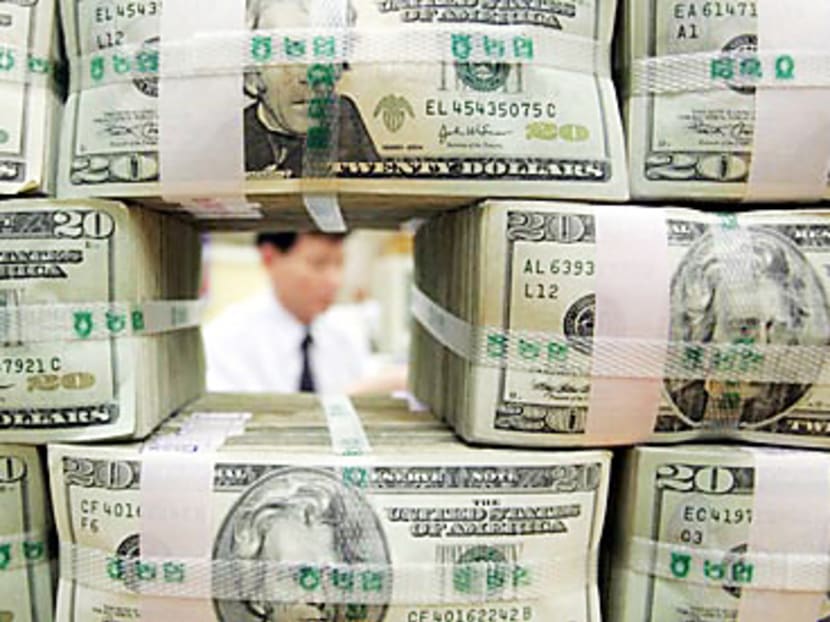
Reuters file photo

SINGAPORE — The United States dollar continued to weaken in Asia today (Feb 4), after falling overnight by the most in seven years, as a top Federal Reserve official increased expectations that the central bank would slow the pace of its interest-rate hikes.
New York Fed president William Dudley, a permanent voting member on the policymaking Federal Open Market Committee (FOMC), said on Wednesday that financial conditions have tightened considerably in the weeks since the FOMC raised the benchmark interest rate on Dec 16, and policymakers will have to take that into consideration in future meetings.
The greenback was also weighed down by a survey from the Institute of Supply Management showing activity in the vast US services sector slowed last month to a near two-year low, adding another layer of uncertainty to the Fed’s near-term policy path.
“The move in currencies has been vicious. The market is clearly questioning whether the Fed made a policy mistake that will need to be reversed,” said Mr Brendan Murphy, a director in Standish Mellon Asset Management’s global fixed-income division.
The greenback slipped 0.7 per cent today to S$1.4035 in late Singapore trading. Since this year’s high of S$1.4428 on Jan 8, it has fallen about 2.7 per cent.
Credit Suisse economist Michael Wan said: “With the Singapore dollar stronger now, this could possibly hurt our exports and affect tourism from the US...however, from a bigger picture, what is of concern now is more of a weak demand problem, so the impact from the exchange rate is not likely a greater cause. We observed that the strength from the consumers in the US has not really helped our exports and growth.
“We don’t think a small move will impact the market. The situation has to be sustained first, but of course if consumers change money today, then it would be cheaper. We have to look for better clarity on the Fed and the potential path for a possible rate hike and other indicators,” he added.
DBS senior currency strategist Philip Wee said: “The year has been very fluid … In the short term the US dollar is probably coming off, but it is not enough for us to change our medium-term forecast of the US dollar moving up to S$1.47 by the third quarter.”
After falling 1.7 per cent overnight — the most on an intraday basis since March 18, 2009, when the Fed announced it planned to buy Treasuries to rescue an economy struggling to recover from the global financial crisis, the US dollar slipped another 0.7 per cent to US$1.1179 against the euro and 0.3 per cent to 117.52 yen late in Asia.
The greenback has handed back all the gains made against the yen after the Bank of Japan (BOJ) last week imposed a negative interest rate for the first time ever, pushing it to a six-week high of 121.70 yen.
The BOJ’s shock decision was seen by many as an attempt to prevent the yen from appreciating, as the safe-haven currency had soared to a one-year peak against the US dollar last month in the face of widespread risk aversion.
Barely a month and a half after the Fed’s first baby step into the tightening cycle, US dollar bulls are capitulating as evidence is piling up that the world’s biggest economy will not escape slowdowns across the globe from China to Brazil.
Buying the US dollar was the winning trade for the past two years as aggressive quantitative easing in Europe and Japan, as well as a China-led slowdown in emerging markets, weakened their currencies.
The Bloomberg Dollar Spot Index, which tracks the US currency against 10 global peers, rallied 22 per cent since mid-2014 and reached the strongest since 2004 towards the end of last month.
That changed as traders in federal funds futures sent the strongest signal yet that the Fed will stand pat this year, as opposed to the four increases that FOMC policymakers forecast in December.
“The currency market has been at odds with the rates market, and now the rates market is winning. There is a disconnect where the Fed says four hikes while the market says it’s like 0.7 hike this year — someone is wrong,” said Mr Peter Gorra, head of foreign-exchange trading at BNP Paribas. AGENCIES, WITH ADDITIONAL REPORTING BY ANGELA TENG
Stay in the know. Anytime. Anywhere.

Subscribe to our newsletter for the top features, insights and must reads delivered straight to your inbox.
By clicking subscribe, I agree for my personal data to be used to send me TODAY newsletters, promotional offers and for research and analysis.






