
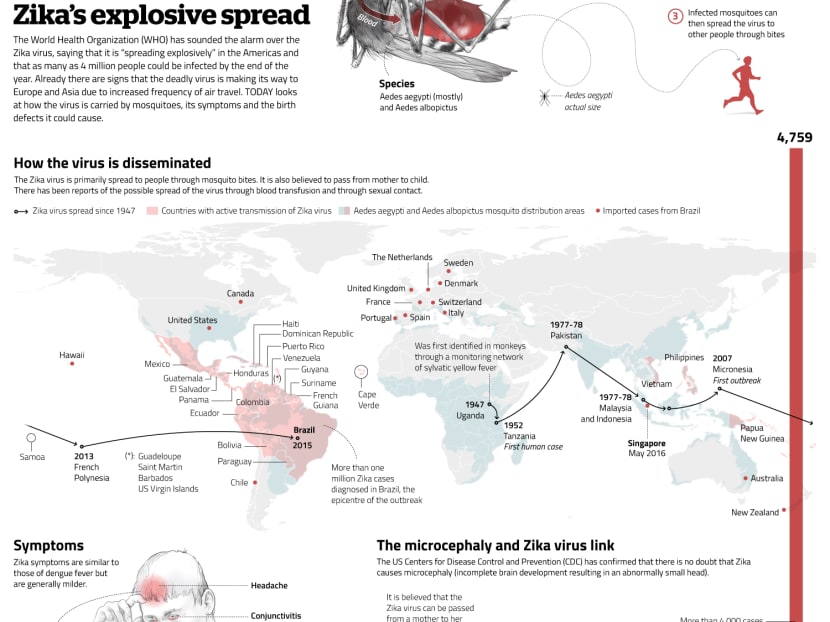
Zika's explosive spread
SINGAPORE — The World Health Organization (WHO) had earlier this year sounded the alarm over the Zika virus, saying that it is “spreading explosively” in the Americas that as many as four million people could be infected by the end of the year. Singapore on May 13 saw its first imported case of Zika virus infection.
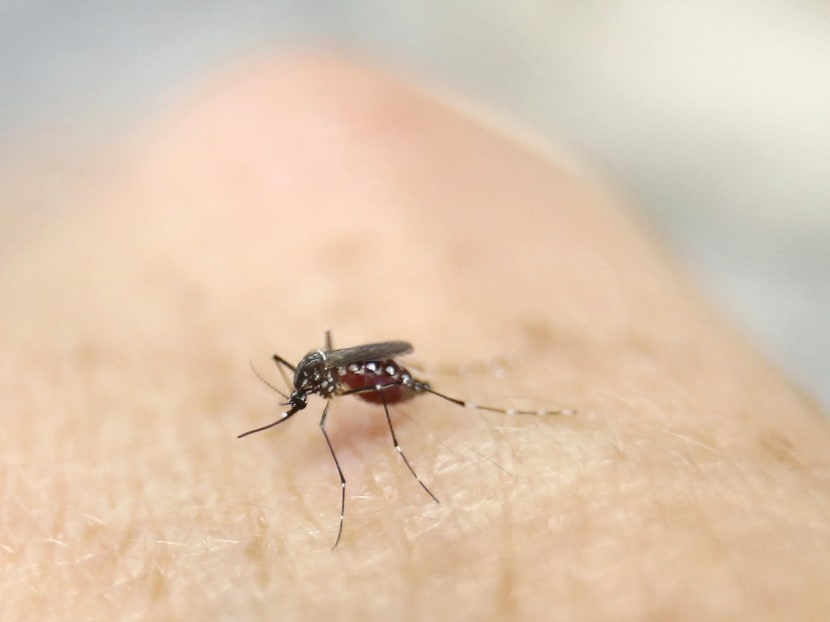
An Aedes aegypti mosquito is seen on human hand in a laboratory of the International Training and Medical Research Training Center (CIDEIM) in Cali, Colombia, on Jan 28, 2016. Photo: Reuters

SINGAPORE — The World Health Organization (WHO) had earlier this year sounded the alarm over the Zika virus, saying that it is “spreading explosively” in the Americas that as many as four million people could be infected by the end of the year. Singapore on May 13 saw its first imported case of Zika virus infection.
The US Centers for Disease Control and Prevention (CDC) has confirmed that “there is no longer any doubt that Zika causes microcephaly” — a condition that causes babies to be born with abnormally small heads and other severe brain defects. TODAY looks at how the virus is carried by mosquitoes, its symptoms and the birth defects it could cause.
Stay in the know. Anytime. Anywhere.

Subscribe to our newsletter for the top features, insights and must reads delivered straight to your inbox.
By clicking subscribe, I agree for my personal data to be used to send me TODAY newsletters, promotional offers and for research and analysis.






