
This Is The Best Kueh Bingka Ubi You’ll Ever Eat
It’s from the cookbook ‘The Way Of Kueh’.
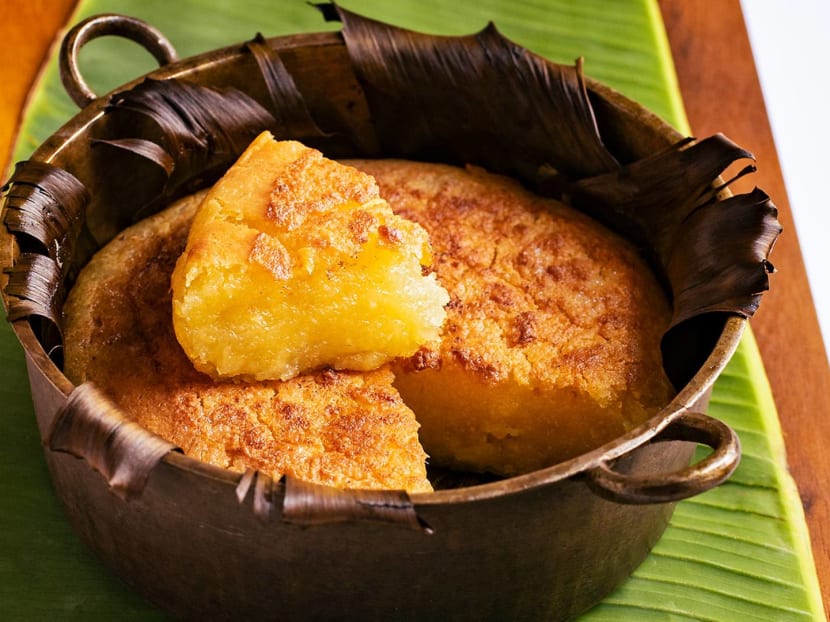
It’s from the cookbook ‘The Way Of Kueh’.

In the colourful, sedap world of nonya kuehs, kueh bingka ubi ranks pretty low on our must-eat scale. How can this humble baked tapioca cake compete with the sexy gula melaka ooze of the ondeh ondeh? Or the custardy wobble of kueh salat? And it doesn’t help that the average bingka is stodgy, close-textured and tastes one-note (of the starchy root and not much else).
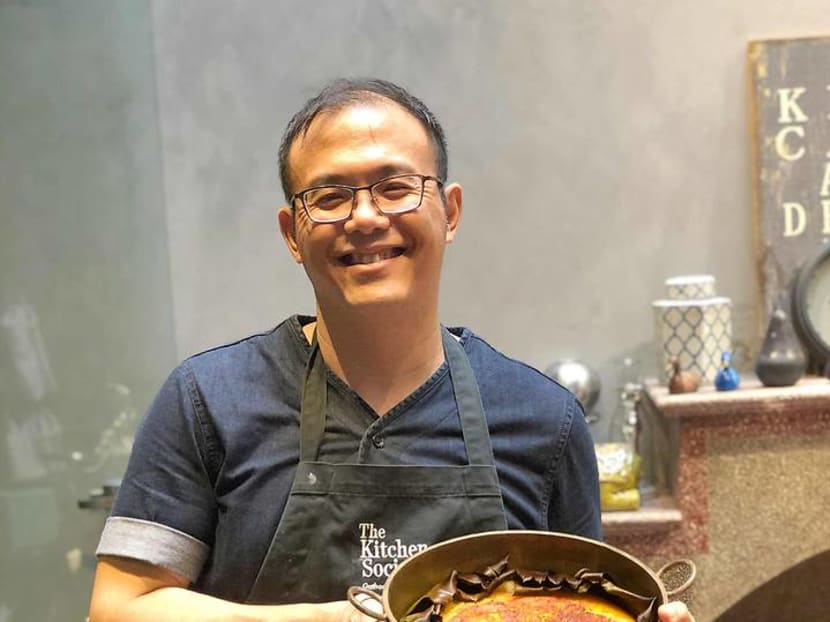
But all that changed for us at the recent launch of Christopher Tan’s new book ‘The Way Of Kueh’. The culinary instructor & heritage dessert maestro made us a kueh bingka so phenomenal, we hoovered three pieces, shamelessly tapowed a few more and then promptly went to buy a medieval-looking vegetable grater (see below) after the session to attempt his recipe.
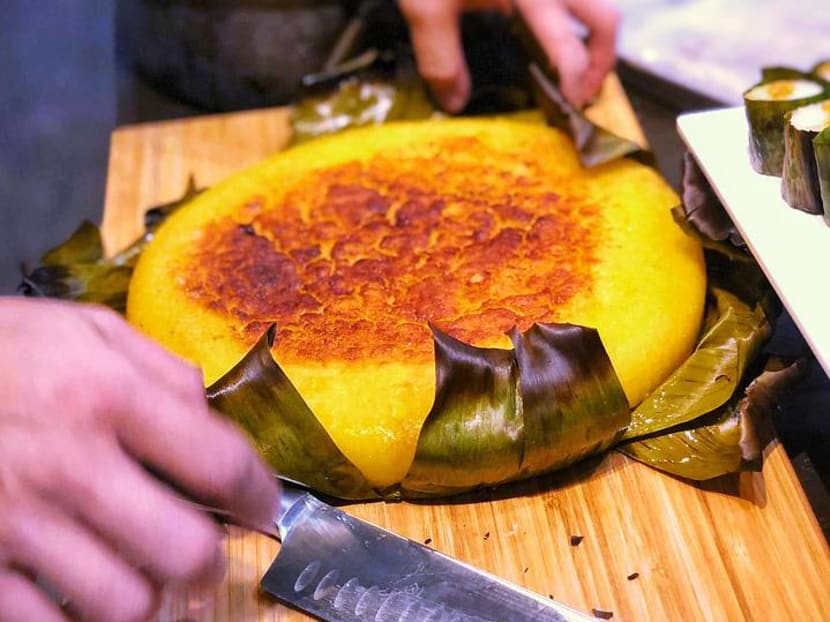
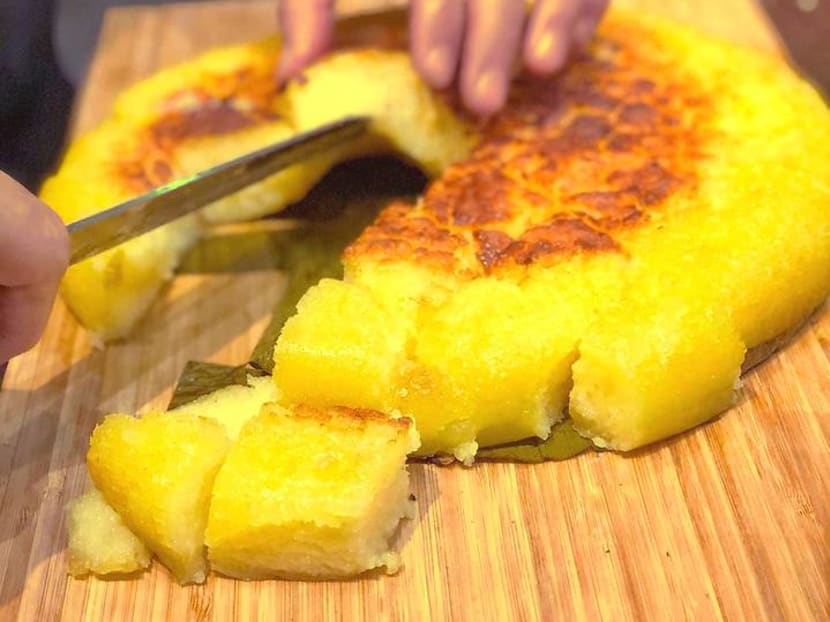
Chris’s kueh bingka is exceedingly buttery, lemak with freshly squeezed coconut milk and maddeningly perfumed with the banana leaves it’s baked in. The texture is the opposite of all other bingkas we’ve tasted — loose, light, juicy, melt-in-the-mouth and capped with a delightfully caramelised, crackly crust. This is bingka that’s truly lust-worthy.
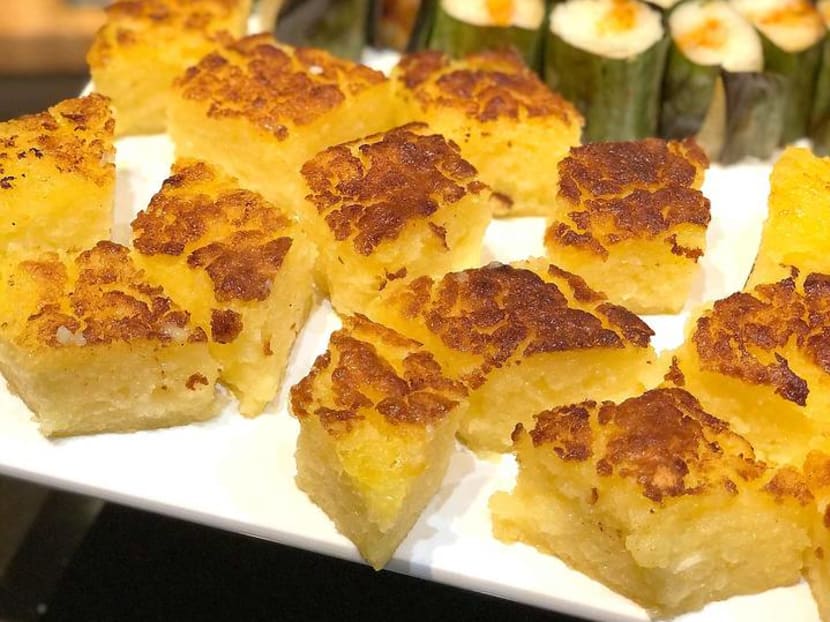
Bad news: you’ll have to make it yourself. Good news: this recipe from what our baking pal coined “the Alton Brown of Singapore” is one of the least involved in his beautifully comprehensive collection of heritage kueh recipes inspired by local artisans, and run the gamut from nonya to Malay and Hakka kuehs.
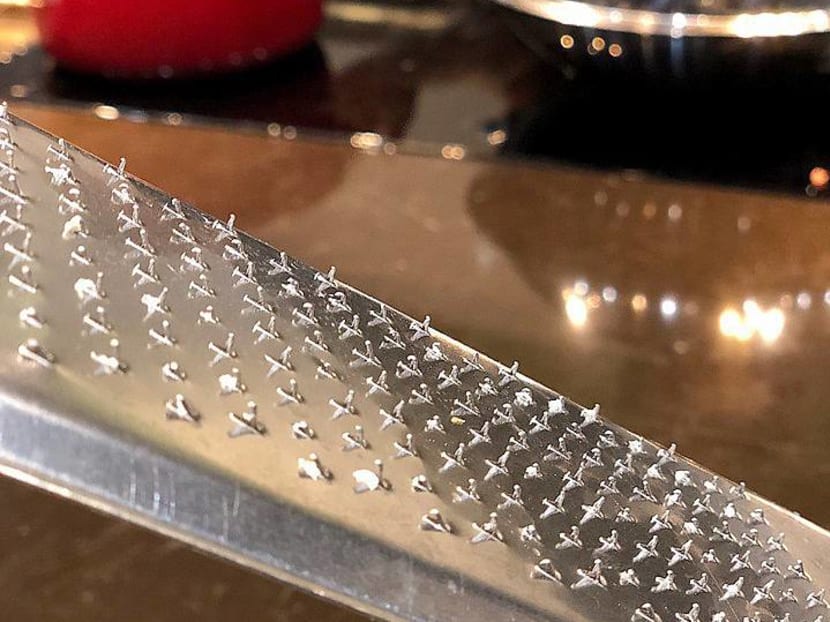
Chris’s treasured family recipe can be made in five steps. The most challenging part is only the bit where Chris, ever the purist nerd baker (he’s got a bestselling book of the same name after all), instructs you to procure fresh tapioca and grate it yourself using a scary-looking grater with badass spokes that he says can be found in “any HDB sundry shop”. Fancy box graters don’t work. And no being lazy and getting the pre-grated version either (which often results in the usually gummier, denser and dryer bingka we know and don’t love) — this step makes all the difference to achieving an almost ethereal texture. The special old-school grater traps all the tapioca’s stringy fibres and shreds the root into smooth strips that are succulent, yet possess a tiny bit of bite. Just watch those fingers.
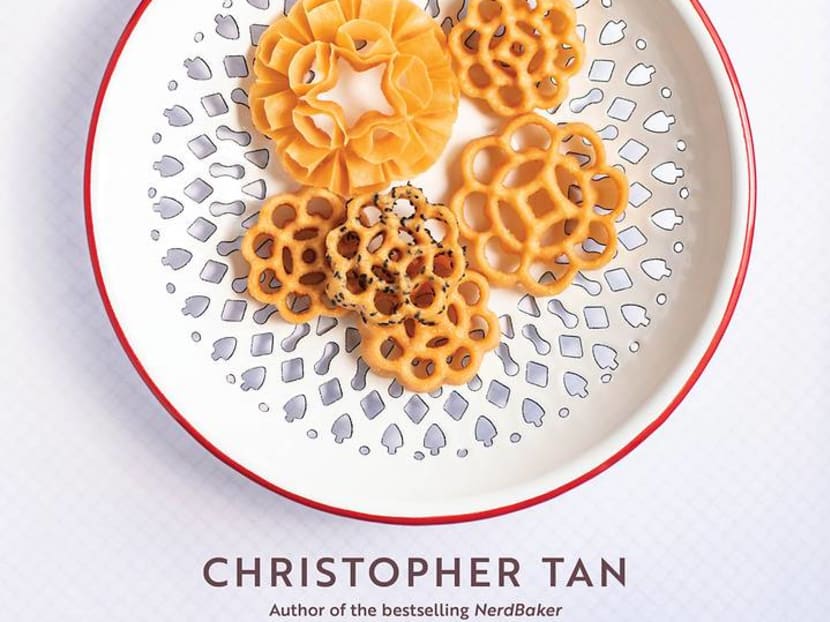
If you’re wondering whether to buy the book, take this recipe for a spin first. Chris generously shares his secrets for the best kueh bingka you’ll ever eat right here on 8days.sg.
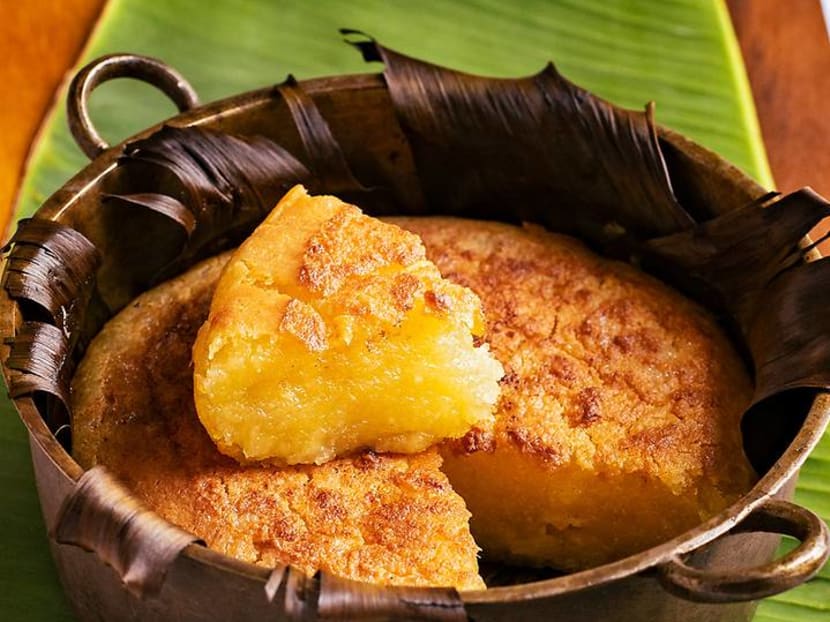
In Chris Tan's words: The Thunderbird of classic kuehs, this is made across Singapore, Malaysia and Indonesia, varying in the specifics but rarely deviating far from the sticky, dense, lemak, golden, crusty ideal, perfumed with oven-scorched banana leaf. Peranakan-style bengka ubi (the nonya spelling of Malay bingka) was a frequent treat in my childhood family kitchen, and here is my updated family recipe.
INGREDIENTS
850g freshly grated tapioca
320g coconut milk
190g sugar
1 tsp fine salt
45g unsalted butter, softened
3 egg yolks
Wilted banana leaf, for lining pan
15g cold salted butter, cut into small bits
1. Preheat oven to 180C on conventional mode (top and bottom heat). Line the base and sides of a 20 cm square cake pan, at least 5 cm deep, with a large square of wilted banana leaf (no need to grease), shiny side up, tucking its corners to fit.
2. In a muslin cloth or bag, squeeze tapioca a handful at a time to extract as much juice as possible – you should get around 230 g to 280 g juice. If you get less than 230g juice, add an extra 40g water to the juice. Set tapioca pulp aside.
3. Combine tapioca juice with coconut milk, sugar, salt, butter and egg yolks in a heavy-bottomed pan. Set over medium-low heat and stir constantly, scraping pan base and sides with a whisk, until mixture thickens into a creamy but pourable custard. Scrape into a bowl, add tapioca pulp and mix very well until batter is even and lump-free.
4. Scrape batter into lined pan. Bake on the oven’s lowest shelf for 40 to 45 minutes. Then, scatter cold butter bits over the bengka, and move pan to a high shelf in the upper third of the oven. Bake for 10 to 15 minutes more, until bengka is well browned and a skewer inserted into its centre emerges sticky but clean, with no raw batter on it.
5. Let kueh cool to at least lukewarm before unmoulding. Slice with a plastic knife to serve. Leftovers will keep for 2 to 3 days in the fridge, but will firm up as they age: steam or microwave to warm and soften them before serving.
'The Way Of Kueh' by Christopher Tan ($51.25) is available at all major bookstores.
Photos: Chris Tan & Florence Fong
Stay in the know. Anytime. Anywhere.

Subscribe to our newsletter for the top features, insights and must reads delivered straight to your inbox.
By clicking subscribe, I agree for my personal data to be used to send me TODAY newsletters, promotional offers and for research and analysis.






