
Butterfly Pea Flower Ondeh Ondeh With Durian & Gula Melaka — A Sedap Threesome
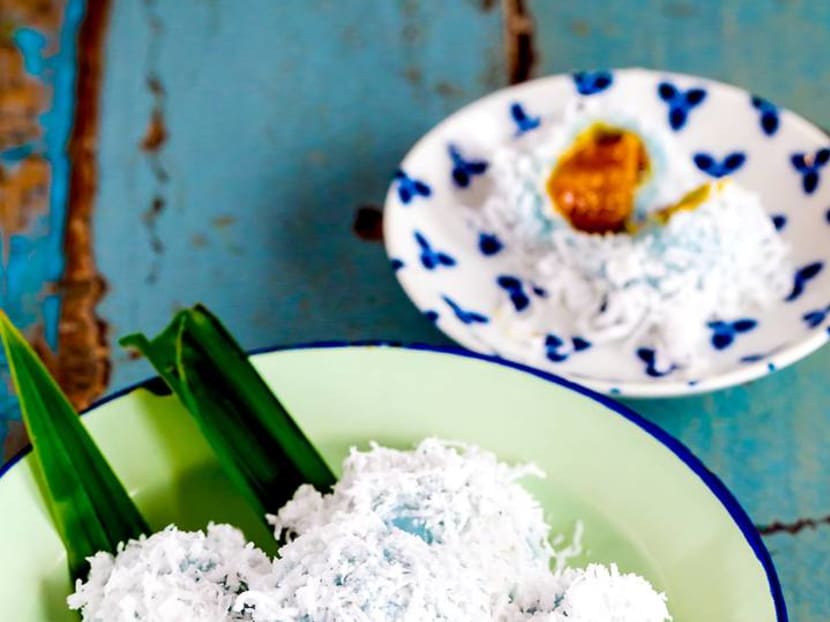
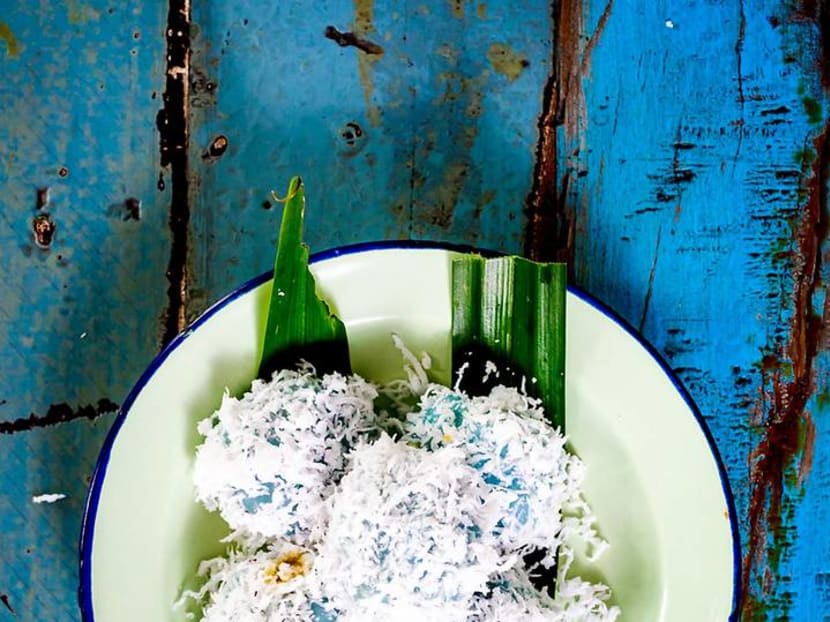
Photogenic ondeh ondeh kissed with the king of fruits.
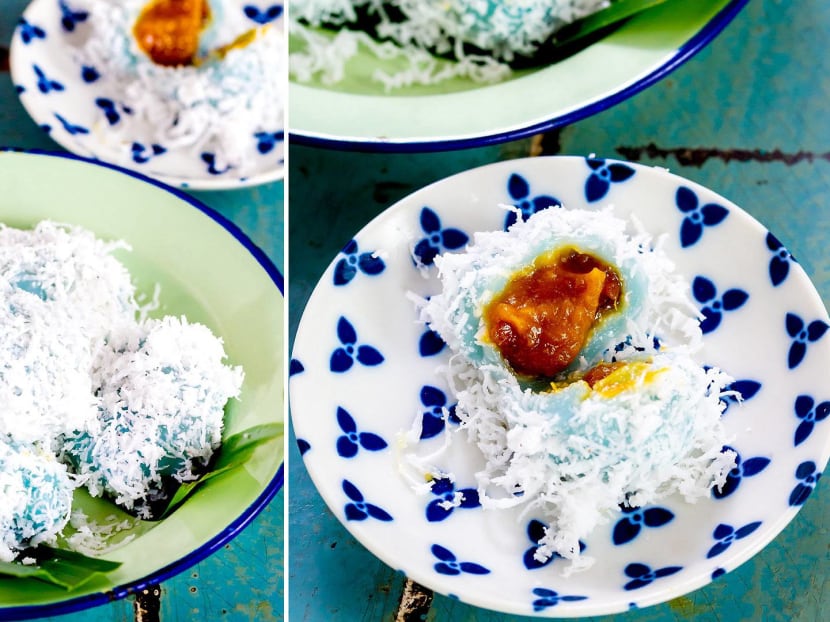
Photogenic ondeh ondeh kissed with the king of fruits.

Few things elicit the kind of joy we get from the burst of liquid gula melaka that results from biting into a QQ ondeh ondeh. But what if we take it to the next level, and replace that syrupy brown filling with a durian-spiked one? Paired with springy dough dyed a pretty shade of blue with butterfly pea flowers?
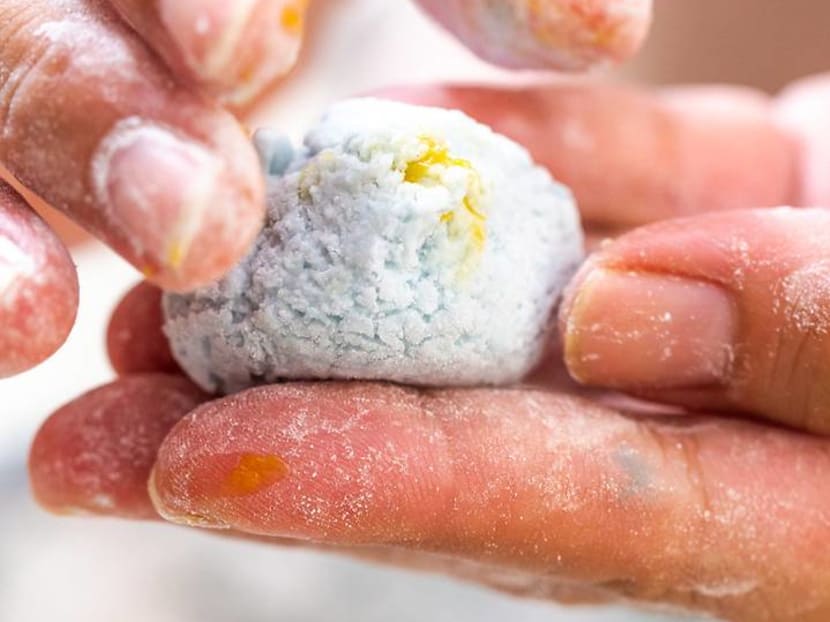
We won’t lie to you: this recipe takes some time to master. The most complex part of making ondeh ondeh is shaping the balls to optimum thinness — shape it too thick and it becomes overly chewy; too thin and they break open, spilling its contents. Practice, as the adage goes, makes perfect. And practice you must.
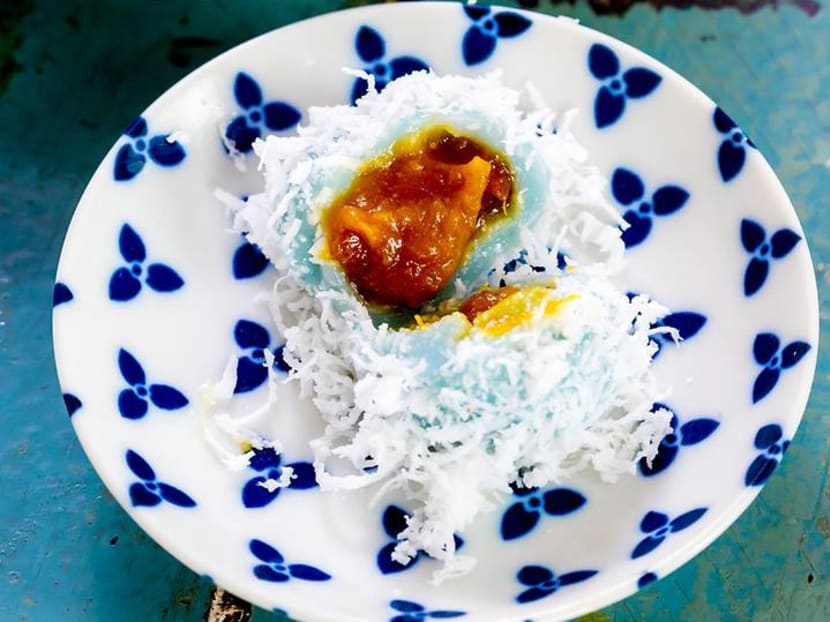
That said, there is incredible satisfaction to be had from making your own ondeh ondeh — first of which is flavour. You don’t have to use Mao Shan Wang or any particularly fancy durian, but be sure to use a variety of fruit that you’d be happy to eat neat. Alternatively, durian stores like Ah Seng or Durian 36 sell frozen durian puree that most pastry stores buy to use for their durian confections. Those are also great options.
As for the gula melaka or palm sugar, short of buying the good stuff from Malacca, we like Singlong Gula Melaka from supermarkets like Cold Storage or NTUC FairPrice. It has a lovely mellow flavour that isn’t too sweet. We tried using Indonesian gula Java, but found it way sharper and sweeter than its Malaccan cousin for this purpose.
Butterfly pea flowers are available dried at wet markets (or online shops like Lazada) and sometimes sold as tea on supermarket shelves. Finally, make this recipe a communal task. It’s a lot more fun — not to mention less time-consuming — when you split the work between several pairs of hands. Should you want to try making a smaller portion to start, know that this recipe halves effectively.
Makes about 30 pieces
5 fresh/dried butterfly pea flowers or 1 teabag of butterfly pea tea
200ml hot water
¼ tsp pandan essence
250g glutinous rice flour, plus extra for dusting
60g gula Melaka, finely chopped
75g fresh/frozen durian puree
100g grated coconut
a pinch of fine sea salt
1. Steep the butterfly pea tea or flowers in 200ml hot water for 10 minutes to dye the water blue. Strain and discard the flowers. Add pandan essence to the blue water.
2. In a large bowl, combine glutinous rice flour with the warm butterfly pea water, and knead till it forms a smooth dough.
3. Bring a large pot of water to a boil.
4. Pinch a small piece of dough (about 30g) and drop into the boiling water. When the dough rises to the surface, remove it with a slotted spoon and shake off the excess water. Turn off the heat.
5. Knead this cooked dough back into the raw dough in the bowl until smoothly incorporated. This step helps to keep the dough elastic and resilient.
6. Wrap the dough tightly in plastic wrap and set aside for about 15 minutes.
7. Meanwhile, mix the grated coconut with salt and place into a heat-proof bowl and steam for 8 minutes. Remove from the steamer and allow to cool completely.
8. To make the filling, mix the chopped gula melaka and durian pulp (defrosted to room temp if using frozen puree) together in a bowl. Stir vigorously with a fork or whisk till smooth. For a silkier consistency, blend together using an immersion blender.
9. Dust work surface with glutinous rice flour.
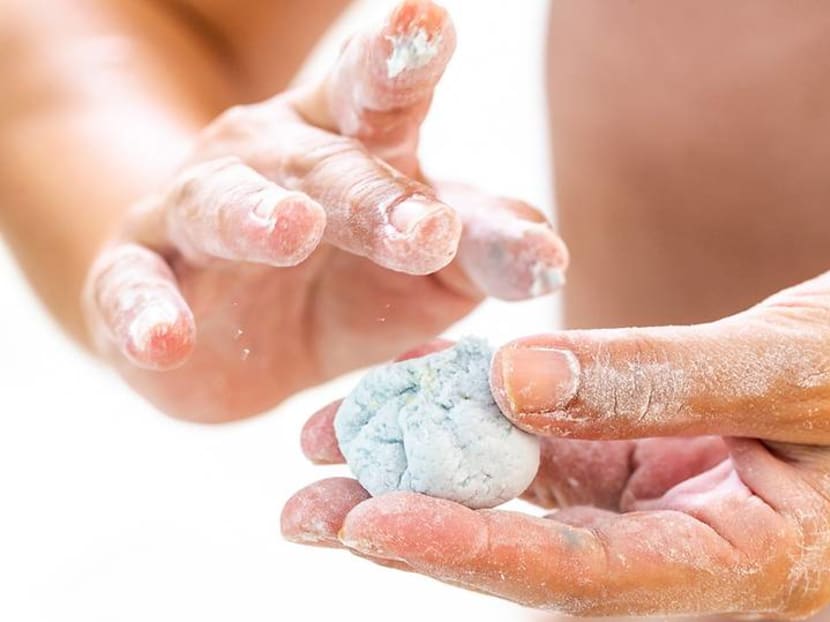
10. Pinch off 15g of dough and roll it between your palms to form a ball. Dust your fingers with a bit of glutinous rice flour if you find the dough sticking to your hands.
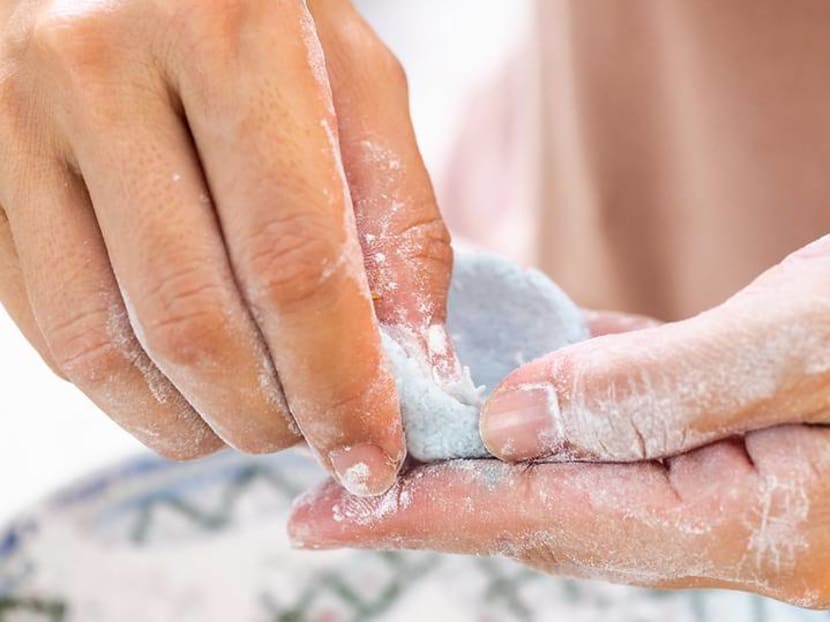
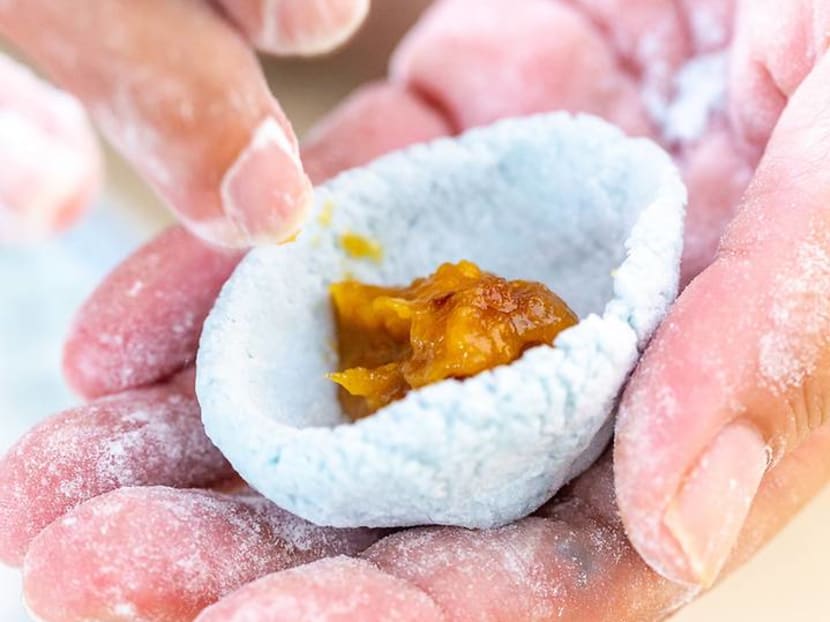
11. Make an indentation in the centre of the ball of dough with your thumb (see above pic) and continue pinching the dough with your thumb and forefinger to form a “cup”. The resulting piece of dough should measure about 7cm in diameter and 3mm thick around the edges.
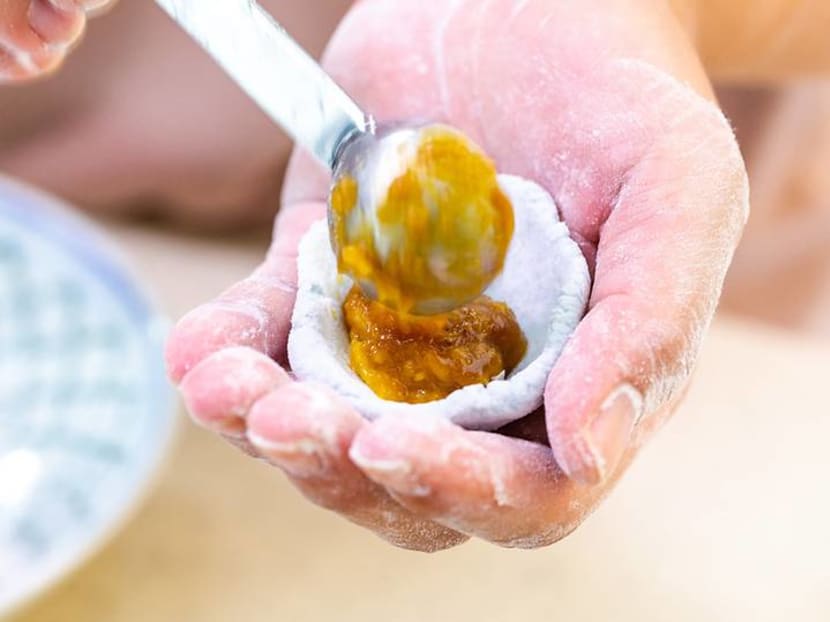
12. Place 1 teaspoonful of the durian and gula melaka filling in the centre of the dough and gently pinch the seams of the dough to seal. Roll lightly between your palms to form a smooth ball. You may find that the area around the seams thicker — carefully pinch off excess dough if need be and continue rolling it into a ball.
13. Place the filled ball of dough onto the floured surface and repeat with the rest of the dough and filling.
14. Bring the pot of water to a boil again. Gently lower a few balls into the boiling water. Don’t overcrowd the pot. Stir the water gently with a spoon so that the balls don’t stick to the bottom of the pan.
15. Let the balls cook gently until they float to the top. Allow them to cook for 2 minutes longer, then remove with a slotted spoon and shake off excess water.
16. Place the balls on the plate of grated coconut, toss them lightly to coat completely and serve within four hours.
Stay in the know. Anytime. Anywhere.

Subscribe to our newsletter for the top features, insights and must reads delivered straight to your inbox.
By clicking subscribe, I agree for my personal data to be used to send me TODAY newsletters, promotional offers and for research and analysis.






