
Luncheon Meat & Quail Egg Nasi Lemak ‘Sushi’ So Cute, Gudetama Would Approve
A Singaporean take on the Hawaiian-Japanese musubi.
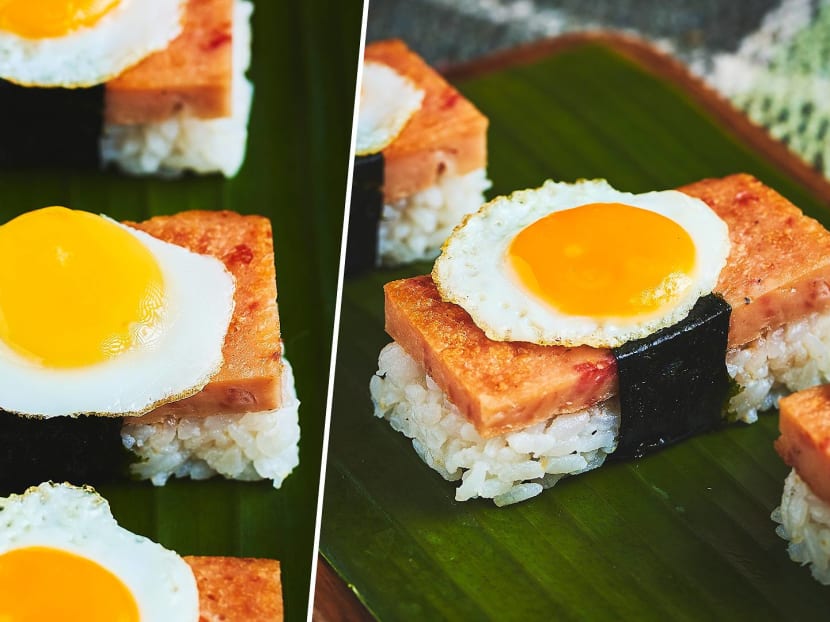
A Singaporean take on the Hawaiian-Japanese musubi.

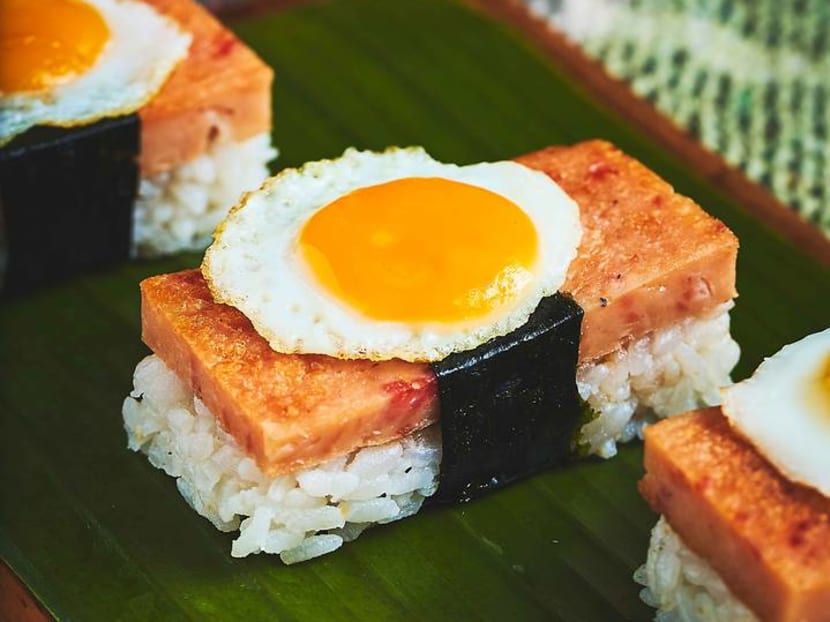
We’ve always been enamoured by the idea of musubi, that Hawaiian-Japanese snack of marinated Spam set on a bar of sushi rice and fastened with a ribbon of nori (seaweed). So for National Day, we made our luncheon meat musubi dreams come true with a quintessentially Singaporean take on it — nasi lemak.
Musubi is one of those hybrid dishes that resulted from the war, much like Korean army stew. The story goes that as the United States entered into the war against Japan, American troops were deployed to Hawaii, bringing with them rations of canned luncheon meat. Musubi was reportedly created in the Japanese internment camps in Hawaii, but because of its long shelf life, the stocks of Spam outlived the war and became abundantly available to civilians long after the fight was over. Hawaii’s large ethnic Japanese population continued making musubi and it is today as commonplace as poke rice bowls. Unlike sushi, the rice in musubi isn’t cooked with vinegar and is considerably more rustic in shape since you don’t need to be a master to put this delish snack together. Its name simply refers to meat or cured vegetables served on Japanese short-grain rice.
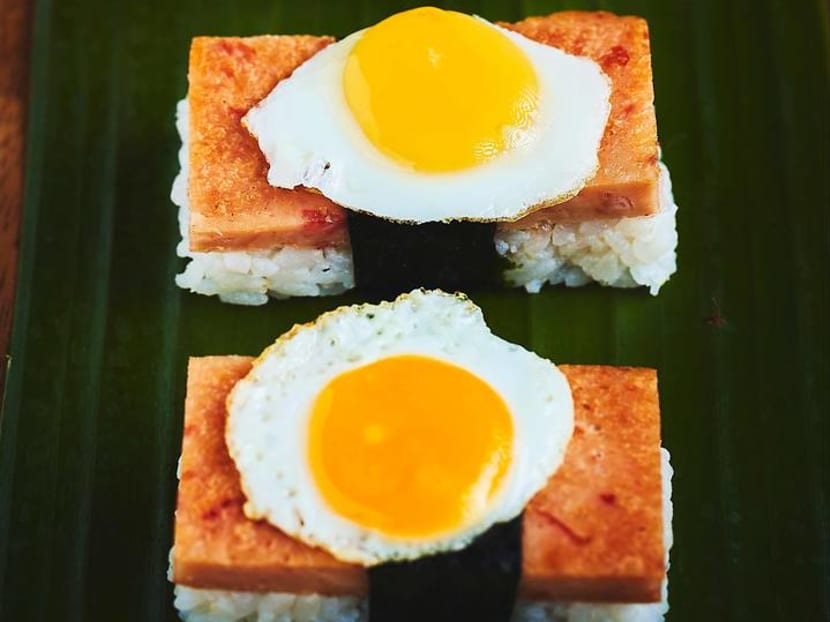
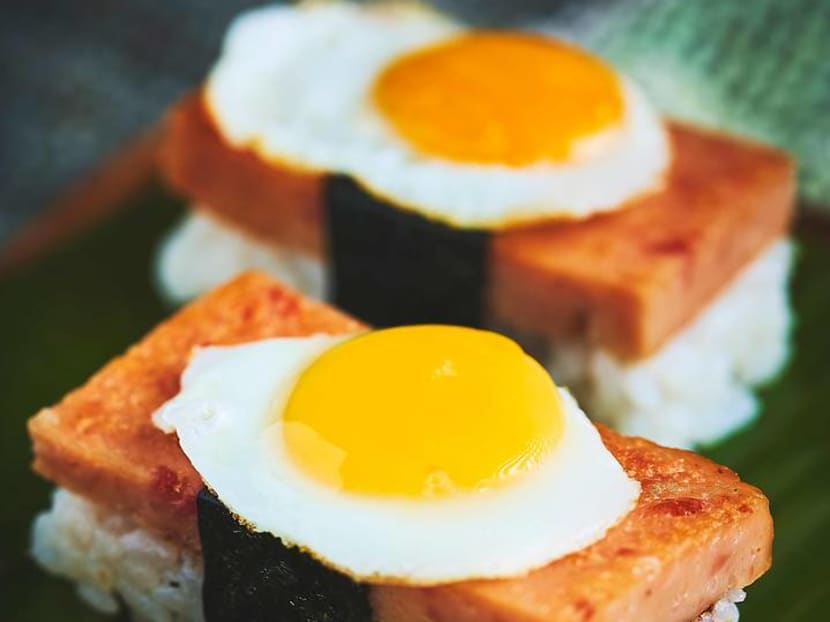
In the true spirit of nasi lemak, we cooked Japanese short-grain rice with coconut milk, slathered the musubi with nasi lemak sambal, and topped them off with fried quail eggs, which gives them some irresistibly cute Gudetama (Sanrio's lazy egg character) vibes.
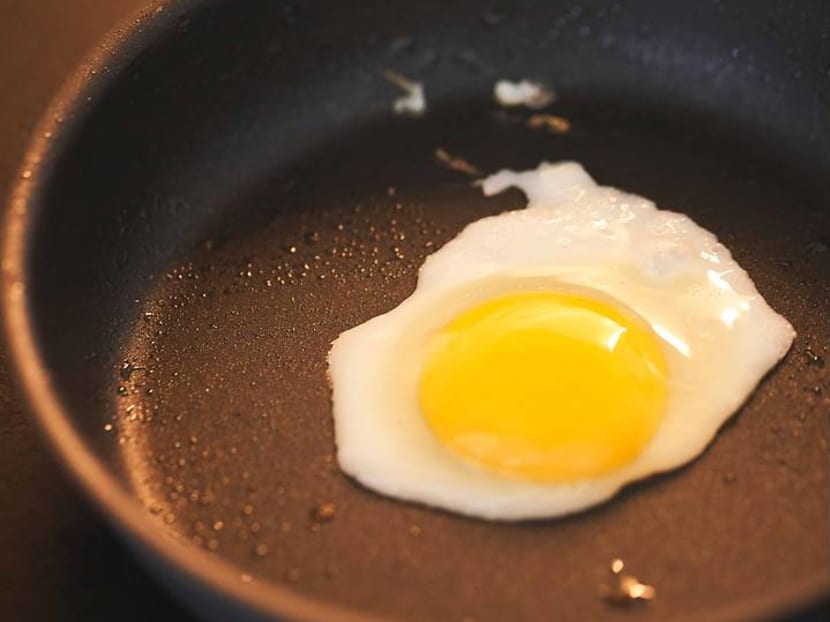
We won’t lie: These are finicky to make. In order to make neat parcels of rice, luncheon meat and egg, you’ll have to spend time and effort paying attention to details like ensuring that the luncheon meat slices are cut to the exact same size as the sushi rice bars. The diminutive quail eggs must also be carefully broken one by one into a bowl before transferring it to the pan, so that you don’t break their delicate yolks while getting them out of their shells.
We’ve designed this recipe so that the rice is unmistakably lemak but still light enough that it doesn’t induce a food coma after you've wolfed it down. Still, the musubi is satisfyingly filling. You can put as much sambal as you like, but do note that the more sambal you put, the messier your musubi might be as the chilli might spill over onto the sides.
Think of this as a fun activity for the long weekend to enjoy with your friends or kids. You’ll have lots of leftover rice and luncheon meat trimmings that make for delicious nasi lemak fried rice once the rice has been kept overnight in the fridge. Alternatively, you can also make nasi lemak onigiri (Japanese rice balls) for your kid’s (or your own) lunch box the following day. This is a fun and delicious dish that just keeps on giving.
Makes about 15 pcs
For the rice:
400g Japanese short-grain rice
300ml water
100ml coconut milk
1 tbsp coconut oil (try Cocorosco)
3 pandan leaves, tied into a knot
a pinch of salt
1 can luncheon meat
4 tbsp bottled nasi lemak sambal (try Singlong)
15 quail eggs
1. Place the rice in a sieve and wash till the water no longer runs cloudy. Place rice in a bowl and cover with fresh water. Soak for 30 minutes.
2. Rinse and drain the rice thoroughly. Place the rice in a rice cooker, along with the rest of the ingredients. Cook according to rice cooker instructions.
3. Once the rice is cooked, allow it to cool completely before using.
4. Meanwhile, prepare the luncheon meat. Cut the meat into 0.5cm-thick slices.
5. Place a non-stick skillet over medium heat (no need to oil it). Place several slices of the luncheon meat on the pan and fry for about 3 to 4 minutes on each side till they are nice and toasty. Transfer to a plate and set aside. Do this in batches.
6. To assemble the musubi, line a straight-sided large square or rectangle tray (about 30-cm square) with plastic wrap. Wipe the tray with a damp cloth before lining it to help the plastic stick. If you only have smaller trays, do this in smaller batches.
7. Spoon rice into the tray and lay another sheet of plastic wrap over it. Press the rice down with your palms to compress the grains into a “cake” that’s about 1.5cm thick.
8. Remove the top sheet of plastic wrap and turn the compressed rice onto a large cutting board. Remove the sheet of plastic wrap that’s now on top.
9. With a very sharp knife, carefully slice the compressed rice into rectangular pieces of about 4cm x 7cm.
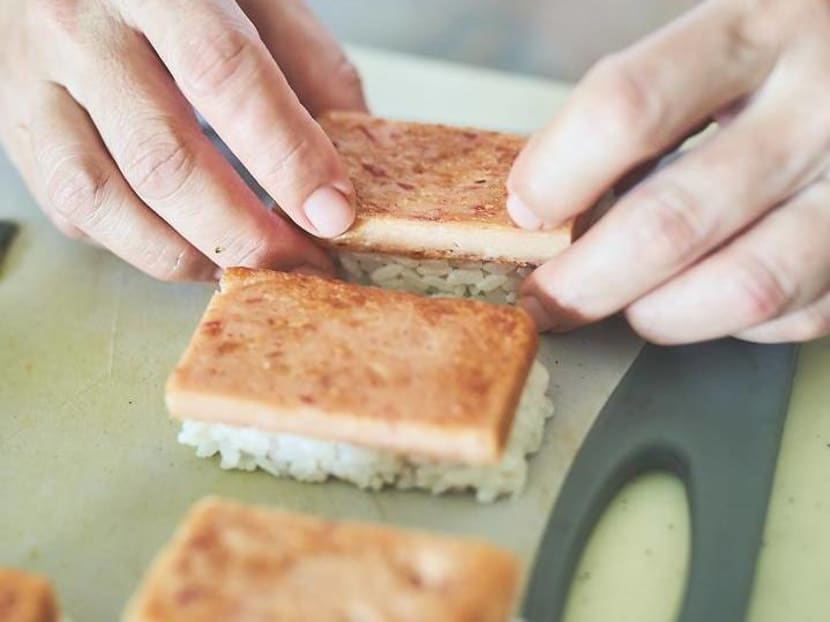
10. Spread about ½ tsp of the nasi lemak sambal onto each rice nugget and top with a slice of luncheon meat, which you can trim to fit the size of the rice bed. You’ll have rice and luncheon meat trimmings left over. Keep them in an airtight container in the fridge for up to three days and use to make fried rice or onigiri for another day.
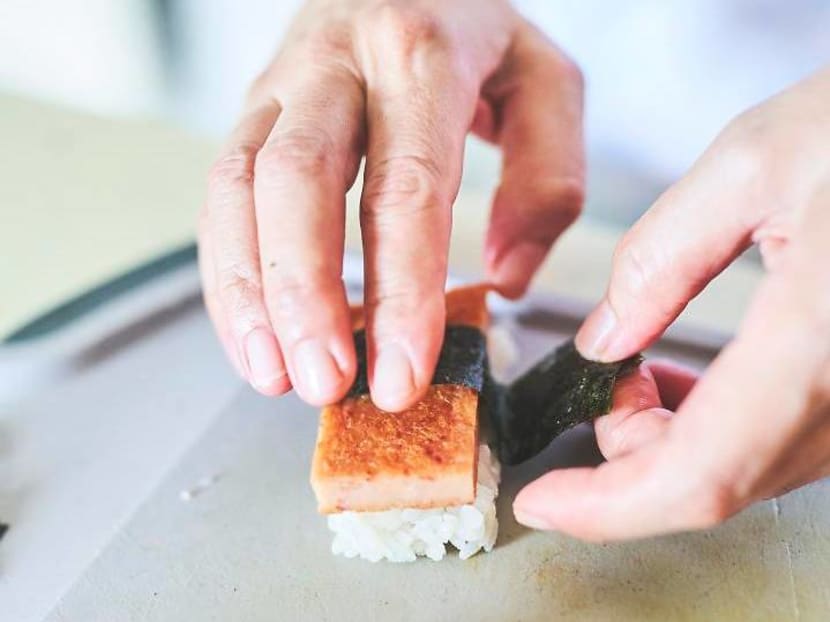
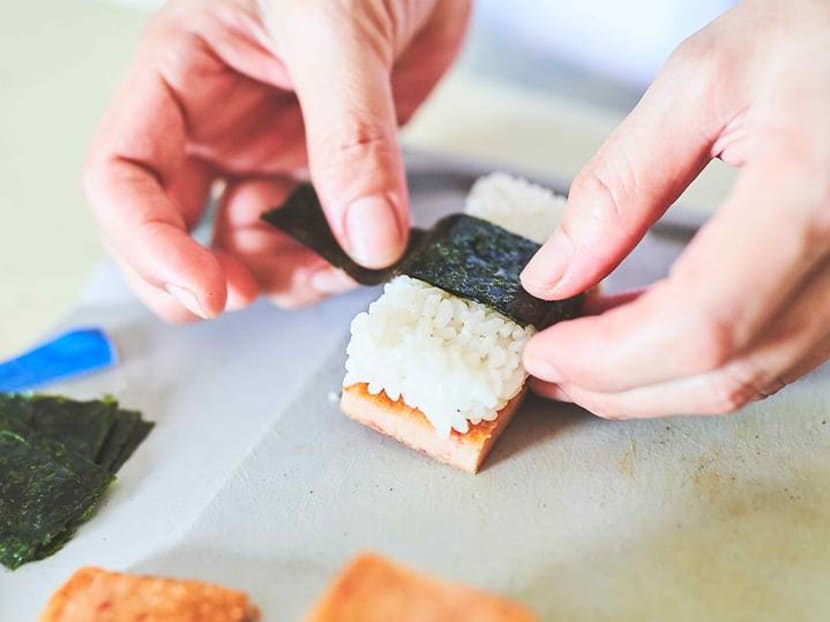
11. Cut the nori into 2cm-thick ribbons and wrap the centre of each musubi with the seaweed strips. Trim away the excess nori.
12. To prepare the quail eggs, place a small non-stick skillet with a teaspoon of oil over medium heat. Carefully break a quail egg into a small bowl and tip the egg onto the hot pan. Fry for about 2 minutes till the whites become opaque and set around the yolk. Carefully remove from the pan and place on a plate. Repeat with the rest of the quail eggs.
13. When all the quail eggs are cooked, carefully place one on top of each musubi and serve.
Alvin Teo
Stay in the know. Anytime. Anywhere.

Subscribe to our newsletter for the top features, insights and must reads delivered straight to your inbox.
By clicking subscribe, I agree for my personal data to be used to send me TODAY newsletters, promotional offers and for research and analysis.






