
Ex-Ch 8 News Anchor Wang Yanqing Spent Almost $1 Mill On Eatery, Then Covid-19 Hit
“Being a newscaster is so much easier than this.”
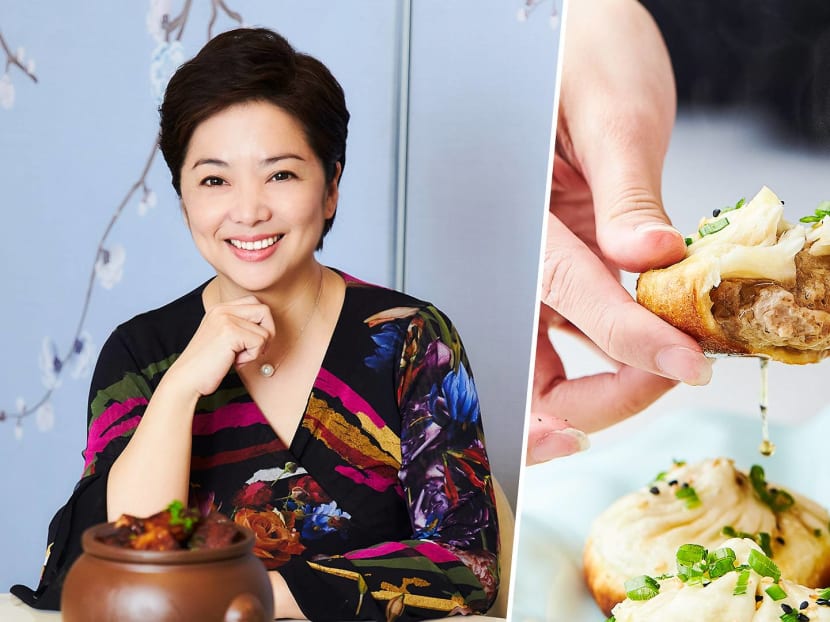
“Being a newscaster is so much easier than this.”

The F&B industry is tough, especially in Singapore with high overheads, manpower shortages, fierce competition and fickle diners. And now Covid-19 is burning gaping holes in the till. Wang Yanqing, 47, is no stranger to the challenges in the world of F&B, although she’s probably better known as a former Ch 8 news anchor and TV presenter than restaurateur. More than a decade ago, the ex-newscaster and editor-in-chief of now-defunct Chinese language magazine Citta Bella, co-owned Yan’s Private Dining, a Shanghai eatery, which she ran concurrently with her media job. There were two outlets in Bukit Timah and Chjimes. She closed both down in 2008 when she was sent to work in Shanghai. After 10 years in Shanghai, Wang said goodbye to the media industry, returned to Singapore last year and opened the 100-seater Yan's Dining Fine Shanghai Cuisine restaurant in Mandarin Gallery. 8days.sg chats with her over a meal at her sprawling eatery.

“There have been a lot of changes in the media industry,” says the Shanghai-born Wang, who came to Singapore to work in MediaCorp when she was just 21. “The digital media scene in China grew exponentially in 2008. If you’re just a paper-based platform, you face a lot of competition. I really dislike this age of social media. The craft and mysticism of media is lost. Nowadays, everything is instantaneous. It’s no longer about quality. It’s about quantity and the ability to churn out content quickly. This is one of the reasons why I left the media industry. We were doing well, but I felt I had a reached a certain age in my life. My daughter was enrolling in university and I wanted to do something for myself. Also, I knew that if I moved back to Singapore, I wouldn’t find many restaurants serving fine Shanghai food. I’ve been away for 10 years and there still aren’t many Shanghai restaurants here.”
Having lived and worked in Singapore for most of her adult life, the Singapore citizen feels a great affinity for this little red dot, which probably explains her decision to begin a new phase in her life here. “I’m Singaporean. I carry a Singapore passport!” she tells us emphatically. “I’ve lived here longer than I’ve lived in Shanghai. My friends are all here. This is my home; Shanghai is my hometown. My daughter has also grown up here and will most likely end up working here. Furthermore, if I were to open a Shanghainese restaurant in Shanghai, the competition would be too great. If I were to ever open a restaurant in Shanghai, I would serve Peranakan food!”
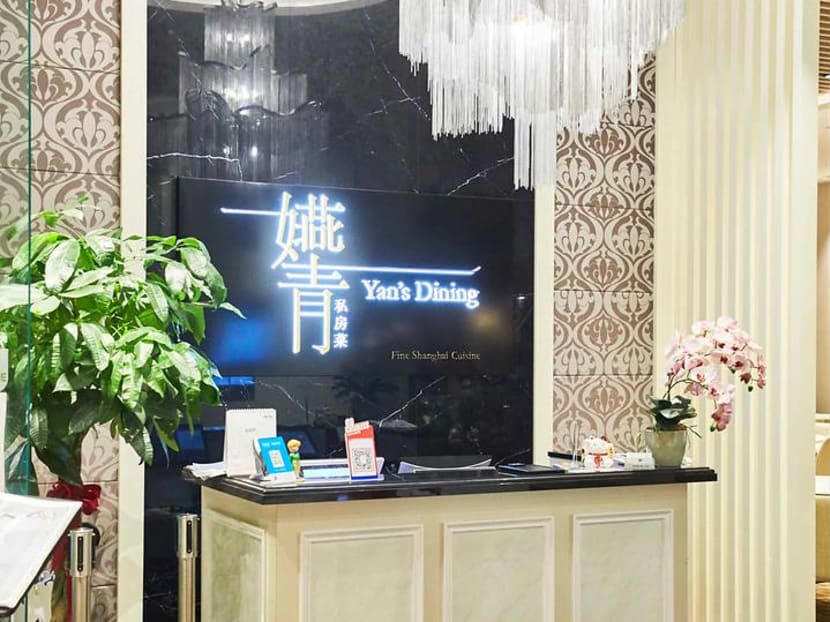
Wang’s second stab at F&B couldn’t have come at a worse time, though. As the sole owner, she tells us she has pumped in almost one million dollars into the venture to date. “My mother asked if I regret opening a restaurant. But what to do?” says Wang. “It’s not easy starting a business in Singapore. Your rent alone already takes up a huge chunk of your investment ’cos you need to pay six months upfront. We were doing okay, but had yet to turn a profit when the pandemic came along. Business has dropped by 50 per cent since the Circuit Breaker, and 40 per cent in Phase 2,” she shares. “We came up with a new menu for 2020, but ’cos of the lockdown, we had to abandon most of it. We’re currently offering just 40 per cent of the dishes on our menu. And we can only take in half the number of diners now. Everyone says things will get better, but can you hold on till things do? Every day you open, it costs money. We did receive some rebates from the mall’s management and we’re very grateful for whatever financial help we got, but it’s really not enough. I have no delusions about making money this year. Open another branch? Forget it. I just want to survive.”
To make ends meet, Wang, like many other F&B joints during this period, has taken to offering takeaways to help tide things over. “We came up with a lot of ideas, like cold snacks that travel well, and inexpensive set meals, so we can keep all our staff. Even though that’s still not enough to cover everything, it’s enough to pay some bills and salaries.” To maximise her earnings, she has also cut out the middleman by coming up with her own website to facilitate takeaway orders. “GrabFood takes 30 per cent from us on top of charging diners a delivery fee, so I decided against using them,” she explains. “But as a business model, they’re not wrong ’cos they’re filling a gap in the market and they’re entitled to charge for the service. But you have to think about the restaurants. My margin is just 20 per cent. What’s left for me if I give you 30 per cent? We’ll lose money on every order. Eventually, I decided to handle the deliveries myself. Diners can order directly from us through WeChat, Whatsapp and our website.”

Even though Wang is doing whatever she can to stay afloat, she is well aware that it may still not be enough. “If I have to close, I have to close. I’m putting in all my effort to survive, but I’m also ready for the worst, although I have not thought about what I’d do if I have to close down. I may take a break for a while. But I’m also an optimist and idealist. It’s a romantic notion, but we have to live courageously for the moment. Honestly, being a newscaster is so much easier than this. Life was simpler. I just had to put on make-up and read the news. But I actually enjoy the challenges in F&B, even though as I near my 50s, I don’t have the energy I once had. I want to do so many things, but I don’t have the energy for it. I do miss presenting. And I have thought about setting up my own channel when things get better ’cos we meet so many different people here from all walks of life. I think it could be quite interesting to host a lifestyle videocast with my guests over some wine — food is a good way to bond with people — but not now. Now I have to survive first.”
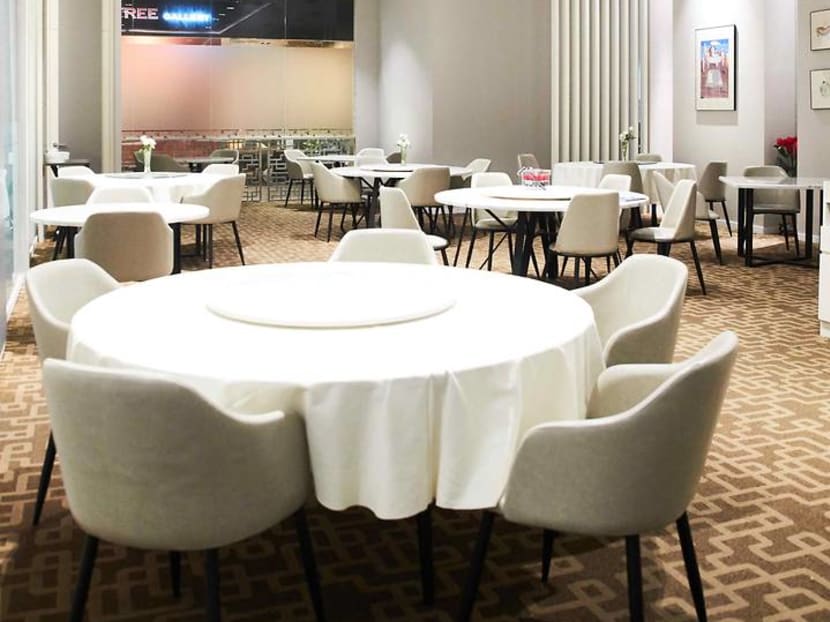
Yan’s took over the space where London Fat Duck used to be in Mandarin Gallery. The interior is done up by Wang herself, who tells us she got everything from China online shopping site, Taobao. Unfortunately, the DIY design approach shows. The anaemic aesthetic is somewhat dated with some furniture pieces looking like Channel 8 leftovers from the ’80s, and not in a fun, kitschy way. It lacks oriental charm and the stark white lighting makes everything look washed out. But, hey, if you’re here for the food, that’s something you can overlook.

The menu here is created by the same Shanghainese chef who headed the kitchen of Wang’s other two restaurants, and fine-tuned through feedback from her Shanghainese friends. Traditional Shanghainese fare is generally sweeter and saltier, but Wang has tweaked it to cater to local palates. “We adjusted the dishes to suit Singaporeans. It’s not as greasy, sweet or salty as traditional dishes. You can still taste the authentic Shanghai flavours in the dishes, but I believe food has to move with the times and accommodate change.” According to Wang, the biggest hurdle was procuring the ingredients, most of which are sourced locally. “It’s not easy to find ingredients locally,” she tells us. “And from doing this, I realised why there aren’t many Shanghai restaurants in Singapore. Procuring traditional ingredients is an issue. For one dish alone, you’ll have to source the ingredients from various different vendors unlike in Shanghai where you can find everything under one roof.”
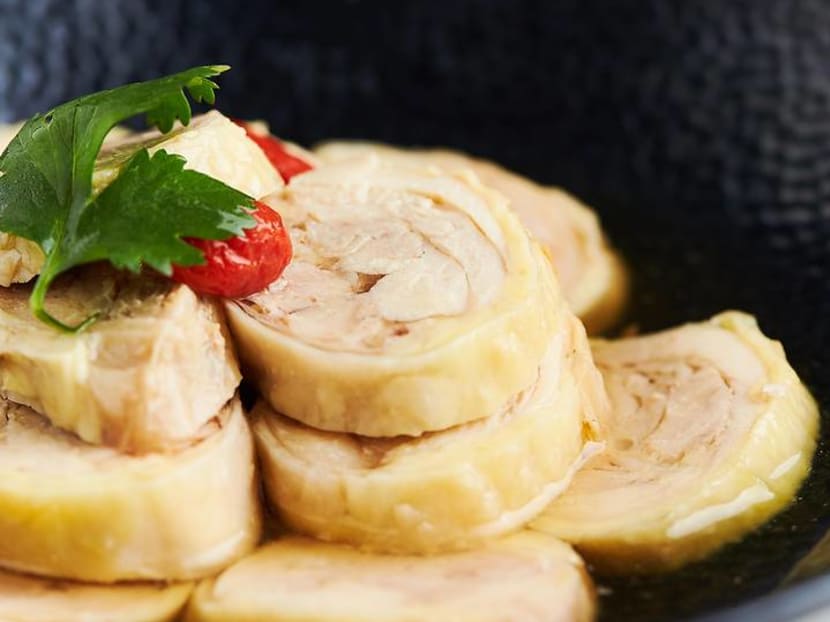
Eaten cold, this traditional Shanghai appetiser — ‘drunken’ is the preferred preparation style that characterises Shanghai cuisine — is a great way to whet your appetite. The rolls of steamed chicken thigh, bathed in the sweet, intoxicating fragrance of Shaoxing wine, are tender, but not mushy and still have a bit of bite to them. The flavours are very delicate, but pronounced. Quite addicting.
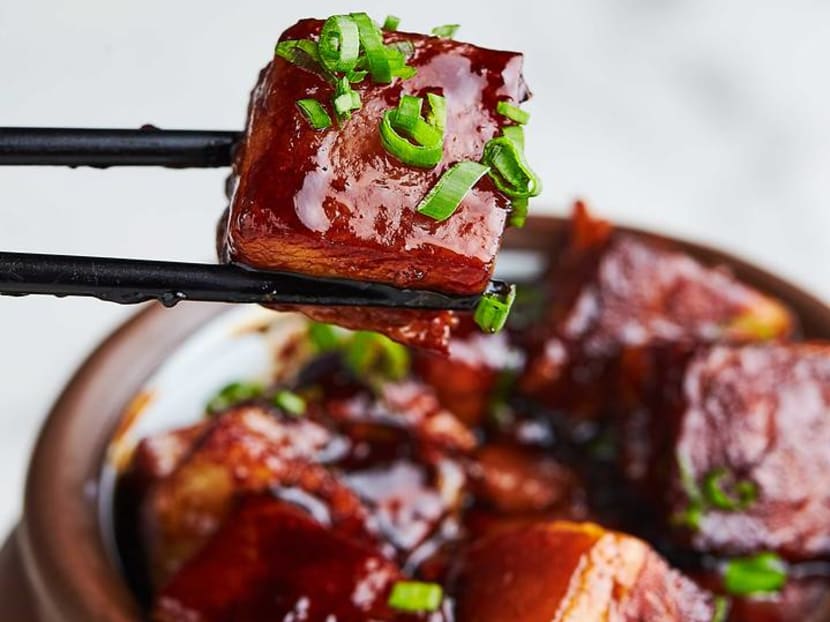
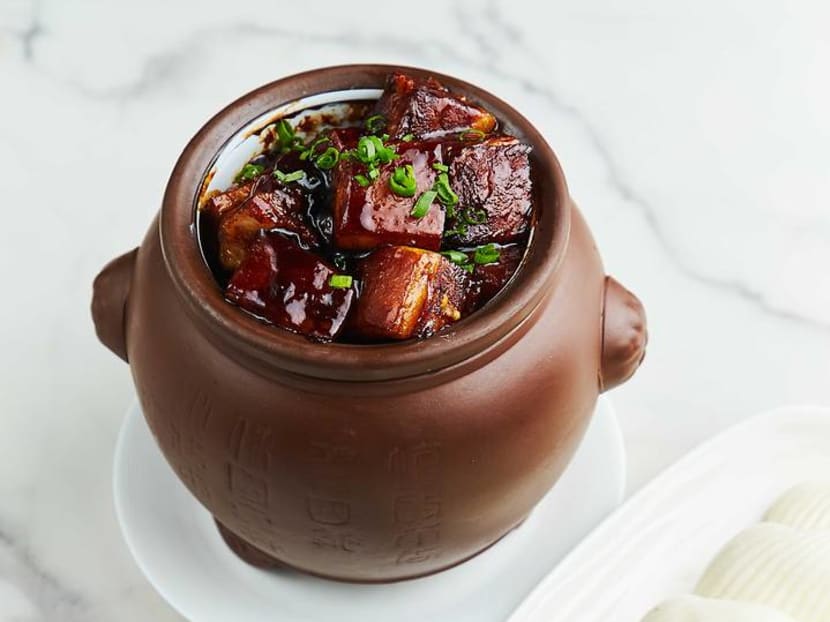
This quintessential Shanghai delicacy, with its bright red, glossy sheen, is clearly the star of the show here. Hong shao rou or braised pork belly is marinated in sugar, Shaoxing wine, soy sauce, dark soy sauce and cooked slowly until the sauce caramelises and turns that signature red hue — known as “red cooking”, which is characteristic of Shanghai cuisine. The slow cooking method also allows the meat to get decadently tender with the thick, sweet bands of fat becoming melt-in-your-mouth soft. The fattiness of the meat is a little rich, but slapping them between the pillowy folds of the house-made mantou buns helps to mop up some of that fatty goodness.
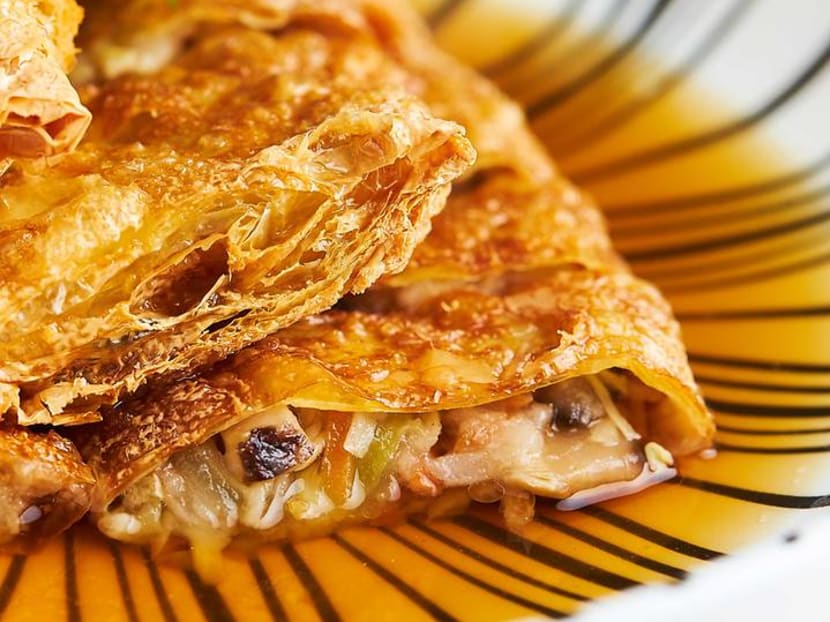
We don’t quite care for mock meats, but this vegetarian goose starter is surprisingly yummy. Sweet, salty and earthy, the shredded bits of turnips, mushrooms and yam encased in the crispy deep fried beancurd skins give the dish a good textural mouthfeel and crunch.
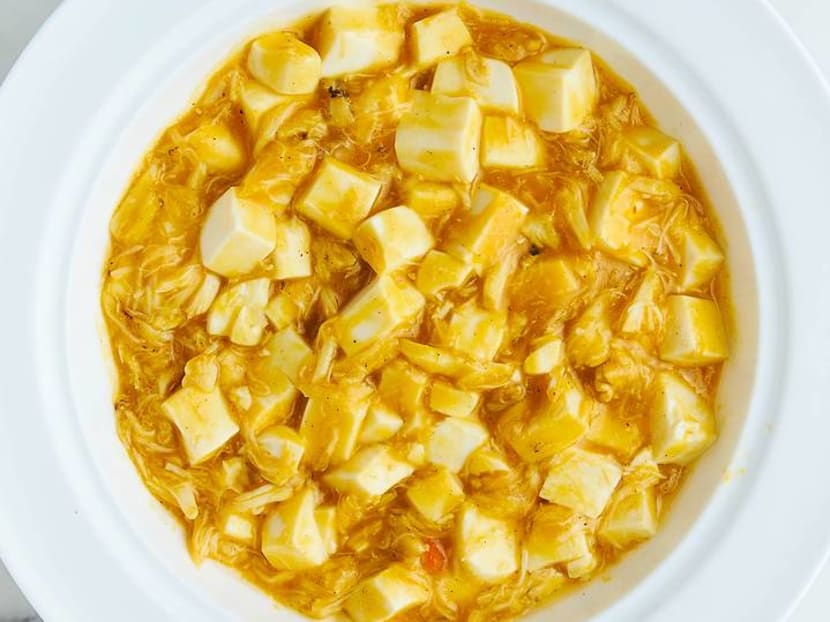
Served in a warmed claypot, this dish of shredded Sri Lankan mud crab and crab roe eats a little like shark fin soup. The broth is thickened with crab roe, which gives it a good briny hit while the cubes of silken beancurd add a luxuriously slippery texture. It tastes best with a generous splash of vinegar.
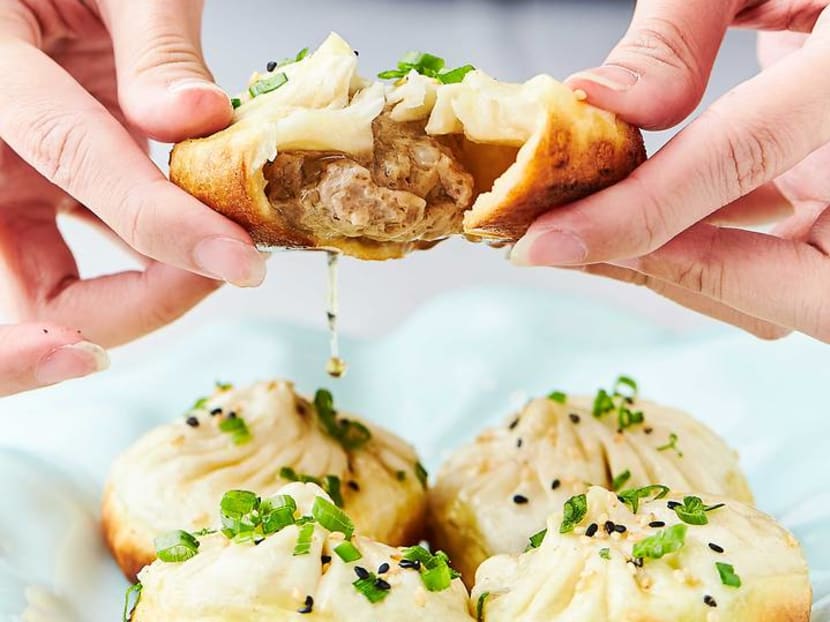
These soup-filled buns are a meal on their own and usually served as breakfast. A moist ball of minced pork enveloped in a soft dough shell is pan-fried till it’s half crispy, half chewy. The broth is sweet, very hearty and the bun not too oily. The minced pork is a tad gamey, but drenching it with vinegar helps to tone it down.
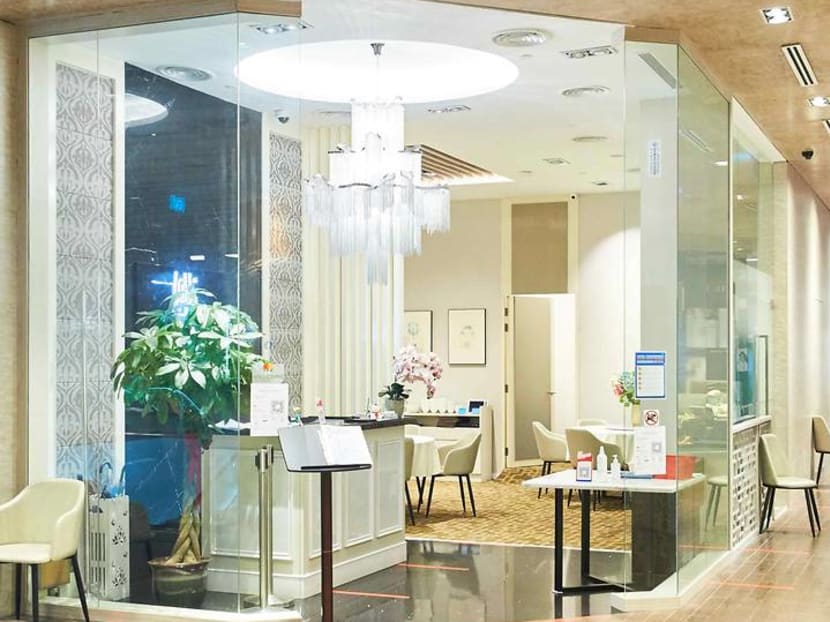
Don’t be intimidated by the “fine” in the restaurant’s name. Prices of the well-cooked nosh here are pretty decent for the quality you get. Yan’s is a good place to sample flavourful Shanghainese cuisine, especially since nobody can travel right now. We hope it manages to survive this pandemic.
Yan's Dining Fine Shanghai Cuisine is at #04-22 Mandarin Gallery, 333A Orchard Rd, S238897. Tel: 6836-1188. Open daily 11.30am-3pm; 5.30pm - 10pm. Deliveries at www.yansdining.sg/order.
Photos: Alvin Teo
Stay in the know. Anytime. Anywhere.

Subscribe to our newsletter for the top features, insights and must reads delivered straight to your inbox.
By clicking subscribe, I agree for my personal data to be used to send me TODAY newsletters, promotional offers and for research and analysis.






