
Kelvin Tong Looks Back At 20 Years Of Directing Movies: From ‘Eating Air’ to ‘The Maid’ To ‘Republic Of Food’
Fun fact: Fiona Xie didn’t have to audition for her role in ‘Rule #1’.
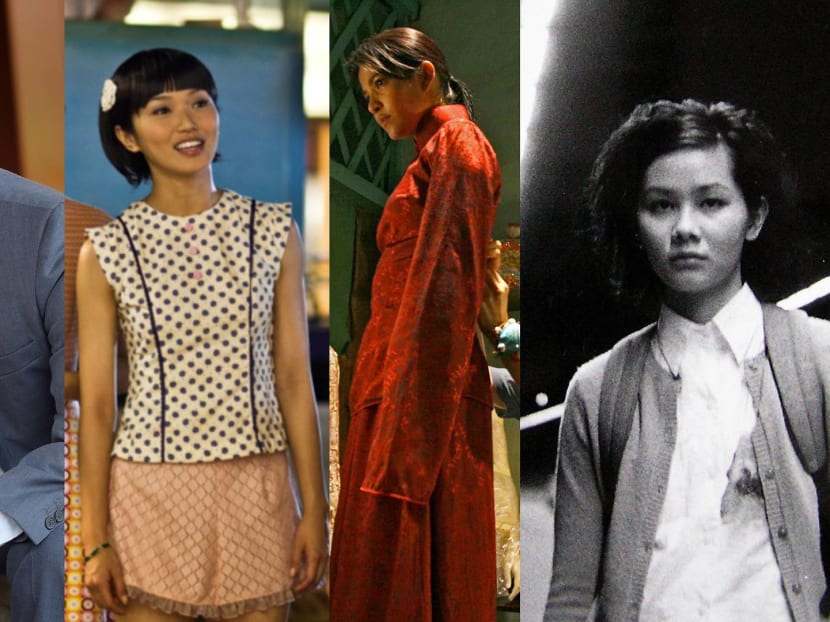
Fun fact: Fiona Xie didn’t have to audition for her role in ‘Rule #1’.

This year marks the 20th anniversary (!) of Eating Air, the first movie directed by lawyer-turned-journalist-turned filmmaker Kelvin Tong, who co-helmed the quirky teen romance flick with Jasmine Ng.
But it wasn't until five years later that he made his name in horror with the smash, The Maid. Despite his reputation as a horror auteur, Tong has also dabbled in arthouse dramas, crime thrillers, and heartland romps.
But whatever the type of movie he’s making, there’s one common denominator. “I work across different genres but what connects all of my films is my love of story,” Tong, 46, tells 8 DAYS via e-mail.
Reflecting on his two-decade-old filmmaking career, Tong says, “I think it’s a privilege to still be working as a filmmaker in a place like Singapore.”
Does he have a favourite Kelvin Tong movie? “I really can’t grade my own movies,” says Tong. “Especially my first one. Your firstborn [Eating Air] will always be special even if it is born with deficiencies.”
He also considers Eating Air as the one movie that taught him the most about directing. “It was essentially my film school,” says Tong, who doesn’t have a habit of watching his own movies.
“Because there are so many other films by other filmmakers to watch,” he adds. “The last film of mine that I saw was It’s A Great Great World which screened last year at the National University of Singapore, as part of an alumni event.
“I wasn’t looking forward to watching the film because when I watch why own films, all I can see are my mistakes. But surprisingly, I found that It’s A Great Great World had weathered well. I believe it’s the first time I liked watching a film that I had made.”
Here, we ask him to share his memories of making these movies…
Catch The Maid on Ch 5 tonight (Mar 19) at 10pm, as well as on Toggle. You can also catch It’s a Great, Great World, The Faith of Anna Waters, and 7 Letters on Toggle.
Photos: Boku Films
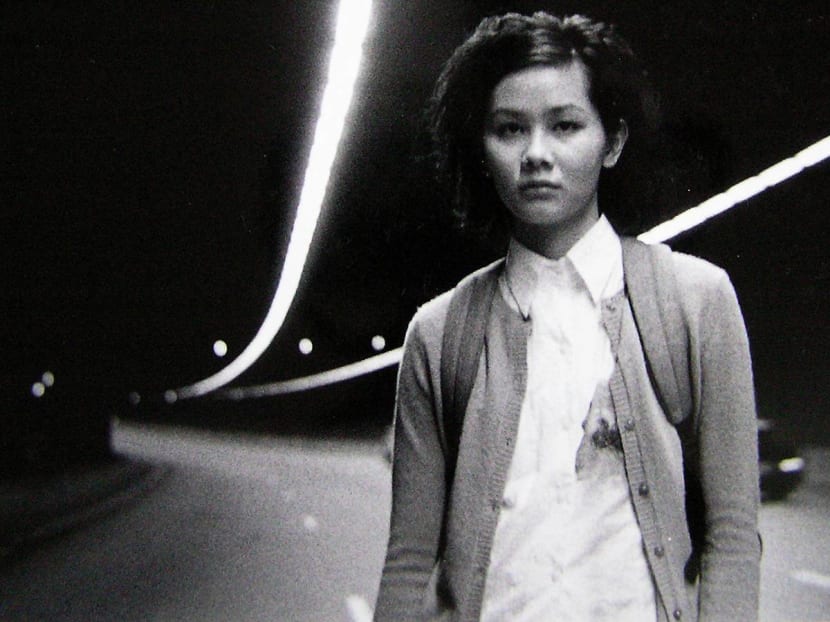
Billed as “a kung-fu motorcycle love story”, Tong’s feature directorial debut — made alongside Jasmine Ng — is about two restless teenagers (Benjamin Heng and Alvina Toh) and their days of being wild and crazy, and being in love. (In Hokkien, the title means “having a good time”.) Michelle Chong also has a scene-stealing appearance as a Malaysian photocopy shop attendant.
8 DAYS: What inspired you to make a movie about Ah Bengs?
KELVIN TONG: I didn’t really see Eating Air as being about Ah Bengs. It is about bored kids trying to make a boring place just a bit more magical.
You were then the film critic with The Straits Times. Did that help get the movie made?
I guess it did, in the sense that when I looked for financing, it helped that people knew who I was and knew that I was connected with film. It gave me a certain legitimacy even though I had never made a film before. Apart from that, however, it was horrific making a film with my day job always looming in the background. People were waiting for me to fail. That exerted great stress and pressure. But making the film together with Jasmine made the journey less lonely. She made me feel braver.
How difficult was it to balance your day-job with making the movie?
It wasn’t difficult because I had saved up so much leave for years of working that I could take a whole chunk of time off work to go make the film. It helped that my then-editor, Richard Lim, was super supportive.
Do you remember the first scene you shot?
I think it was Ah Boy’s flying-guillotine fantasy at his home in Ghim Moh. It was a blast, rigging the flying guillotine and getting the actors playing his mum and dad to do kung fu.
What about the first time you saw the movie with an audience?
I think the first time we saw it with someone else was with Sandra Klass, our colourist. She found the film wild and wacky and her enthusiasm for it allowed me and Jasmine to begin breathing again.
Speaking of Jasmine, how did you guys decide what to direct?
We picked up when the other got tired. And making Eating Air was tiring. When she was directing, I would sort of act as her glorified assistant director. Vice versa, when I was directing.
It’s strange that you guys never made another movie together. Do you still run things by her with your solo projects?
I guess we took separate paths after Eating Air. I focused on more mainstream cinema while Jasmine pursued her passion for documentaries. I do run all of my film ideas by her all the time.
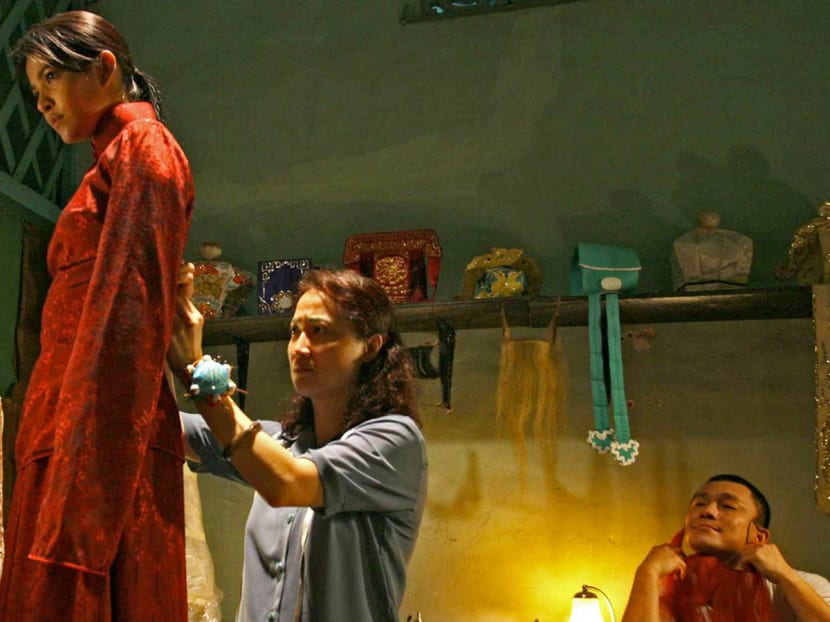
Tong’s follow-up to Eating Air is a fright-fest, starring Alessandra de Rossi as a rookie domestic helper who sees dead people after she starts working for a secretive couple (Chen Shucheng and Hong Huifang) on — of all days —the first day of the Hungry Ghost Month. Just lovely. The movie was a hit, and at one point, there were even talks of a sequel/spin-off set in New Zealand.
What are your memories making The Maid?
Being stuck in a very cramped shophouse in Joo Chiat for more than a month and my eyes watering from the crazy amounts of joss sticks we were burning to create the atmosphere. My eyes still itch whenever I see the poster for The Maid.
What was the scariest thing about making a movie on your own?
That I alone would be blamed for every wrong about the film.
There’s a rumour that your first cut wasn’t scary enough and that it was too arthouse, so you have to reshoot parts of it. Care to comment?
I wish that is the case because I do think that an arthousey horror film will do terrific business at the box office these days. See A Quiet Place.
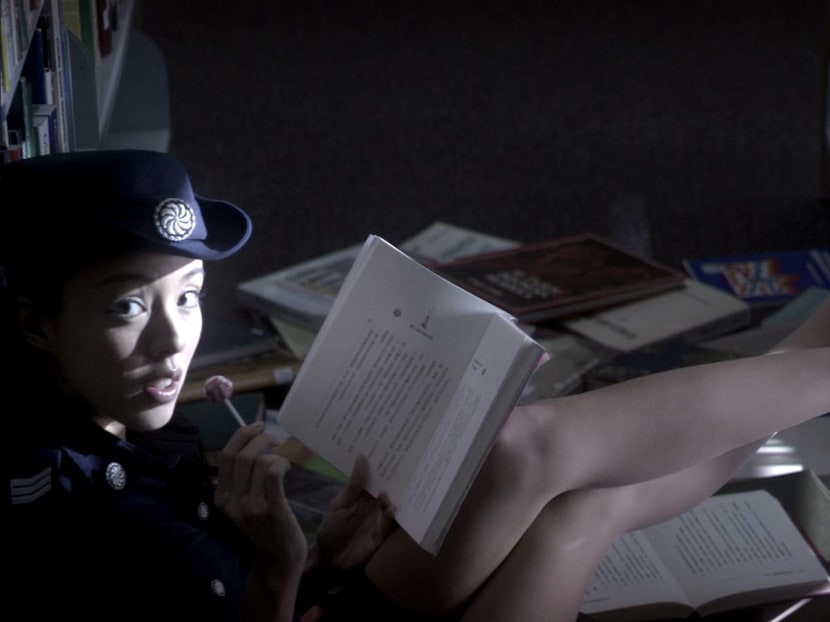
Folks expecting Tong to make another horror flick were disappointed when he made this instead: an avant-garde drama about a writer (Allen Lin Yi Lun) and his very complicated — and confusing — love life involving a librarian (Evelyn Tan), a cop (Ericia Lee), a theatre usher (Tracy Tan), and a punk rocker (Amanda Ling). The film opened to mostly bad reviews, but won Best Director at the 2006 Singapore International Film Festival.
You could’ve made another horror picture but you did Love Story instead, which was quickly shot in two weeks. Was it a deliberate move to switch between commercial and arthouse projects?
Absolutely. I wanted to keep working in both commercial and arthouse cinema. Given the success of The Maid, I felt I needed to make something less mainstream. Hence, Love Story.
Love Story clearly didn’t bring in the kind of money The Maid did, but did it lose money for your investors?
I was given carte blanche essentially because the film was already profitable from a pre-sale to cable TV. Because I knew that no one would lose money on this project, I experimented freely.
When a movie doesn’t work at the box-office, how do you deal with the disappointment?
Make another film. It’s horrible dealing with the aftermath of a box-office dud. So it helps when I can busy myself writing or prepping my next film.

Tong does horror again! But it isn’t the scary kind. More annoying than amusing, Men In White is an ode to the ‘80s Hongkong comedies, about six Singaporean ghosts — a badminton player (Shaun Chen), a gangster (Ling Lee), a housewife (Alice Lim), two rappers (Ben Yeun and Xavier Teo), and a photographer (David Aw) — and their struggles in the afterlife. Don’t recall this movie? don’t worry — not many people did.
What were you trying to achieve with Men in White?
I was trying to find a strain of Singapore humour that worked for me creatively.
So which is harder: comedy or horror?
Comedy is far harder to make than horror. By that, I mean really good comedy like Kung Fu Hustle.
Men in White wasn’t well reviewed. You’ve said that you aren’t bothered by bad review, so whose feedback do you value the most?
My producers, Kat Goh and Leon Tong [who’s also Kelvin’s younger brother]. They have proven to be harsh critics of my work. Plus, I need their buy-in before I start any project if I don’t want to be dealing with their grumpiness for the next eight months.
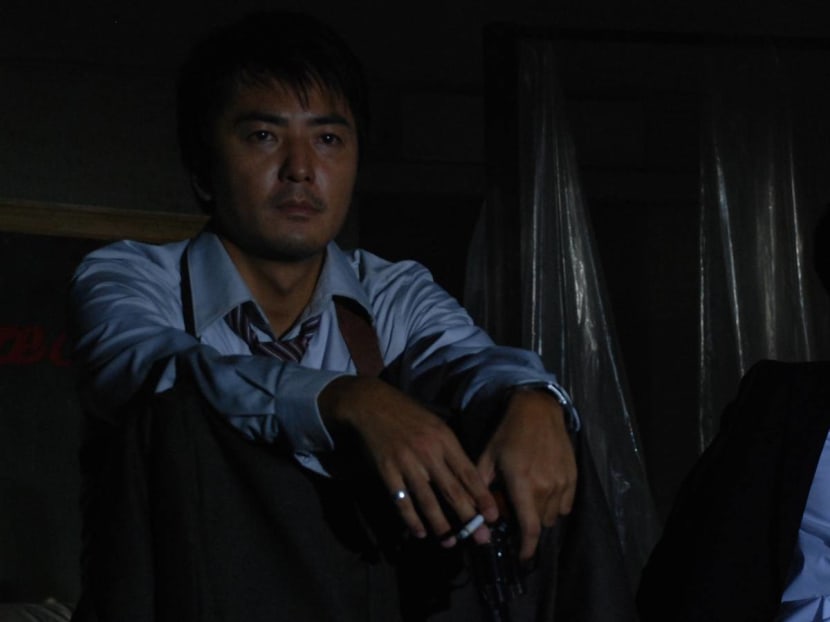
Tong gangs up with Mediacorp’s Raintree Pictures for this paranormal thriller starring Shawn Yue and Ekin Cheng as detectives specialising in cases that involves the supernatural. (Imagine an episode of The X-Files directed by Johnnie To.) Tong’s return to horror (the scary kind) won Best Film (in the Singapore film category) at the 2009 Singapore International Film Festival.
What was it like working with Shawn Yue and Ekin Cheng? Were you starstruck by them?
Not really because I had interviewed a lot of stars before in my other life as a film journalist. I was focusing more on how to communicate with them in Cantonese.
Fiona Xie plays Shawn’s wife. How did you get her involved?
We wanted a Singapore actress in the film and Fiona was right for the part. She didn’t have to audition because I’ve seen what she’s done on television. We met up for a coffee and discussed the role. She was enthusiastic and we decided to cast her.
You shot this in Hongkong. What were the similarities and differences between filming there and in Singapore?
Hongkong is a brutal environment to make a film in. There is no space. Nobody wants to rent you their house or shop to shoot in. And nobody’s impressed that you’re making a movie. They’re likelier to throw a glass bottle at you. So, you have to learn to shoot on the fly.
In a 2008 interview with 8 DAYS, producer and then Raintree Pictures boss Daniel Yun said the movie is “technically competent but lacks heart”. He also said he would not have cast Shawn Yue and Ekin Cheng. Care to comment?
I worked very well with Daniel. Given his vast experience, I respected his opinions. But I also stand by what I felt was right for the film. Whenever we differed in our opinions, we would talk. And he is a very good listener. He might go along with what a director ultimately believes in but he will still hold his original views.
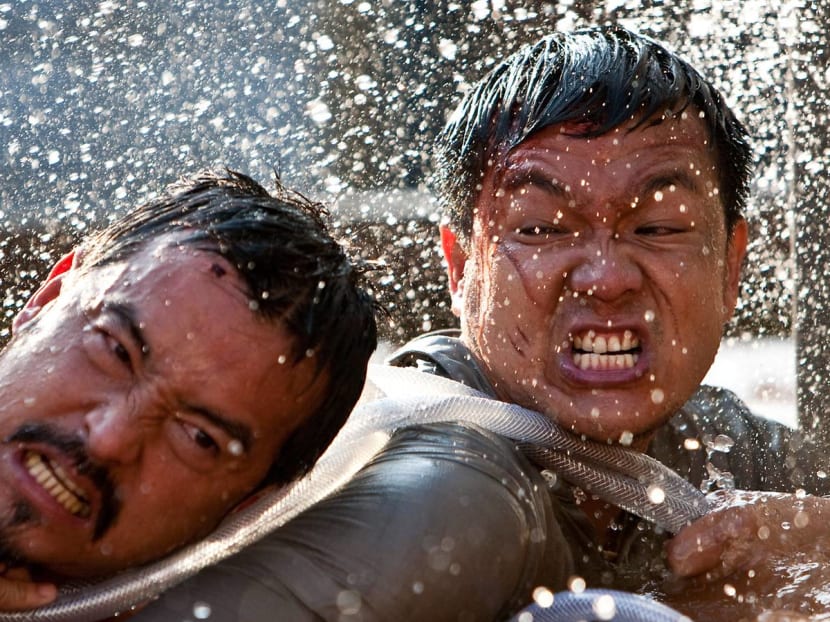
Tong co-wrote this thriller with Ken Kwek (Unlucky Plaza, The Blue Mansion), about a taxi driver (Christopher Lee) whose son is kidnapped by thugs because they’d mistaken him for a rich man’s kid. And how does the cabbie get back at the bad guys? Easy. He kidnaps the kidnapper’s son. That should teach the buggers not to mess with a cab driver. The movie also stars Phyllis Quek and Jack Lim.
What are your memories working on Kidnapper?
Shooting in a lot of weird places that you otherwise wouldn’t go to, such as rooftops, container parks, out of the way public toilets.
Was it difficult to ugly-fy Christopher Lee?
Not really because he was super game. He knew what the role needed and he made sure he got sweaty and oily before the cameras rolled each and every time. Plus he put on a bit of flab for the role. I really enjoyed working with him on Kidnapper and look forward to another chance to direct him in the future. He’s one of those actors who become more interesting the older they get.
You were once a lawyer. Has it ever crossed your mind to make a legal thriller?
It has. But not in Singapore because theatrics in our courtroom is pretty much frowned upon. The American legal system with a jury as the Greek chorus is better suited to this genre.
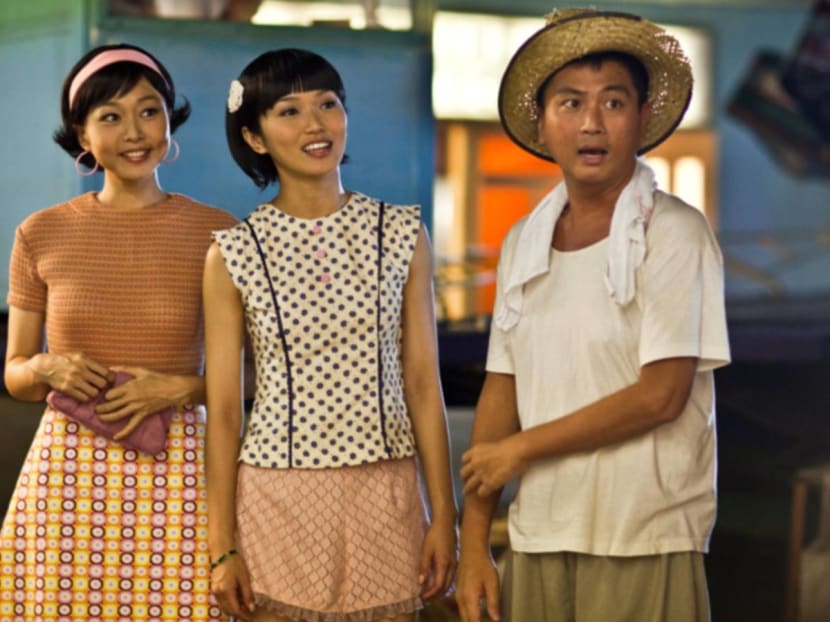
Tong goes epic with this generation-spanning drama set in the legendary Great World Amusement Park, featuring a big, big ensemble (everyone on Ch 8 is here somewhere, from Joanne Peh to Chew Chor Meng to Gurmit Singh). But there are way too many characters crammed into a 90-minute narrative; Tong should’ve made this as a TV serial.
This is the first of two movies — the other being Dance Dance Dragon — produced by Raintree Pictures where you were served briefly as its creative director. Why did you choose to do this movie?
I wanted to make a film that spoke to a broad swathe of Singaporeans. And given the Mediacorp arsenal behind Raintree, I also thought it would be a crime not to make a huge ensemble movie with lots of stars.
What’s the secret to handling a huge ensemble?
Keeping everyone apart and not making them wait. You want each actor and actress to feel special. Everyone gets the star treatment they deserve. So, scheduling and planning was key in a huge ensemble piece like It’s a Great Great World.
If you were to do this movie again, how differently would you have done it?
With a bit more money and time. We were rushing because of the release date [before Chinese New Year]. I think the film would look a lot more authentic with more money and time.
You used to write scripts in English and then had them translated into Mandarin or Hokkien. How do you ensure the jokes weren’t lost in translation?
I used to write in English. But ever since Rule #1, my Mandarin has improved enough for me to write my screenplays in Mandarin. I’m currently working on my dialects. I recently directed Eat Already, a dialect television series. I wrote the Hokkien and Cantonese dialogue myself.
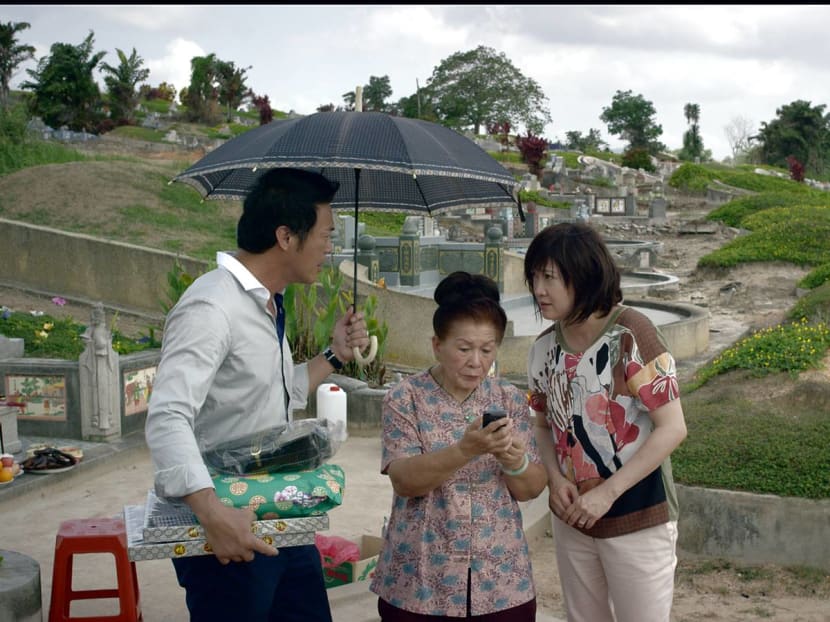
Seven homegrown filmmakers — Tong, Royston Tan, Eric Khoo, Boo Junfeng, Jack Neo, K Rajagopal, and Tan Pin Pin — came together for this anthology to mark Singapore’s 50 years of independence. Tong’s contribution, GPS (Grandma Positioning System), is about a family (Zheng Geping and Hong Huifang as the parents) making their yearly visit to their late patriarch’s tomb in Johore. 7 Letters was selected as Singapore’s entry for Best Foreign Language Film at the Oscars.
How did you get involved with 7 Letters?
Royston invited me to come on board.
What was the inspiration behind GPS (Grandma Positioning System)?
It reflected what I felt when I had to go to Johor Bahru each year to visit my grandparents’ graves. I wanted to capture the inter-generational nuances of Qing Ming.
What are the standout moments while making it?
I was caught up trying to shoot efficiently because the entire film took place under direct sunlight. The cast was practically melting. I was so focused on directing efficiently that I didn’t see the sound recordist crying until my producer nudged me to look. That’s when I knew I was shooting something pretty emotional.
Because there were six other directors, did you feel like you were competing with them?
Not at all. Because I knew how crazily different we all were. I was certain all seven films were going to be so different that comparisons would be futile.
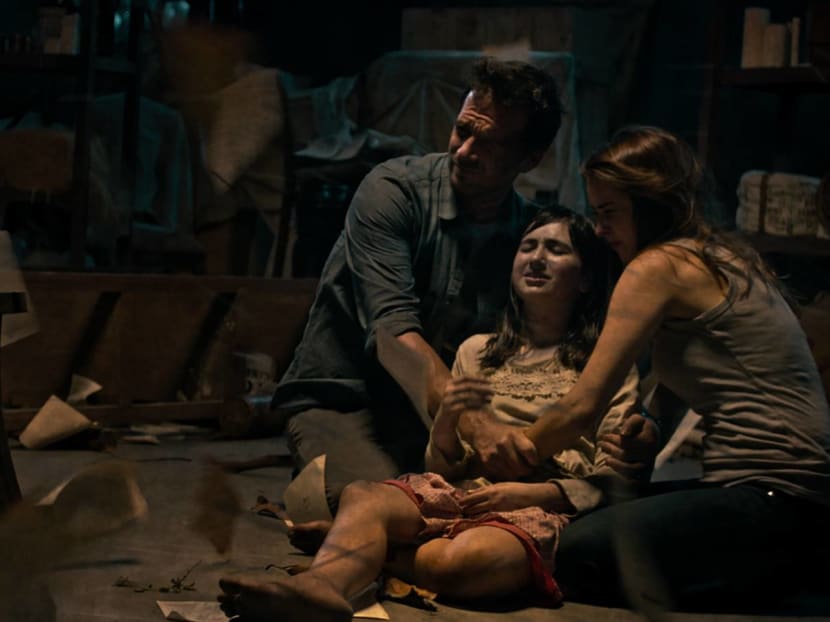
Tong does horror…. again! But this time with Hollywood moolah. Booyah! The movie —retitled The Offering in the US — is about a writer (Mad Men’s Elizabeth Rice) looking into her sister’s mysterious suicide in Singapore. Gossip Girl’s Matthew Settle plays the deceased’s estranged hubby, with whom the journo travel around the island like Amazing Race contestants looking for clues that lead them to a haunted house, a demonic possession and satanic data streams. Or something like that.
It’s your first movie in English. It’s your first horror movie since Rule #1. What made you want to write in English?
It was a co-production with a small American studio and I leapt at the opportunity to do something in English, which I have never done before in my film career.
You also got to work with American actors Matthew Settle and Elizabeth Rice. What did you learn about filmmaking from working with them?
I Skyped them extensively before casting them and made sure they would find shooting in Singapore fun. That proved vital because most American thespians will find shooting someplace hot like Singapore and at a pace that is breakneck compared to Hollywood a torture. Matthew and Elizabeth were well-prepped by all those Skype calls so when they arrived in Singapore, they hit the ground running.
The budget was said to be about USD6 mil (SGD8.1 mil), three to four times more than a typical local production. From a technical standpoint, what’s the difference for you as a director on a movie that’s SGD8 mil and one that cost SGD 1-2 mil?
Frankly, not much. Because a big-budget film will have big-budget problems. I may have had more gear and lights on The Faith of Anna Waters. But my set-pieces were also much bigger.
Did the movie make back its money?
Most of it. International sales and TV sales helped a lot.
It isn’t well-reviewed. Did that affect any future American/Hollywood co-productions?
I don’t think so because I am working on another co-production.
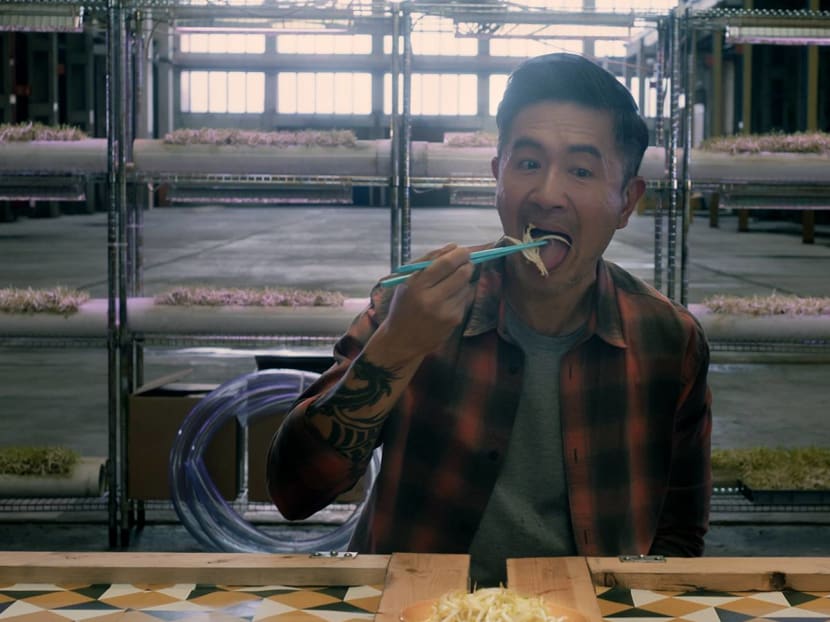
Tong does sci-fi… ish! Set in a future where a plague has wiped out all the natural foods, forcing humans to consumed bland synthetic ones produced by an evil company run by Bobby Tonelli. Adrian Pang plays a foodie who joins an underground food club that’s reviving cherished local cuisines made with real ingredients. The dystopian comedy also stars Yeo Yann Yann, Patricia Mok, Alan Wong and Jeffrey Xu.
This movie is supported by Ministry of Communications and Information (MCI). How did it come about?
I had a lot of fun working with MCI on the Eat Already television series. So when I came up with the idea of Republic Of Food, they were keen to support me.
How much creative freedom did MCI give you?
They gave me complete freedom because it was my film.
It has some sci-fi elements in it. Have you thought about writing something that’s full-blown sci-fi?
No. I would like to someday.
There are a lot of foodie shots. What’s your favourite food to shoot? What’s the secret to filming food?
I love shooting fish being deep fried. There is such a dramatic change in colour and texture. And the sound added during audio post-production — it makes me drool. The trick to shooting film sequences is to link it to emotions or memories. This makes the food shots twice as evocative and powerful.
Eric Khoo and Royston Tan have made movies about food. You guys can team up on a food-themed omnibus. What do you think?
That’s a great idea. I’m sure this topic will come up sooner or later when we sit down for a beer.
Stay in the know. Anytime. Anywhere.

Subscribe to our newsletter for the top features, insights and must reads delivered straight to your inbox.
By clicking subscribe, I agree for my personal data to be used to send me TODAY newsletters, promotional offers and for research and analysis.






