
The Noose's Judee Tan On How The Most Challenging Scene In Titoudao Reflected Her Mental Health Struggles
‘The Noose’ star returns to her dramatic roots in 'Titoudao: Inspired by the True Story of a Wayang Star’.
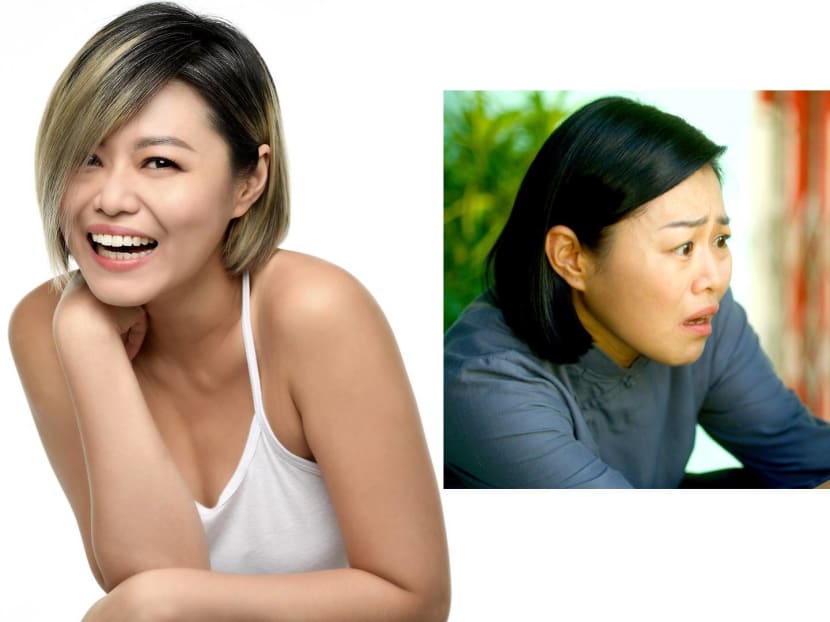
‘The Noose’ star returns to her dramatic roots in 'Titoudao: Inspired by the True Story of a Wayang Star’.

[Spoiler alert: Do not read ahead if you have not watch Ep 11 of Titoudao: Inspired by the True Story of A Wayang Star.]
As a comedian, Judee Tan has cracked us up as one of the kooky correspondents on the news parody series The Noose (hello, North Korea’s Kim Bong Cha!) But once in a while, she would like to show the world that she’s equally capable of making us cry.
“I know you know me from The Noose, but I started out in theatre,” says Judee who gets to revisit her dramatic roots on Mediacorp’s Titoudao: Inspired by the True Story of a Wayang Star, the stage-to-screen adaptation of Goh Boon Teck’s 1994 play, based on real-life Chinese opera icon Oon Ah Chiam, who happens to be Goh’s mother.
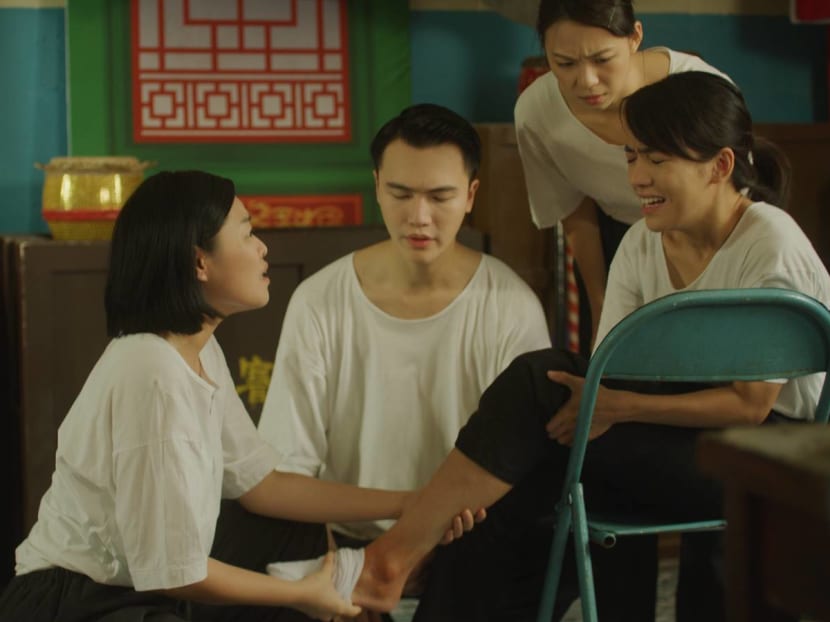
Judee and the original play go back a long way: She made her theatre debut in the 2007 staging of Titoudao. On the serialised version, she plays Ah Kuan — a role created specially for the 13-part series — the long-suffering housemother of a wayang troupe. Nurturing, compassionate and loyal, Ah Kuan is unlike any other character Judee has played before.
“I do treasure my time as Ah Kuan,” Judee tells 8days.sg over the phone. “It’s a role I have never done before. The experience of playing her is really rewarding. I have people coming to me, telling me, ‘We all wish we have an Ah Kuan in our life.’ So it’s really nice that the audience appreciates her.”
The TV version of Titoudao marks another milestone for the 30-something thespian: it’s the first time she’s written a serialised drama (she scripted Episodes 9 and 10). “Ah Kuan has to make a lot of difficult choices on the show and [as a writer], I get to put myself in her position [and examine] the circumstances surrounding those decisions.”
Over the course of our conversation, we discussed how she finds a silver lining in the COVID-19 ‘circuit breaker’ measures even though they have cost her a few gigs (“I’m now digging into my savings, reducing spending, and surviving off government grants”); and how she drew from her own mental health struggles for a crucial scene in Titoudao: Inspired by the True Story of a Wayang Star.
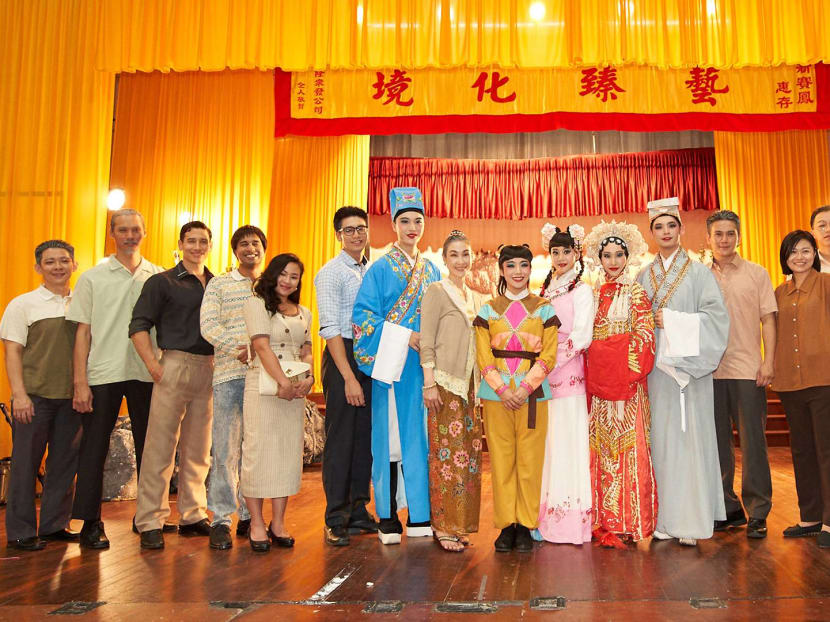
Group effort: Judee (fifth from the left) with the rest of the 'Titoudao: Inspired by the True Story of a Wayang Star' cast in Ipoh in Dec 2019.
8 DAYS: You worked on Titoudao: Inspired by the True Story of a Wayang Star as an actor and a writer. Which came first — the acting or the writing part?
JUDEE TAN: It’s not exactly that straight forward. When I first heard that Toy Factory and Oak 3 were looking for writers, I asked them if they would consider [hiring me] as a writer. That part came first. In the process of writing, I got so into it that I forgot I am an actress. So I asked Oak 3 if I could audition for a part as well. And they were opened to the idea. Because for them, I think, it would be nice to have an actress on the writing team. So I auditioned for many parts, and they decided to cast me as Ah Kuan.
Which other parts did you read?
The part I really wanted was in the episode [‘Chicken Coop’] I wrote: Ang Di, Ah Chiam’s mother-in-law, which Lina Ng ended up playing. In my years doing musical theatre, I’d always been cast as treasonous, not-really-nice characters — because they’re fun to play.
The other role I wanted was Ah Ngor, which went to Constance Lau. I love playing a hua dan [a lively young female character]. When I did the stage version, I played a hua dan. On the TV show, Ah Long, Xavier Ong’s character, played the hua dan. Back in the day, some men played female characters as well.
Did you go through a steep learning curve as a scriptwriter?
I wanted to dabble in writing scripts but didn’t know how to go about it. I had done the original play and I had written my own stand-up material and plays, but I just didn’t have experience writing for the screen.
Jason [Lai], the creative producer from Oak 3, was very kind to me. He said [my lack of experience] was not a real concern because I am an actor and I know something about drama. So it wasn’t a super-steep learning curve for me.
And what did you learn?
What I like about TV writing is that the boundaries are so clearly defined; the format is very, very fixed. You have to work within a certain format and that is the thing that’s freaking me out. I don’t know the format. When you write for theatre, there’s no boundaries. You have this one rectangle space on stage to do anything you want and you just make it happen.
But TV is not like that. It has to be this number of minutes long. You must have a character arc here, a cliffhanger there and all these elements. So then it was time for MasterClass (laughs)! Those were my mentors. I just Google them. It’s a super, massive, major resource. I also relied heavily on the interviews I did with Madam Chiam. I’ve known her since I did the play in 2007.
When I spoke to Lina on the Titoudao set last year, one challenge she faced was figuring out what kind of English to use — Singlish, broken English or Standard English. There is also some Hokkien. What kind of discussions did you have in the writers’ room?
We were told to write in Standard English first. In terms of the Hokkien, we negotiated with the Mediacorp commissioners and they allowed us to use a maximum of three Hokkien phrases per episode. Because the show's about Hokkien opera, they gave us that allowance and we had to choose where to use them and really make an impact.
Besides acting and writing, you also received a ‘Performance Consultant’ credit. Are you playing Ah Kuan off-screen as well to the younger actors?
I did help them out with their wayang on set. Sometimes the director wanted to switch some stuff around, and if Nick [Shen], who was the official consultant, wasn’t around, I would step in to help out.
Sometimes the directors would get confused too. When they said Titoudao, were they referring to the play or the TV show? So they would ask me [to clarify things]. I was handy to have around. If not, they would have to call someone and sometimes they might not get the answers when it was time to shoot the scene.
I enjoy wayang; as a theatre geek, I’m happy to share with anybody who wants to know about it. I know something about wayang but I don’t know a whole lot. I didn’t perform the full three-and-a-half hours of wayang, just snippets of it in a play.
There is a scene where Ah Kuan coughs up blood. What’s the best way to fake cough?
My stomach really hurt the whole day. To fake that kind of cough, you really need to use your diaphragm. Yeo, one of the directors, asked me, “Can you cough as if you are going to die?” We did all the coughing scenes in one day. Funnily enough, I already had a slight cough, and I exacerbated it by — I don’t want to people to do this but it’s part of acting, if you believe in method acting — by smoking [herbal cigarettes]. I used to be a smoker but not anymore. Obviously, smoking makes your throat dry, so it made my coughing more authentic and I didn’t have to worry about faking it too much.
How tough was shooting Ah Kuan’s suicide scene?
As someone who has battled suicidal thoughts — much less now — when I got the role of Kuan and knowing how she ends her life, I wondered if it would cause a cognitive dissonance because I was not sure if showing it on TV would glorify or romanticise suicide and therefore promote it as a way for people to ‘solve’ their problems. I wondered how I was going to approach it.
I’d like to let viewers/readers know that it was done for dramatic purpose and that I understand what it feels like to sometimes be brought to that situation, where we feel like there is no way out. I hope that we all know that suicide isn’t the solution, although it can feel very much so like it is.
It was a very sacred moment for me to play, and one that I was grateful to have as an artist. I felt almost how serendipitous the character’s journey was, in relation my own. So, I pulled it very close to my heart, and approached the scene as a wonderful symbolic death for a past/personality I have been working hard to disconnect from, as part of my healing.
I hope by sharing this, viewers/readers with similar struggles can feel the catharsis I had as well from her departure. And I wish to ask them to consider that maybe a physical death does not need to be attempted just so to get away from our problems, rather, a symbolic one. If they so wish, they can connect and write to me in times where they feel so alone in that dark space, where seemingly no one understands them.
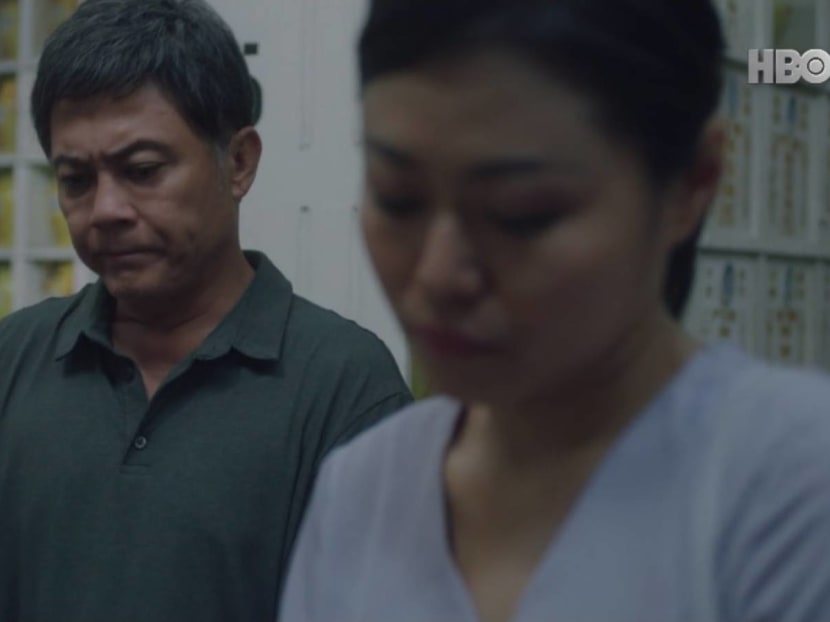
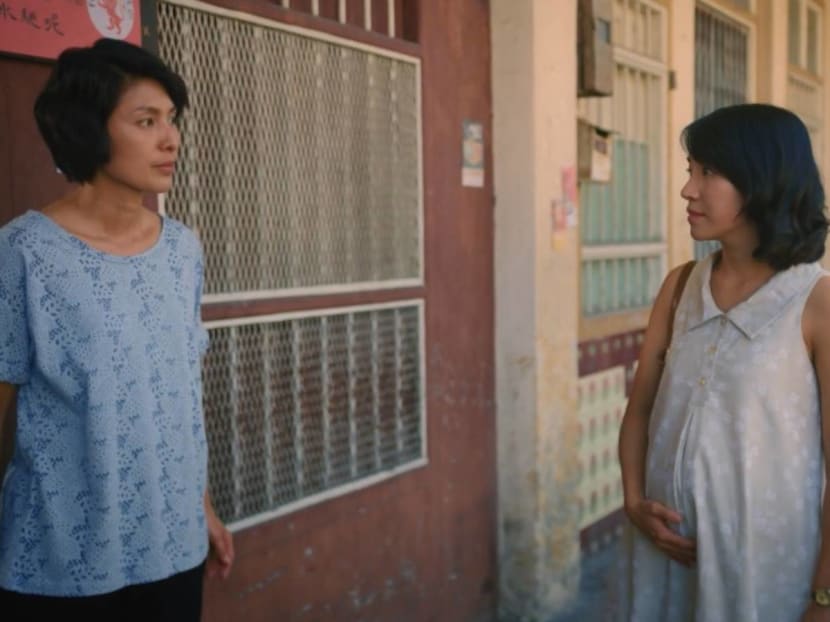
You also appeared on Invisible Stories, in a scene with Wang Yuqing, your Titoudao co-star Xavier Ong’s stepfather.
I did Invisible Stories first and I didn’t know Yuqing da ge was related to Xavier then. I had no idea. I have done comedy for so long and I am very grateful that comedy has given me all these opportunities but I am an actress, I need to be daring. I [need to expand my range]. So I have been trying to get some dramatic roles.
I texted a casting director who was working on Invisible Stories and they were looking for someone who could speak dialect. Apparently, they couldn’t find a lot of actors who can speak dialects in Singapore. I’m not really good at it but if you give me enough lines and direction, I can pull it off.
I had not worked with Yuqing da ge and [director] Ler [Jiyuan] before. I had one meeting with Ler. We had a chat and talked about a few things I had to do. He wanted me to be very real, very natural. I am a sensitive person, so if I were to sit down with you and I can get a sense of what you want, even if you don’t say much. When I shot with Ler, it was one scene and that was it. Huh? Wait, do you want me to do it again? I wish I had a bit more screen-time, so hopefully I can maybe do more projects with him. I don’t know when. It was a good experience.
What have you been doing during this 'Circuit Breaker' period?
A ‘break’ like this is actually a welcome relief. I have been working on my mental health for a long, long time. I’m a lot better now compared to a few years ago.
Earlier on, you mentioned about suicide. Are you okay talking about it?
Part of the reason I didn’t heal well is [that I kept quiet] about it, but I’m happy to talk about it. I was diagnosed with Major Depressive Disorder (MDD) and I also have CPTSD or Complex Post-Traumatic Stress Disorder and General Anxiety Disorder (GAD), which is something I live with every day. It’s a kind of fear it’s hard to explain but it’s like you constantly feel like something or someone is going to attack you.
Depending on what caused the PTSD, which I won’t go into details what those incidents were, you kinda live in this state all the time — that you are never safe. And this is not a thought or a thought process. It is a bodily reaction. This is what people don’t understand and I frankly get tired of explaining and wish people would get more educated about these things. When you are in that state, you’re all alone in your own world while everybody else is fine. There is a huge disconnect which leads to dissociation.
Then suddenly there is the COVID-19 pandemic and everybody is experiencing it. The paradox of constantly being in a hyper-vigilant mode is this — because I experience and need to manage fear on a daily basis, I feel strangely prepared psychologically in a situation like this. But because this is a crisis that is happening outside me and not just inside me, for the first time, I don’t feel alone.
Titoudao: Inspired by the True Story of a Wayang Star airs Tue, Ch 5, 9.30pm; it’s also streaming on meWATCH. Invisible Stories is now available on HBO Go.
Follow Judee on Instagram @judeetan.
If you or someone you know is having difficulties coping, here are some numbers to call:
Samaritans of Singapore: 1800-221-4444
Singapore Association for Mental Health: 1800-283-7019
CHAT @ *SCAPE: (+65) 6493 6500, (+65) 6493 6501
SAF Counselling Hotline: 1800-278-0022
Photos: Judee Tan (main); Alvin Teo (set still); HBO Asia,
Stay in the know. Anytime. Anywhere.

Subscribe to our newsletter for the top features, insights and must reads delivered straight to your inbox.
By clicking subscribe, I agree for my personal data to be used to send me TODAY newsletters, promotional offers and for research and analysis.






