
The Big Read in short: SOS for foreign domestic helpers mired in debt
SINGAPORE — Two freak accidents involving her brother and nephew on an island north of Manila late last year turned a Filipino domestic helper’s life upside down. The 45-year-old, who has worked in Singapore since 1999, had to find a way to raise around 85,000 pesos (S$2,000) to pay for their surgery and hospitalisation bills.

Maids interviewed by TODAY said that familial pressures on them to send a big portion of their salaries home, coupled with the occasional family emergency, often force them to borrow money.


This audio is AI-generated.
Each week, TODAY’s long-running Big Read series delves into the trends and issues that matter. This week, we look at the factors behind the longstanding issue of foreign domestic workers mired in debt, and what can be done to solve this persistent problem. This is a shortened version of the full feature, which can be found here.
- Foreign domestic workers in Singapore have lately taken to pawning gold jewellery bought on instalment plans with zero upfront payment
- This helps them obtain much-needed cash, but high interest rates charged by jewellery shops often mean workers cannot repay monies owed and end up in debt
- Some of these helpers also borrow from both legal and illegal moneylenders, with maid agencies and charities saying they have seen a rise in cases of maids taking loans and getting into debts
- Foreign domestic workers interviewed by TODAY said that familial pressures on them to send a big portion of their salaries home, coupled with the occasional family emergency, often force them to borrow money
- These helpers, employers, maid agencies, charities and MPs whom TODAY spoke to offered various suggestions on how to better address the longstanding problem


SINGAPORE — Two freak accidents involving her brother and nephew on an island north of Manila late last year turned a Filipino domestic helper’s life upside down. The 45-year-old, who has worked in Singapore since 1999, had to find a way to raise around 85,000 pesos (S$2,000) to pay for their surgery and hospitalisation bills.
Having previously borrowed S$5,000 from her employer which she later returned, Ms Melissa (not her real name) did not want to make yet another hefty loan request.
So she borrowed various sums of money from four different friends and a licensed moneylender from the Philippines, all of whom charged her an interest for their loans.
For months, sleep was hard to come by, she said. “I just keep thinking (about) how to pay back all these people.”
She briefly considered turning to local moneylenders to do so, but was intimidated by horror stories from myriad peers who said they would do “bad things” to foreign domestic workers who did not pay back their debts on time.
Ms Melissa thus decided to roll the dice, quite literally, by turning to online gambling sites. But Lady Luck was disinterested in her prayers, and Ms Melissa’s financial woes worsened, all the while without her employer knowing.
She lost more than S$5,000 over four months.
“I don’t want to gamble anymore. It was very difficult, very stressful,” she said. She spoke to TODAY on condition of anonymity for fear of getting into trouble with her employer.
Ms Monette, 41, another helper who did not want to give her last name for fear of reprisal from her current employer, went through a similar situation in 2018.
She borrowed S$500 from a licensed moneylender in Singapore to pay for her mother’s hospital bills back in Manila and struggled to repay her debt. So she borrowed from another moneylender, and then another.
Ms Monette ended up owing money to six different moneylenders, including one loan shark.

Unfortunately, this precarious financial situation that many foreign domestic workers among the 280,000 here find themselves in is neither uncommon nor new.
WHY IT MATTERS
In 2019, a study commissioned by information services company Experian and Hong Kong charity Enrich found that a third of foreign domestic workers in Singapore were in debt.
That same year, the Government revealed that there had been a seven-fold jump in foreigners borrowing from licensed moneylenders from 2016 to 2018.
To curb the spike, the Ministry of Law introduced a slew of measures in 2019 including a loan cap for low-income foreigners — limiting the combined amount they can borrow across all moneylenders to just S$500.
While the authorities said in 2023 that the number of foreign domestic workers borrowing from licensed moneylenders had “increased but remains low at about 150 borrowers per year” from 2020 to 2022, those borrowing from unlicensed moneylenders was estimated by the Singapore Police Force to be “in the hundreds”, and the figure had been increasing.
Charities and maid agencies told TODAY that the overall debt situation for maids “has not improved”, and the measures meant to restrict foreign domestic workers from borrowing from licensed moneylenders might have inadvertently led these workers to find other ways of obtaining money they desperately need.
One such charity, Blessed Grace Social Services, said foreign domestic workers seek help from the charity for their financial troubles every week, and there are around 50 who are currently in debt, it said.
This increase in borrowing by maids was corroborated by spokespeople from migrant advocacy group Humanitarian Organization for Migration Economics and the Association of Employment Agencies (AEAS) as well.
Blessed Grace added that it has seen a rise in cases of foreign domestic workers owing money to retail shops which charge “unreasonably exorbitant” interest rates on their products too.
As TODAY recently reported, these include jewellery stores such as those in Lucky Plaza which allow foreign domestic workers to buy gold jewellery via instalments without any upfront payment.
“The late interest charges sometimes even end up becoming greater than the principal sum, so it becomes an endless cycle of repayment since the late interest charges continue to run. This is also known as a debt trap,” the charity said.
THE BIG PICTURE
Other measures implemented by the Ministry of Law in 2019 include prohibiting licensed moneylenders from targeting low-income foreigners in their advertisements, and restrictions on how many foreigners they can loan money to at any one time.
To complement these enforcements, the Ministry of Manpower (MOM) said in 2023 that it has been working closely with various stakeholders to educate migrant workers, including foreign domestic workers, on “prudent financial management practices and the risks and implications of borrowing money”.
So why do agencies and charities still see an increasing number of domestic workers in deep financial water?
As licensed moneylenders have existing quotas on how many foreigners they can loan to, they tend not to be willing to lend to low-income foreign domestic workers, said Blessed Grace.
“Hence, with no legal avenues for the foreign domestic workers to borrow from, they resort to borrowing from unlicensed moneylenders, retail companies/shops, and handphone or jewellery shops.”
Social media applications like Facebook and TikTok also provide an easy avenue for exploitative businesses and illegal moneylenders to reach foreign domestic workers, and this has exacerbated the problem, said Mr Jeffrey Wong, founder of JForce Employment Agency.
Another key factor is the influence of fellow maids.
AEAS president K Jayaprema said that “peer relationships” are often more persuasive than the words of caution given by organisations.
“When a friend tells another friend: ‘Don't worry, this is okay, I've done this’ — you will just listen," she said.
“The advice from MOM, the association, or the agency which deploys them at the beginning — how would this stay in somebody's mind, who is at that point, in a desperate need of money?”
Another key factor resulting in maids sinking into debt is the outsized responsibility some of them bear in caring for extended family back home who see these workers as an easy source of financial help given the perception that they are earning good money in Singapore.
Crucially, foreign domestic workers, who typically earn anywhere from S$500 to just over S$1,000 a month depending on their nationality and experience, often feel the pressure to cede to these requests.
“We have very strong family ties. Even my nephews, I have to (pay to) send them to school. I have to help my sister’s family, my brother’s family. That’s our culture. Even if they don’t ask for money, we will give,” said Ms Monette the foreign domestic helper.
THE BOTTOMLINE
Such anecdotes from foreign domestic workers, which almost always outline familial pressures to send large portions of their salary home, are indicative of just how financially vulnerable these domestic helpers are.
It is therefore important to address the root cause of why foreign domestic workers are getting into debts, said Assistant Professor of Sociology Shannon Ang from Nanyang Technological University, as Singapore has an obligation to care for the well-being of migrant workers who contribute substantially to society.
He said that there should be more publicly available data to allow more independent parties to study the migrant workforce and provide insight into why they may engage in certain practices.
On what more can be done to tackle the issue of maids getting into debts, foreign domestic workers, employers, maid agencies, charities and Members of Parliament (MPs) whom TODAY spoke to offered various suggestions.
MP for Yio Chu Kang Single Member Constituency Yip Hon Weng said that the Government "should do more" during the interviews that the Centre for Domestic Employees conducts for new workers, as it is an avenue for them to open up about their monetary concerns privately without their employers present, and to provide them with some form of financial counselling.
Such a safe environment should extend to the home as well, said migrant workers' rights group Transient Workers Count Too.
Preventing foreign domestic workers from getting into debts "starts at home through a culture of open communication and understanding, so that our helpers feel comfortable sharing their problems, which we may potentially be able to help with before they resort to risky solutions," it said.
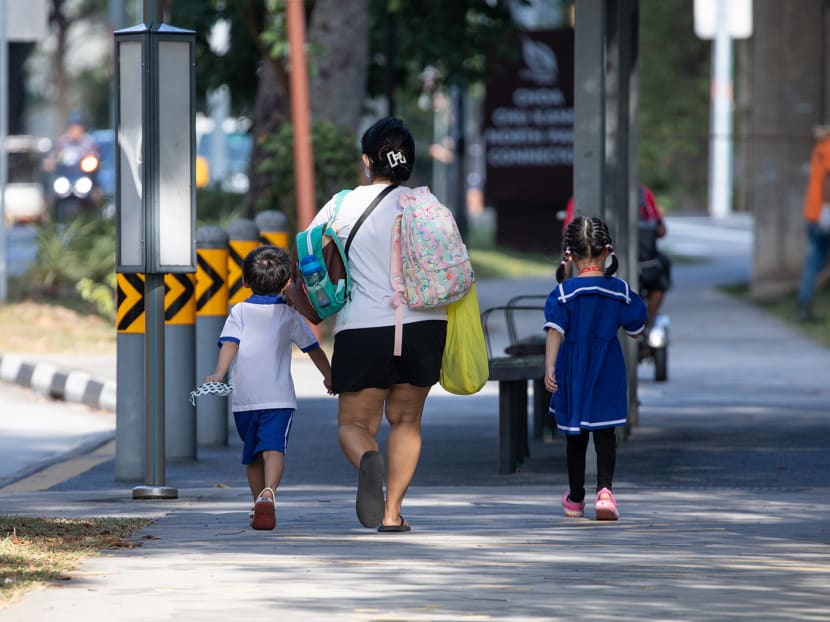
Agreeing, Asst Prof Ang believes that society needs to find ways to enable foreign domestic workers to speak up “more freely” about their conditions, needs, difficulties and aspirations — “all without the fear of facing reprisal”.
For Ms Monette, Ms Melissa, Ms Yoon and many others, inculcating a culture of responsible spending through financial literacy could be key to preventing foreign domestic workers from falling into a vicious circle of debts.
But educating these helpers in Singapore is just one piece of the puzzle.
“Education will help in the long run, but it does not resolve their immediate need to put food on the table back home,” said Mr Ong, the employer, who works in finance.
“I think providing an avenue for foreign domestic workers to access short-term, micro loans through government programmes and non-profit organisations will help. Right now, the only options available to foreign domestic workers are exploitative and prey on their desperation.”
Ms Foo, the other employer, suggested that it should be mandatory for employers’ consent to be sought if a foreign domestic worker wishes to make certain high value financial transactions like obtaining loans from licensed moneylenders, pawning jewellery, or buying items on instalment plans.
The Foreign Domestic Worker Association for Social Support and Training (Fast), an MOM-supported charity, said recruitment agencies' can conduct regular workshops on managing debt and unlicensed moneylending could also be conducted for domestic helpers as these agencies are often the workers' first point of contact.
It also encourages employers to regularly check in with foreign domestic workers on their financial situation, educate them about the dangers of unlicensed moneylending and refer them to organisations like Fast should they require advice on debt management.
Related topics
foreign domestic worker DebtStay in the know. Anytime. Anywhere.
Subscribe to our newsletter for the top features, insights and must reads delivered straight to your inbox.
By clicking subscribe, I agree for my personal data to be used to send me TODAY newsletters, promotional offers and for research and analysis.