
The Big Read in short: What next for Singapore’s polytechnics?


This audio is AI-generated.
Each week, TODAY’s long-running Big Read series delves into the trends and issues that matter. This week, we look at how polytechnics have grown more popular as an educational choice over the years and what challenges they face in Singapore's push to place more emphasis on skills instead of grades. This is a shortened version of the full feature, which can be found here.
- Each year, some 20,000 students enrol into Singapore's five polytechnics, a clear sign that they are no longer seen as educational institutions for those who could not enter junior colleges
- Factors for polytechnics' success include better outreach programmes, diversification in courses as well as their close links to industry, students and educators told TODAY
- Polytechnics play an important role in Singapore's push to place more emphasis on skills instead of grades, but they do face challenges
- These include the wage gap between university and polytechnic graduates and the speed at which skills become obsolete
- The Ministry of Education and polytechnics spoke about what they are doing to tackle these challenges, including doubling down on collaboration with industry partners


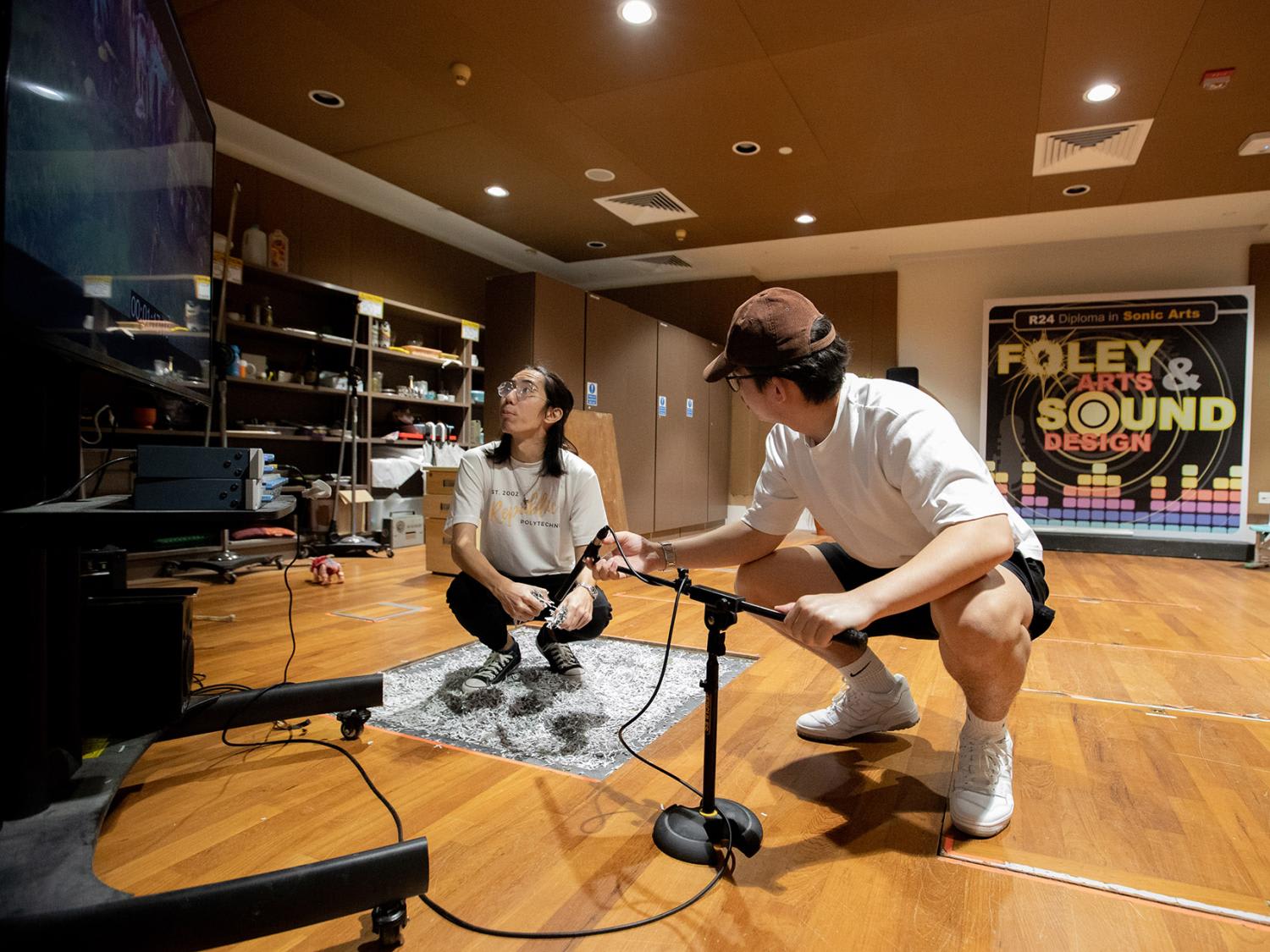
SINGAPORE — With a six-point score for his O-Level examination, Mr Matthew Neo had a key to most tertiary educational institutes — so he headed to Republic Polytechnic (RP) to pursue a diploma in sonic arts.
While he could have gone to a top junior college (JC), few batted an eyelid at Mr Neo’s school of choice.
Now 19, the second-year student told TODAY: “I am interested in working in audio, and the course is exclusive to RP.
“Nobody questioned my decision... I have the responsibility to take charge of my own learning, and (my parents) are supportive and want me to succeed.”
Mr Neo said choosing to study in a polytechnic — with its slew of industry talks, projects with real-world applications and an upcoming internship — instead of a JC was the right choice for him.
Likewise, National University of Singapore undergraduate Abdul Qayyum described the three years he spent studying for a diploma in law and management at Temasek Polytechnic (TP) as very enriching as he became “more mature and developed a lot holistically”.
Mr Abdul too had the option to go to a junior college but opted to pursue a diploma. Several teachers in his secondary school had supported his choice, he recalled.
WHY IT MATTERS
With polytechnics having long shed their past as educational institutions for students who could not enter JCs, a growing number of secondary school students are opting to take the polytechnic route in their education journey.
Each year, some 20,000 students enrol into Singapore's five polytechnics, including many who chose a polytechnic as their first choice even though they were also eligible for JC.
Education experts and practitioners cited several factors for how polytechnics have transformed their image over the decades.
These include better outreach programmes to students and diversification in courses to cover areas such as logistics, tourism and hospitality, creative design and legal studies.
Close ties with the industry, hands-on learning and the chance to pick up skills for the workforce have also made youths keen to pursue higher education in a polytechnic.
The educational roles played by polytechnics are particularly relevant to Singapore's push to place more emphasis on skills instead of grades.
THE BIG PICTURE
Human resource managers, current and former polytechnic students and education experts raise some challenges polytechnics face.
This includes the lower starting pay and the widening pay gap between between polytechnic and university graduates.
In a written response to a parliamentary question in February last year, Education Minister Chan Chun Sing revealed that the median starting salary gap between university and polytechnic graduates increased by S$200 between 2016 and 2021.
According to the 2023 Joint Polytechnic Graduate Employment Survey, the median gross monthly salary for fresh and post-National Service (NS) polytechnic graduates was S$2,800, up from S$2,600 in 2022.
While there is no data available for graduates of autonomous universities in 2023, data from a similar study in 2022 found university graduates had a median gross monthly salary of S$4,200 — 62 per cent higher than their polytechnic counterparts.
The surveys conducted in 2010 found university graduates had a median gross monthly salary of S$2,900, 45 per cent higher than post-National Service polytechnic graduates’ monthly salary of S$2,000.
In his reply, Mr Chan said that the widening gap was caused by several factors, such as the relative demand and supply of manpower, and differences in productivity between jobs and sectors that different groups of graduates enter.
“While some differences are understandable, it is important that we ensure these differences do not widen significantly over individuals’ lifetimes. Singaporeans must feel that there are opportunities to progress over their career regardless of differences in starting points,” said Mr Chan.
Chief executive officer of recruitment agency Reeracoen, Mr Kenji Naito, added that diplomas being valued less than degrees “might be rooted in historical biases towards traditional educational pathways”.
“As industries evolve, there is a growing acknowledgement of the effectiveness of polytechnic education in producing skilled professionals. It may take time for these perceptions to fully shift, but the trend is moving towards recognising skills irrespective of the educational background,” said Mr Naito.
Another challenge that polytechnic graduates face is the speed at which skills become obsolete.
Mr Patrick Tay, Member of Parliament for Pioneer Single Member Constituency and chairman of the Government Parliamentary Committee for education, said that polytechnics need to ensure “speed to market” for their programmes, curriculum and attachments.
This is because the “half-life of skills is shortening” and “the speed of market disruptions and change of skills in demand is increasing”, added Mr Tay.
Artificial intelligence, in particular, poses a challenge for polytechnics as there are several questions about how educational institutions and their students can stay ahead of advancements while using it responsibly and ethically, said Dr N Varaprasad, partner and principal consultant at Singapore Education Consulting Group.
Dr Varaprasad was also the founding principal and chief executive officer of Temasek Polytechnic (TP) in 1990.
THE BOTTOMLINE
As the workplace grapples with rapidly changing technology and creative disruption, polytechnics need to continuously enhance their partnerships and engagement with industry stakeholders, such as companies, said human resource and education experts.
In response to TODAY's queries, the Ministry of Education (MOE) said that the five polytechnics will continue to "maintain close partnerships with industry partners through co-development of course content, internships, and work attachment opportunities, to ensure that our students are equipped with the most updated knowledge and skills to thrive in the future economy".
The ministry added that it is reviewing admissions into polytechnic year one to "better recognise the different subject levels taken by students".
It has also expanded the Polytechnic Foundation Programme, allowing more students to take it up. MOE will be removing the current stream-based admission — which limits the programme to Normal (Academic) students — in the academic year of 2028.
The polytechnics told TODAY that they are employing a variety of strategies to keep their curriculum up-to-date and to enhance the value of a diploma.
A key plank of their strategies is to double down on what has worked for them — industry partnerships.
Nanyang Polytechnic, for one, has revamped its curriculum with a "Professional Competency Model" where students focus on acquiring specific skills and knowledge relevant to real-world tasks based on industry knowledge and partnerships.
Three of its six schools will have its curriculum based on its model when the new academic year starts in April, said Mr Russell Chan, its principal and chief executive officer.
"The curricula are agile, responsive to industry changes, and provide our students with the latest skills and knowledge. And our industry-relevant training is informed by real industry intelligence and needs, coupled with having access to proprietary learning materials from top companies," he told TODAY.
Industry partners also play a key role in Republic Polytechnic's enhancement of its hospitality programme.
Its principal and chief executive officer Jeanne Liew told TODAY it has launched its Talent Advancement Programme to equip hospitality students with the right skills in collaboration with 16 businesses in the events, financial services and hospitality sectors.
Students who get into the programme in their second year of studies will get assigned to a mentor and participate in an early work immersion that can range from part-time roles during weekends to full-time positions during semester breaks.
They then take part in a 40-week structured internship, where students rotate across multiple roles to "broaden their competencies and enhance life skills".
To ensure their graduates remain relevant as skills evolve at a quicker pace, several polytechnic leaders like Mr Soh Wai Wah, principal and chief executive officer of Singapore Polytechnic (SP), said Continuing Education and Training is crucial.
Acknowledging that adults have different learning needs, SP has micro-credentials for adults to learn from bite-sized modules that can be stacked for higher-level recognition.
To help adults acquire job-relevant skills at a comfortable pace amidst their busy schedule, about 30 per cent of its Continuing Education and Training programmes are held online for flexible learning, he added.
On the artificial intelligence (AI) front, Ms Anita Kuan, deputy principal of TP, said the school has developed a digitalisation plan and launched an AI studio to equip its design school students with skills in Generative AI.
"The studio offers a vibrant, constantly evolving space for students to delve into the convergence of design and technology. By introducing students to the dynamic world of AI-assisted creativity, TP aims to nurture not just designers, but future innovators who are well-equipped to lead in the ever-evolving design landscape," she said.
Freshmen in the polytechnic's business school will also be required to learn how to use AI effectively this year onwards, she added.
For Mr Neo, the sonic arts student, his future after his diploma is still uncertain. He plans to use his time during National Service to decide between pursuing a degree or securing work.
“I have the luxury of choice since my diploma is arts-based and most employers are looking for experience, not just academic credentials,” he said.
“So who knows? I will wait until I have to make a decision.”
Related topics
Education MOE polytechnics Big ReadStay in the know. Anytime. Anywhere.

Subscribe to our newsletter for the top features, insights and must reads delivered straight to your inbox.
By clicking subscribe, I agree for my personal data to be used to send me TODAY newsletters, promotional offers and for research and analysis.





