
The Unexpurgated interview with Joe Ng
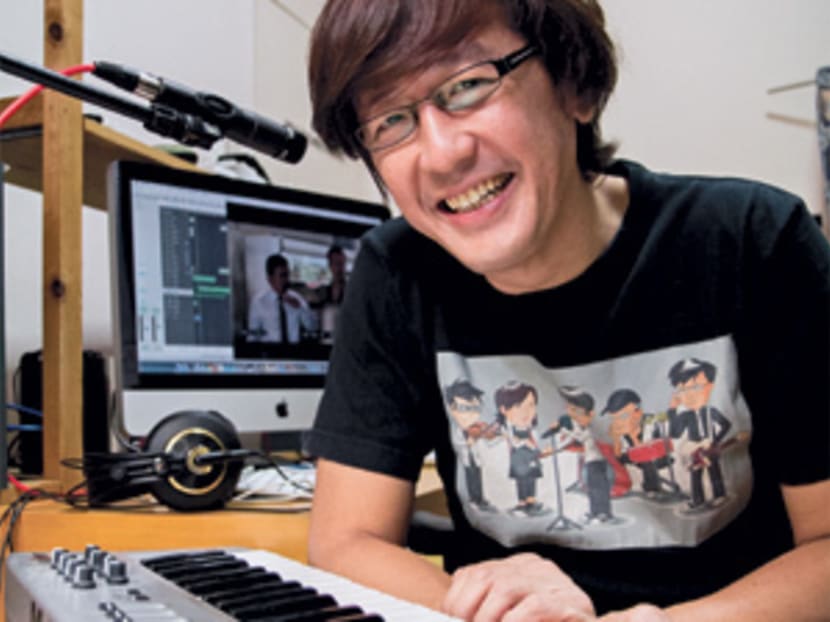
He once wrote a song about how radio stations forgot to play his favourite songs, but Joe Ng — better known as the frontman for ’90s Singaporean indie rock band Padres — now writes music for the silver screen instead. Indeed, Ng abandoned his former life as indie rocker as he “started running out of things to say”, and established a reputation as a film composer and sound designer of note in the last decade.


He once wrote a song about how radio stations forgot to play his favourite songs, but Joe Ng — better known as the frontman for ’90s Singaporean indie rock band Padres — now writes music for the silver screen instead. Indeed, Ng abandoned his former life as indie rocker as he “started running out of things to say”, and established a reputation as a film composer and sound designer of note in the last decade.
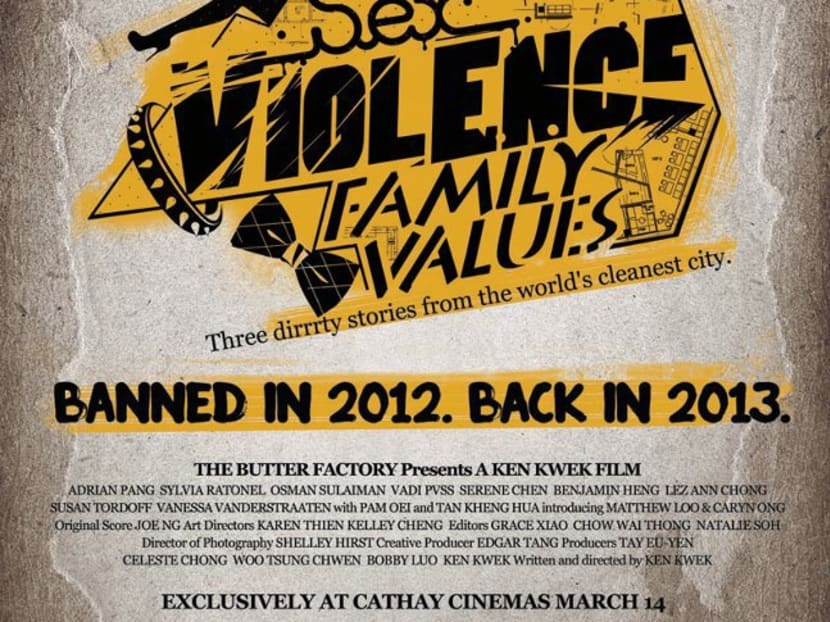
And Ng’s latest work can be heard in Ken Kwek’s satrical look at Singapore life, Sex.Violence.FamilyValues, which opens in cinemas island-wide on March 14.
HOW DID YOU GET INTO THE BUSINESS OF WRITING SOUNDTRACKS? In school, I’ve always loved film and music. As it so happens, when I was working in Rock Records, in the mid-’90s, I was put in charge of film soundtrack albums - both Western and Chinese. So having a whole catalogue of about a thousand titles, and being product manager, I had to listen to most of them! Or at least have a proper understanding of them.
And it wasn’t work - it was fun, as I have always loved soundtracks. Along the way I was involved in local films also, this came together when I left the record business in the late ’90s and slowly it evolved. Then there was music supervision - putting music together for Eric Khoo’s films (like 12 Storeys). After that, in the early Noughties, I got more involved with Kelvin Tong and started doing more film scores.
WHAT’S THE MAIN DIFFERENCE BETWEEN WRITING FOR ALTERNATIVE ROCK SONGS AND WRITING FILM SCORES? For me personally, writing songs for my own band and for myself involve things that I need to express, things that I want to say. Whereas for film soundtracks, I am helping the director to actualise his vision and his story. So in that sense, I am serving him. But in songwriting I am serving the band’s and my own vision. That’s the main difference.
GOING FROM ONE TYPE OF SONGWRITING TO ANOTHER, WHAT WAS YOUR BIGGEST CHALLENGE? Actually, there wasn’t much of a challenge. I have always felt that along the way, through the years, towards the end of the ’90s, I started running out of things to say, because I was in a good place. I was still writing songs but whatever I had to say was just regurgitation of things I had said before. It would be like Suede coming out with their 11th album and not wanting to quit - Suede should have quit after Dog Man Star. Haha!
So when I decided to write for film, there was a bit of a challenge, the transitioning wasn’t a challenge. Well maybe the only challenge was learning how to tell the story and then by reading up of past masters like Bernard Herrmann, I learned a lot - especially what Herrmann said that music should always represent what the actors aren’t saying. So that become part of my philosophy.
WHAT IS IT ABOUT WRITING FILM SOUNDTRACKS THAT GIVES YOU THE GREATEST SATISFACTION? One of the things that I always do is - for example, if I am working on a particular cue, I would take a break, clear the mind and listen to the cue again. Does it work? If it works, I am not too far off. And that gives me the satisfaction. At the end of the day, when I am looking at the entire film again, examining all the cues, does it draw a musical graph that helps to tell the character and plot development and the story.
If it does, then it’s great. The most important thing is this - watching the audience reaction. If this is my intention or the director’s intention, for this particular cue then when I look at the audience reaction, did we hit the mark? And if we did, then, song. But if we didn’t, then we must improve.
WHICH ARE YOUR FAVOURITE SOUNDTRACKS YOU’VE COMPOSED THUS FAR? I’ve said this before but one of the early scores I did was for Durian King (TV series) in 2003. Looking back at Durian King, the music and the cues, it could have been much better! A lot of things were (rubbish) - it was not very good, but I am very proud of it. That was one of the first things that I did, entirely on my own with my then-co-composer. We made a lot of mistakes but that was a great starting point and I am always proud of Durian King. And also, around that period of time, my girlfriend broke up with me and there was a little bit of personal sadness. After that, during the production of Durian King - because it’s a comedy - Adrian Pang and Kym Ng were so funny that it helped to lift that moment.
Around the same period, I worked on The Maid, which was the first film on which I helmed as music composer and sound designer and tried to marry all three components - music, sound effects and dialogue - into a symphonic whole. Of course, there were a lot of parts, looking back, which could have been better. I mean, hindsight is 20/20! But I am very proud of The Maid, because there were many moments that I hit the mark. Actually, I liked every single one of them - even the ones like Dance Dance Dragon - with the mixture of bossa nova and Chinese tok-tok chiang! So it’s fun - that’s the main thing!
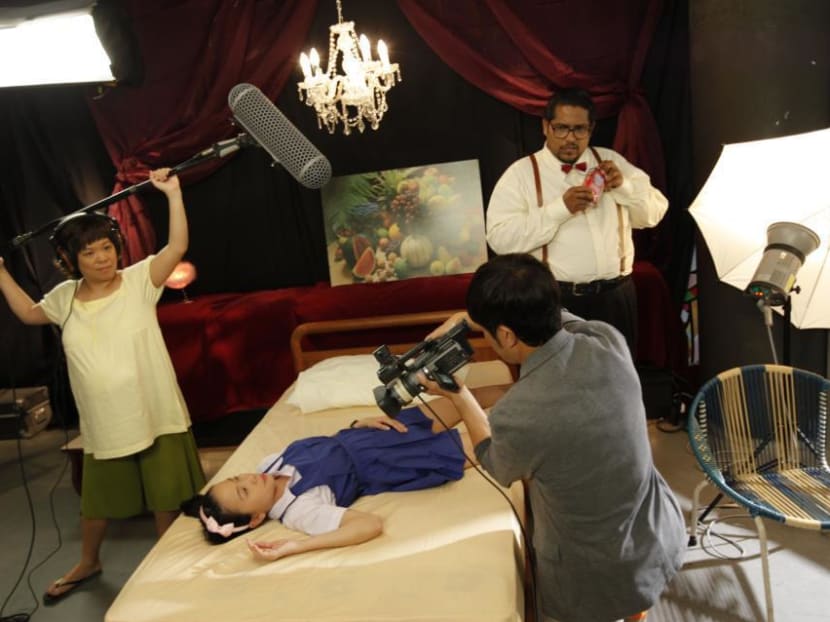
SO LET’S TALK ABOUT SEX.VIOLENCE.FAMILYVALUES. HOW DID YOU GET INVOLVED WITH THE PROJECT, AND WHAT WAS YOUR APPROACH TO THE FILM SCORE? When (director) Ken Kwek first approached me, he wanted to do five stories. But then due to budget constraints, I think, he decided to cut it down to three. Throughout the three stories, there is a thematic idea about taking the mickey of traditional and mainstream values and giving it a twist. So, the very first short - Cartoons - the timbre was mainly glockenspiel as it was about a 9-year-old kid’s relationships with his mother and teacher and the music needed to be cutesy as well. The approach was to express innocence but underneath there was a feeling that “something was wrong”.
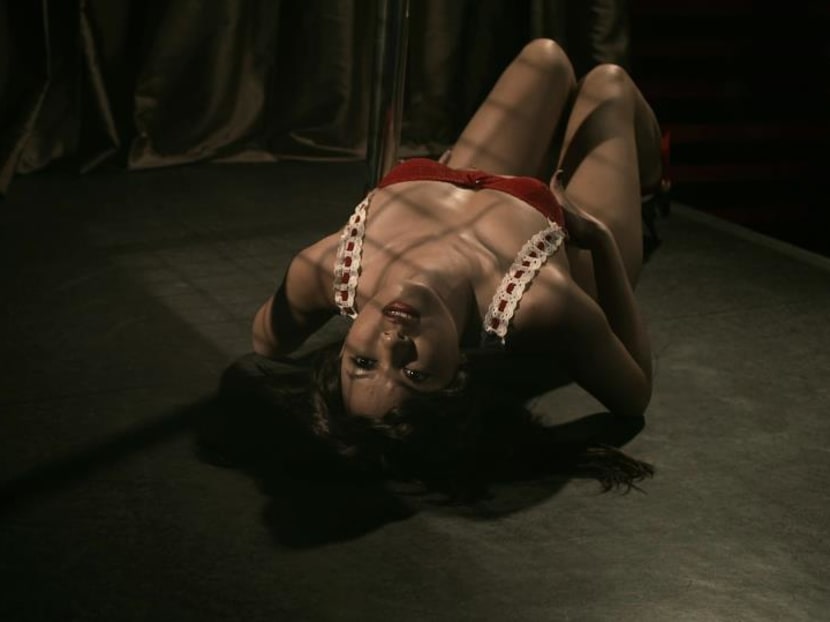
Then for Porn Masala, one of the things that I personally don’t like is when you see a Chinese character on screen in a traditional costume you need to put a (cymbal crash). And if you see an Indian guy walk onto the screen, then you must put a tabla! If it’s a Scottish guy, you must play a bagpipe! All of which are cliched musical representations of people. But then Ken kept saying - “Joe, must have tabla!”. Initially I was very very resistant but after going through the entire process, I look back and actually, it works. In the context of the short - it works! For the very last one, I didn’t do much. Most of it was existing pop songs by local bands - AWOL, Ugly In The Morning, Kiat, Asha, The Thunderbirds - different songs from different eras and I only did a couple of dance tracks. In-between, there is a musical I.D. that links all the three stories together.
WHAT ARE YOUR THOUGHTS ABOUT THE CURRENT LOCAL MUSIC SCENE? The current scene is fantastic! I think that in every five-year period, we see a batch of exciting new local bands. We have Pleasantry, Cashew Chemists and so on. Not just the new bands, the older musicians themselves have also moved up, forming great new outfits like Shelves, for example. Production, showmanship, relaxed persona on stage - frontmen like Noel Yeo (Shelves) and Yee Chang Kang (TypeWriter) can even crack jokes on stage - no more hiding behind the drumset! All the new bands that we like - technically there, songwriting there - nothing to fault.
Stay in the know. Anytime. Anywhere.

Subscribe to our newsletter for the top features, insights and must reads delivered straight to your inbox.
By clicking subscribe, I agree for my personal data to be used to send me TODAY newsletters, promotional offers and for research and analysis.






