
Baxter’s new plant boosts S’pore’s biomedical hub ambitions
SINGAPORE — With the opening yesterday of another biologics manufacturing facility here, the total investment in the biologics sector in Singapore has reached about S$3.35 billion, taking the Republic another step closer to its ambition to be a biomedical hub, the Economic Development Board (EDB) said.
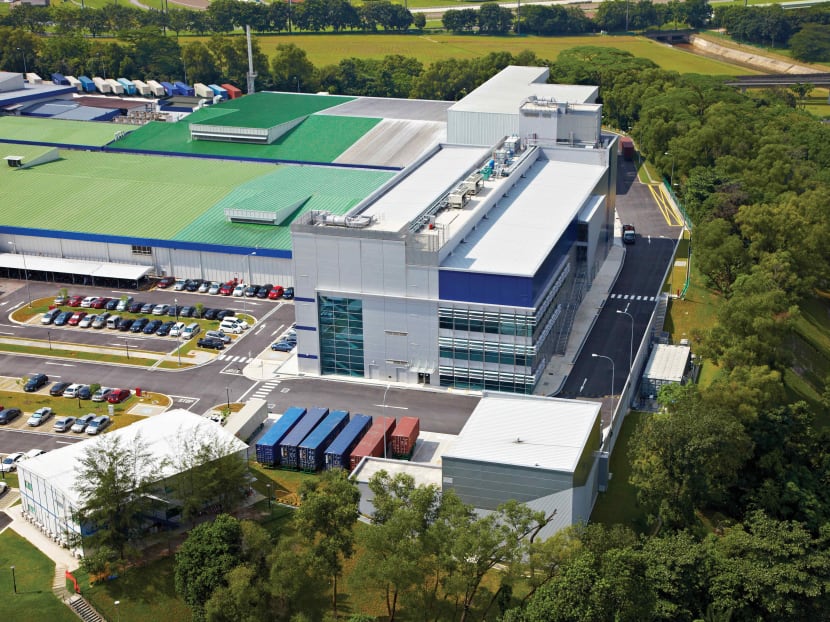
Baxter’s new facility at Woodlands Industrial Park is its first biologics plant in Asia.
Photo: BAXTER
SINGAPORE — With the opening yesterday of another biologics manufacturing facility here, the total investment in the biologics sector in Singapore has reached about S$3.35 billion, taking the Republic another step closer to its ambition to be a biomedical hub, the Economic Development Board (EDB) said.
Biologics is a field under the biomedical sciences industry where medicinal products are made from living cells such as proteins and hormones, instead of chemicals.
The new 150,000sqf facility, located in Woodlands Industrial Park, is American healthcare firm Baxter’s first biologics plant in Asia. It will produce ADVATE, a type of protein used in the treatment of haemophilia A, a rare genetic blood-clotting disorder. The facility employs more than 400 production staff and the firm expects to add another 50 employees by next year.
Baxter, which has been in Singapore since 1978, is set to expand its biologics footprint here with a second processing suite due to open in 2017. It will manufacture RIXUBIS, which supports the treatment of haemophilia B. Together, the two investments amount to S$375 million.
“Baxter’s expansion of its biologics footprint in Singapore reinforces our position as a leading biologics hub, with nine facilities that will employ more than 2,000 people at steady state. The biologics sector supports knowledge-intensive and high-value-added activities which create good jobs for Singaporeans,” said EDB managing director Yeoh Keat Chuan.
Besides Baxter, other biologics companies that have set up base here include Novartis, Amgen and GSK Bio. The presence of these facilities will help Singapore’s biomedical exports to be more stable, but some volatility is inevitable given the nature of manufacturing processes in this industry, Mr Yeoh said.
“Manufacturing of a product may take months, so while they are being produced and manufactured, they are not registered as an output. So exports will always be volatile, but as we grow the base, they will be less volatile,” he said, adding that such spikes should not be interpreted as a lack of competitiveness or economic substance.
“I think the growth prospects are very good. The biomedical sciences sector has grown by almost four times in output since we began this concerted effort in 2000. Our ambition is to anchor as many of these new facilities as we can … We have a few other projects in the pipeline and I think the prospects look very good and exciting,” Mr Yeoh said.
For companies such as Baxter, Singapore offers a good business environment and strategic location to enhance its distribution network.
Baxter’s corporate vice-president and president-international, Mr Jean-Luc Butel, said: “The Singapore Government has the ability to understand the business needs. It offers an environment where intellectual property is protected, regulations are clear and, from the logistics point of view, this is one of the best places in the world.”
Stay in the know. Anytime. Anywhere.

Subscribe to our newsletter for the top features, insights and must reads delivered straight to your inbox.
By clicking subscribe, I agree for my personal data to be used to send me TODAY newsletters, promotional offers and for research and analysis.






