
Cashless is king, as MAS maps out e-payment future
SINGAPORE — Young couples placing downpayments for their HDB flats on their tablets. Diners paying for dinner with their mobile phones, and small and medium enterprises using electronic inventory management platforms to make and receive payments.
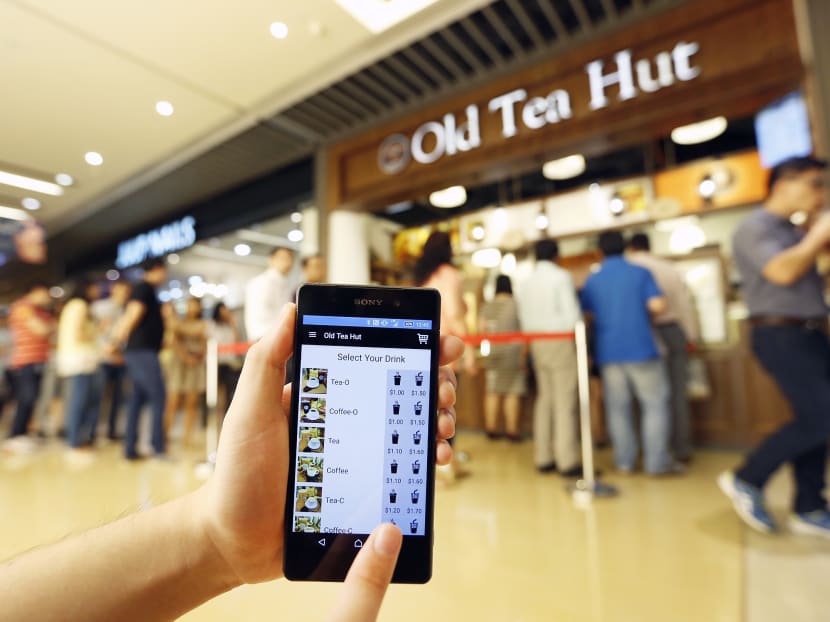
Contactless payment services using electronic means offered by DBS. TODAY file photo
SINGAPORE — Young couples placing downpayments for their HDB flats on their tablets. Diners paying for dinner with their mobile phones, and small and medium enterprises using electronic inventory management platforms to make and receive payments.
Monetary Authority of Singapore (MAS) managing director Ravi Menon used these examples on Friday (Aug 19) to illustrate the future envisioned for the Republic as it aims to become an “inclusive, innovative and, perhaps, even inspiring” electronic payments society along its journey to become a Smart Nation.
“Our vision is to make Singapore an electronic payments society. A society that spurs continuous innovation in payments technology; that gives consumers maximum convenience and confidence in making payments; that enables firms to increase productivity through payments integrated with business processes; and where swift, simple, and secure payments are a reality for everyone,” he said at the 6th Annual Sim Kee Boon Institute Conference on Fintech and Financial Inclusion at Singapore Management University.
In about a year’s time, Singaporeans will likely be able to transfer funds to each other via their mobile phone numbers without needing the recipient’s bank account number. Singapore, pointed out Mr Menon, was among the first in the world when it introduced Fast in 2014 — a 24/7 real-time interbank fund transfer system.
“The Association of Banks in Singapore has been working hard to develop a central addressing scheme which would allow payments to be made through Fast using only a recipient’s mobile number or NRIC number or unique identity number,” he said.
While making Fast transfers is free for individuals, small and medium-sized enterprises have complained that they are charged up to S$10 for fund transfers, he noted. Calling on banks to encourage businesses to use e-payments, Mr Menon said: “Our own studies indicate that the marginal cost of e-payments, including Fast fund transfers, should be far lower than that for cheques. But banks offer free cheque payments every month. This is surprising. Cheque processing is a resource-intensive operation.”
Mr Dennis Khoo, head of personal financial services Singapore at UOB, called the central addressing scheme that allows transfer of funds via mobile phone numbers a “great forward-looking initiative”.
“Small businesses and sole proprietors will also benefit from faster payments. We also see this move as a positive move to reduce reliance on cheques, which require more back-end administrative resources. Overall, this is a positive move to Singapore becoming a Smart Nation,” he said.
Other initiatives unveiled by MAS include simplifying card acceptances at retail outlets, online payments of bills and mobile phone payments for public transport.
“The array of multiple point-of-sale terminals clutter up the cashier’s counter. This is confusing for customers and unproductive for counter staff,” he said. The payment industry under the direction of ABS is developing unified, single point of sale terminals, which can accept all major credit brands, including those that are contactless or embedded in smartphones. About 1,000 of these terminals, said Mr Menon, have been rolled out in convenience stores, and another 10,000 are expected to be deployed in the next two years.
In its Singapore Payments Roadmap published on Friday, MAS articulated four key strategies to promote electronic payments in Singapore: Streamlined regulation, inclusive governance, interoperable infrastructure, and pervasive digitisation. The financial regulator had commissioned business consultancy KPMG to research and produce the report.
As recommended in the report, MAS is looking to set up a national payments council that will foster innovation, competition and collaboration in the industry. The new payments council, comprising representatives from users and providers of payment solutions, will coordinate key initiatives, such as promoting interoperability. MAS will launch a public consultation next week for the formation of this council.
Banks in Singapore embraced the drive towards a cashless economy.
Mr Jeremy Soo, head of Singapore Consumer Banking Group at DBS Bank, said: “We are upping the ante on not just the breadth of our digital offerings, but also on providing a holistic customer experience across our platforms. We have been relentlessly expanding our payments partnerships... This is part of our larger plan to drive cashless payment behaviour in Singapore.”
Mr Pranav Seth, head of e-business and business transformation, OCBC Bank, said: “OCBC Bank’s vision is to make payments instant, convenient and secure for our customers, which entails a switch away from cash. Moving towards a future of digital payments is heavily dependent on culture, customer preferences, ubiquitous infrastructure and ecosystem support.”
UOB, the first bank in Singapore to launch a full accelerator programme to grow start-ups in the fintech space, said it is not tech for tech’s sake. “When it comes to technology, banks have to navigate keeping the customer in mind rather than chasing the latest technology. As banking is first and foremost a people’s business, technology has to enhance the customer experience and make banking more convenient... I believe that the initiatives announced today will soon become intuitive and natural for all consumers and businesses,” said Mr Khoo.
Stay in the know. Anytime. Anywhere.

Subscribe to our newsletter for the top features, insights and must reads delivered straight to your inbox.
By clicking subscribe, I agree for my personal data to be used to send me TODAY newsletters, promotional offers and for research and analysis.






