
Female CEOs are fascinating, as Marissa Mayer knows
Where there is sexism, making a fuss — though boring for the person doing the complaining and for the person listening — is important. If nothing is said, nothing changes
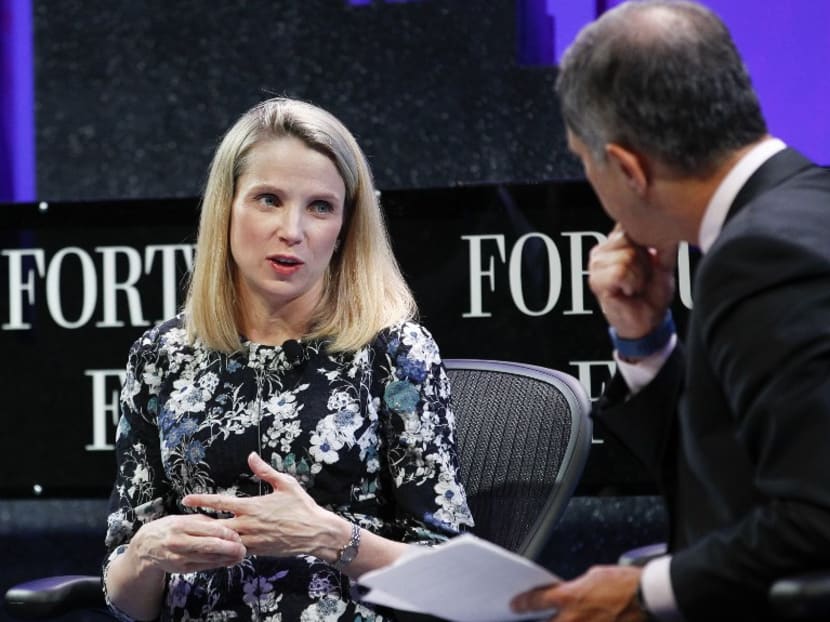
Marissa Mayer in 2015. Photo: AFP

In 1985, when I became a journalist, I was invited to join a group of female colleagues who met regularly to discuss how rotten it was being a woman at work.
I turned up once but never again: I was irritated by the complaining and could not help noticing the people who were doing the most of it were the least good at their jobs.
If you are not great at what you do, I thought, you should not blame it on your sex.
In 30 years, I have progressed a bit in my views. Whether people are good at their jobs and whether they are suffering from gender bias are different questions.
Where there is sexism, making a fuss — though boring for both the person doing the complaining and for the person listening — is important. If nothing is said, nothing changes.
Financial Times readers, it seems, have not progressed so much. Ms Marissa Mayer last week complained to the FT that the media had it in for her because she was a woman — and FT readers responded as I did all those years ago.
One wrote: “You are incompetent — it’s as simple as that, Mayer. Stop trying to hide behind ‘gender’ victimisation nonsense, please.”
A couple of hundred posted similar comments. She had done a rubbish job as CEO of Yahoo, sexism had nothing to do with it.
Their vehemence makes me smell a rat.
Ms Mayer may have done a poor job. But are they right that there has been no sexism in the reporting? And how does one measure it?
Ms Mayer complained at how the media is obsessed with women’s clothes, citing Mrs Hillary Clinton and her pantsuits. This is true, but the attire gender gap is closing — last week the FT ran an entire article on Mr Boris Johnson’s backpack.
Either way, I am not sure it is such a big deal. I am interested in what women (and men) wear, and so long as pantsuits are not an alternative to policies, I see little harm in it.
In any case, Ms Mayer cannot really protest at press intrusion into her wardrobe, given the photo of her in Vogue a couple of years ago lying upside down on an uncomfortable bit of garden furniture in skin-tight blue sheath and bondage sandals, holding an iPad reflecting an image of herself.
If I were CEO, I would not have posed like that in a million years, but then that is because, upside down and thus clad, I would not have looked a pretty sight.
Ms Mayer, on the other hand, looked a very pretty sight, and did the world a favour by proving you can be gorgeous, blonde, love clothes and run a big company in male-dominated IT.
Equally, people have cried sexism at the endless articles about her as a mother.
From the time she was appointed when pregnant, we have watched her through two pregnancies, tutted at the scant maternity leave, marvelled at the on-site nursery and nannies, and ogled endless photos of the cute baby girls in the office.
By contrast, no one writes about the children of Yahoo founders David Filo and Jerry Yang — their Wikipedia pages do not even reveal that they have any.
This looks like gender bias, but again it is understandable. We do not have many female CEOs with babies, and so I am grateful to Ms Mayer for showing me how she does it.
The only bad things are the opinions expressed over whether she is a good mother. Such judgment is no longer for women only — Mr Mark Zuckerberg has posted almost as many pictures of his offspring online as has Ms Mayer — only he is judged a wonderful father on the basis of having taken his baby for a jab, while she is a bad mother because she works too hard.
There is an even more important bias — sheer volume of stories.
Last year 4,200 articles were printed in English about her, more than four times as many than were about her opposite number at AOL, Mr Tim Armstrong (also bought by Verizon last year) — which is particularly remarkable given how hard he tried to be newsworthy via a string of gaffes.
We are simply more interested in women CEOs and we will go on being more interested until there are more of them.
This is not an advantage — the pressure is bad enough anyway without everyone reporting on your every move.
It would be enough to make one do a Ms Mayer, spend US$500,000 of company money on private security guards — and generate yet another adverse story. financial times
ABOUT THE AUTHOR:
Lucy Kellaway is the Financial Times’ associate editor and management columnist.
Stay in the know. Anytime. Anywhere.

Subscribe to our newsletter for the top features, insights and must reads delivered straight to your inbox.
By clicking subscribe, I agree for my personal data to be used to send me TODAY newsletters, promotional offers and for research and analysis.