
PC demand to lift near-term prospects for local chip industry
SINGAPORE — Demand for personal computers may be waning as consumers shun them in favour of mobile devices, but a spark of optimism in the form of demand by businesses is expected to guide Singapore’s chip industry — at least in the near term.
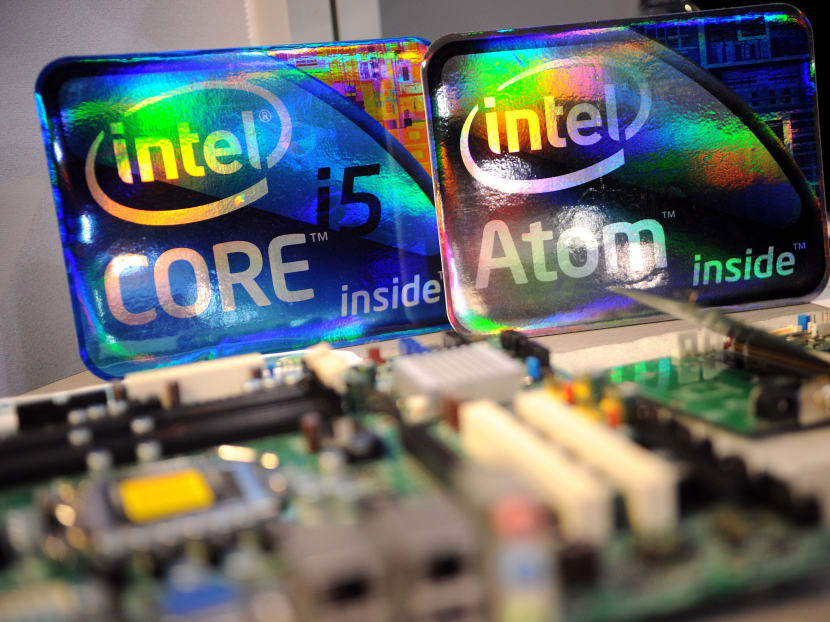
Intel processors on display. The firm said on Thursday it had raised its second-quarter revenue estimates, which spells
good news
for Singapore. PHOTO: Bloomberg
SINGAPORE — Demand for personal computers may be waning as consumers shun them in favour of mobile devices, but a spark of optimism in the form of demand by businesses is expected to guide Singapore’s chip industry — at least in the near term.
This renewed optimism comes as Intel — whose processors are inside about 80 per cent of the world’s PCs — flagged a more positive earnings outlook on Thursday, citing improving demand from companies looking to replace office machinery.
Analysts have said that Intel’s experience is likely to translate into good news for Singapore’s chip industry as well as electronics exports, but there are conflicting views on whether the trend will provide only a short-term boost or can be sustained.
Intel, the world’s biggest chipmaker, said on Thursday it had raised second-quarter revenue estimates to US$13.7 billion (S$17.1 billion) from the previous forecast of US$13 billion on stronger than expected demand for business PCs. Its results are often a bellwether for other chip companies.
This recovery in demand, partly boosted by companies migrating to newer systems after Windows XP was retired by Microsoft earlier this year, is good news for Singapore, said UOB economist Francis Tan.
“If Intel is seeing better business and stronger PC orders, it will certainly up the optimism of Singapore tech companies that are part of the value chain, including those that manufacture semiconductors and integrated circuits as well as PC parts,” he said.
“We can expect Singapore’s electronics exports to improve. Given that the electronics sector takes up a good chunk of our export basket, this bodes well for the outlook of manufacturing and overall growth moving into the second half of this year,” Credit Suisse analyst Michael Wan added.
Electronics exports, which account for nearly 30 per cent of total shipments out of Singapore, have declined on-year for more than seven quarters as of the first quarter this year, data by International Enterprise (IE) Singapore showed.
This comes at a time when global demand for PCs continues to weaken amid the proliferation of mobile devices — a fast-growing sector that Singapore’s electronics manufacturers are not as competitive in, compared with their counterparts in Taiwan and Korea.
Global shipments of PCs plunged by 9.8 per cent to 315.1 million units last year and are likely to drop further to 295.9 million this year and 291.7 million in 2018 as demand wanes from both emerging and mature markets, showed data from tech industry watcher IDC.
But this does not mean the PC business is counting its last days, said Mr Tan. “Structurally, we know the demand is shifting towards mobile devices, but I believe PC is not yet a sunset industry, nor is the improvement expected by Intel a cyclical blip,” he said. “I expect the shift to tablets and smartphones to unfold much slower in the corporate sector, which will continue to have a need for traditional PCs and laptops.”
But Mr Wan is less upbeat, expecting the improved PC demand — and its benefit to Singapore’s electronics manufacturers — to be only temporary.
“It will provide a short-term boost, but the structural shift towards mobile devices will remain. This will continue to impact South-east Asian tech manufacturers, such as Singapore and Thailand,” Mr Wan said. “The way forward is to diversify and move up the value chain, for both electronics manufacturing and other activities.”
“For Singapore, it means developing higher value-add industries, such as aerospace and pharmaceuticals, which is already happening,” he said. “Alongside electronics, pharmaceuticals will likely be a key driver for exports in the second half of this year, as the economy stabilises in the eurozone, which is a key market for our pharmaceutical products.”
Stay in the know. Anytime. Anywhere.

Subscribe to our newsletter for the top features, insights and must reads delivered straight to your inbox.
By clicking subscribe, I agree for my personal data to be used to send me TODAY newsletters, promotional offers and for research and analysis.






