
Sinopec lubricant plant a boon for energy industry
SINGAPORE — The energy and chemical industry here continues to grow in strength, with Asia’s largest oil refiner Sinopec joining the ranks of global companies using the Republic as a platform to expand their regional operations.
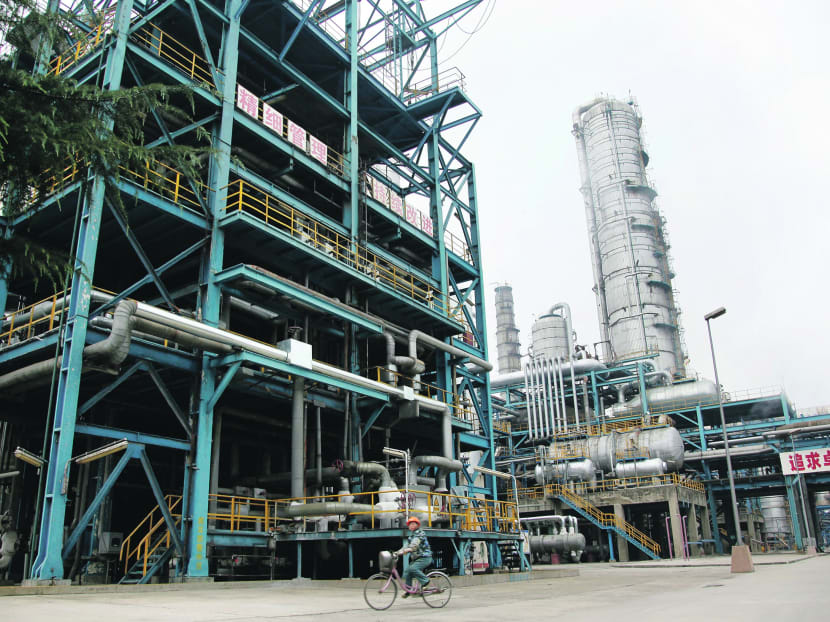
A Sinopec plant in Nanjing. The S$134 million facility in Tuas is the Chinese conglomerate’s first lubricant plant outside China. Photo: Bloomberg
SINGAPORE — The energy and chemical industry here continues to grow in strength, with Asia’s largest oil refiner Sinopec joining the ranks of global companies using the Republic as a platform to expand their regional operations.
The Chinese conglomerate opened its first overseas lubricant plant in Tuas yesterday, hoping to create an Asia-Pacific hub by leveraging on Singapore’s industry ecosystem and geographical advantage.
“We chose Singapore because of three reasons. First, Singapore’s status as the world’s third-largest refinery hub offers a robust industry ecosystem,” said Mr Pei Wenjun, General Manager of Sinopec Lubricant (Singapore). “Second, its geographical location is ideal for our regional expansion. Third, Singapore’s business environment is also conducive to our growth.”
Now fully operational, the 650-million-yuan (S$134 million) facility is Sinopec’s first lubricant plant outside China. At 242,811 sq m, it has an initial production capacity of 100,000 tonnes of lubricant and grease per year, said Mr Pei, adding that the company plans to hire about 150 people.
Sinopec’s lubricant products are currently used in industries such as aviation, automobile and petrochemical in more than 50 countries.
The new facility will enable the Fortune 500 firm to better serve the lucrative Asia-Pacific markets, said Mr Yeoh Keat Chuan, Managing Director of the Economic Development Board (EDB).
“The Asia-Pacific region is the largest and fastest-growing lubricant market, accounting for almost 42 per cent of the global lubricant market in 2012,” Mr Yeoh said at the opening ceremony yesterday. “This region is expected to register the highest growth worldwide, to reach 17 million tonnes of lubricants consumed by 2017.”
For Singapore, Sinopec’s latest investment also bolsters a lubricant supply chain that already includes other heavyweights, such as Chevron Oronite, Afton Chemical, Shell and Total. They form part of the energy and chemical industry that has been a key driver for the nation’s manufacturing economy.
“(The energy and chemical industry) is the largest contributor to our manufacturing output at over S$100 billion in 2012, accounting for 34 per cent of Singapore’s total manufacturing output,” Mr Yeoh said.
“The industry also provides good jobs in the sector, with Singaporeans making up around 75 per cent of the workforce.”
Stay in the know. Anytime. Anywhere.

Subscribe to our newsletter for the top features, insights and must reads delivered straight to your inbox.
By clicking subscribe, I agree for my personal data to be used to send me TODAY newsletters, promotional offers and for research and analysis.






